
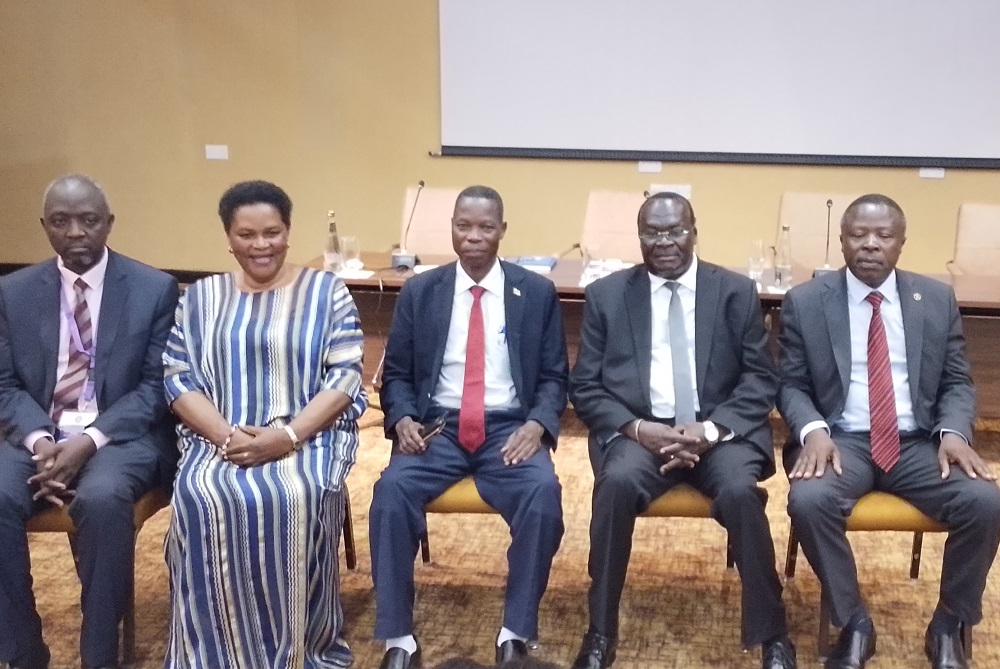
Kampala, Uganda: The Umukuka III of the Bamasaaba, His Highness Jude Mike Mudoma, has applauded President Yoweri Kaguta Museveni and Chief Justice Alfonse Owiny-Dollo for backing the integration of Alternative Dispute Resolution (ADR) mechanisms into Uganda’s judicial system, especially for resolving community-based disputes.
According to Mr Steven Masiga, spokesperson for the Bamasaaba cultural institution, the Umukuka expressed gratitude that ADR has now been recognized by the government as a relevant and accessible tool for resolving disputes in culturally rooted communities like Bugisu.
“His Highness Jude Mike Mudoma is very comfortable with this method of resolving local disputes within clans in Masaabaland. Our people can’t afford expensive legal fees, and ADR is helpful in maintaining harmony, which courts may not always achieve. I’m in full support of this arrangement,” Masiga told DailyExpress.
The remarks came during the recently concluded National ADR Summit in Kampala, where Bishop Joshua Lwere, the General Overseer of the National Fellowship of Born Again Pentecostal Churches of Uganda, raised a public question on whether President Museveni supports the system.
In response, the Chief Justice tasked Prof Andrew Khaukha, head of the Judicial Training Institute, to clarify.
Prof Khaukha confirmed that the president and cabinet had already given legal backing to ADR, reaffirming its growing importance in reducing case backlog and offering inclusive access to justice.
Legal Framework on ADR in Uganda

Mr Masiga further explained that there are clear constitutional and statutory provisions supporting ADR processes in Uganda, especially in community, cultural, and land-related disputes.
He cited Article 126(2)(d) of the Constitution – promotes reconciliation through ADR, Article 246(2) – recognizes cultural institutions in resolving disputes, Section 15(1) of the Cultural Leaders Act, 2011 and Arbitration and Conciliation Act Cap 5 (as amended) to back his justification.

Masiga added that ADR applies across sectors, from civil contracts to labour disputes, and even in criminal justice, such as plea bargaining, where confessions result in reduced sentences.
“Even in the Bible, we see an example of ADR. When God planned to destroy a sinful city, a prophet pleaded with Him to spare it if at least a few righteous people were found. That negotiation spirit is ADR in action,” he said.
He narrated a traditional practice in Bukalasi where suspects would confess upon reaching a symbolic stone near the health centre, signifying the last chance before facing formal justice. “We called it the confession stone. Any thief who crossed it without confessing knew jail was inevitable,” he noted.
Meanwhile, Mr Masiga said the Umukuka has begun cascading the ADR message to all clan heads in Masaabaland, who are now actively engaging their communities to adopt the practice.
Judiciary statistics indicate that over 90% of local disputes are resolved through informal mechanisms—a model now being strengthened to address Uganda’s high case backlog, the worst in the East African region.
If you would like your article/opinion to be published on Uganda’s most authoritative news platform, send your submission on: [email protected]. You can also follow DailyExpress on WhatsApp and on Twitter (X) for realtime updates.