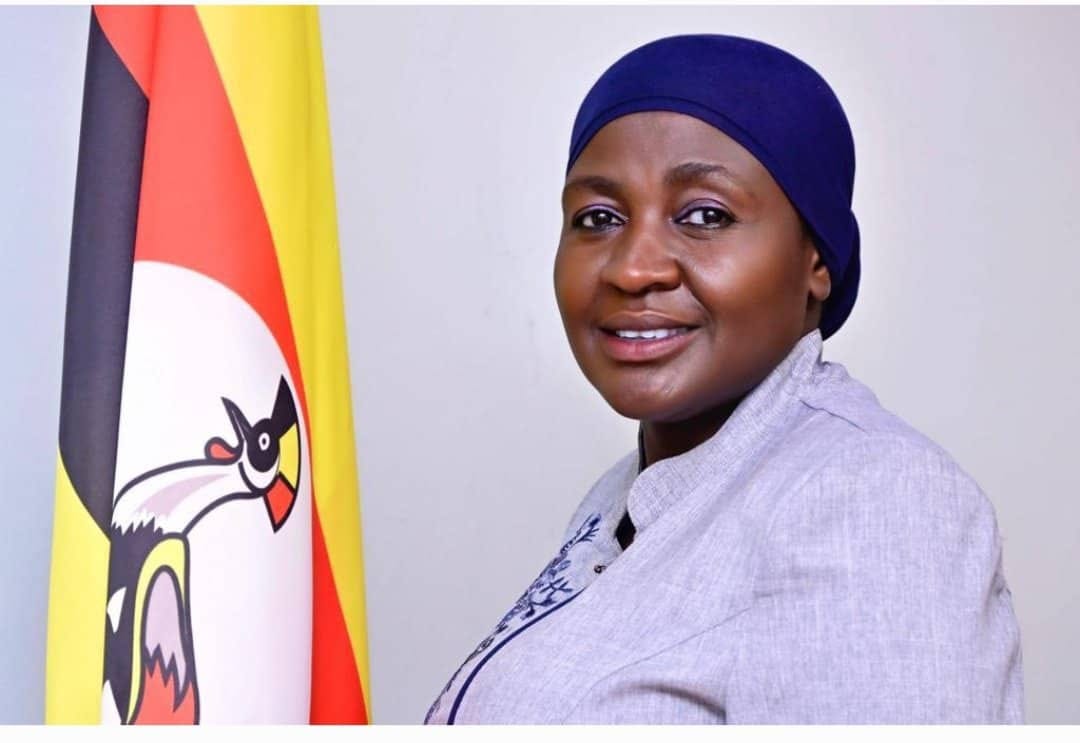
By Hadijah Namyalo Uzeiye
Over the weekend, the armed conflict between the Islamic Republic of Iran and Israel took an escalation twist following the United States military bombing of three alleged Iranian nuclear enrichment sites of Fordow, Natanz and Isfahan.
A few hours after the US military bombardments, the United Nations nuclear watchdog, the International Atomic Energy Agency (IAEA) and the Kingdom of Saudi Arabia assured the concerned world that there is yet no increase in radiation levels.
It is unfortunate that the Iran-Israel war was happening at the time when Geneva Academy, an academy of international human law and human rights, disclosed that more than 45 armed conflicts are currently taking place through the Middle East and North Africa.
And the majority of those armed conflicts are qualified as non-international armed conflicts. The non-international armed conflicts are protracted armed confrontations occurring between government armed forces and the use of one or more armed groups, or between such groups arising on the territory of a state.
The Geneva Academy, through its Rule of Law in Armed Conflict, which classifies all situations of armed violence that amount to an armed conflict under International Humanitarian Law, notes that Africa comes second in the number of non-international armed conflicts where more than 35 non-international armed conflicts taking place in the Democratic Republic of Congo, South Sudan, Sudan, Burkina Faso, Mozambique, Nigeria, Cameroon, Somalia, Senegal, Mali, Ethiopia and the Central African Republic.
It elaborates that several armed groups are either fighting against government forces or against each other (non-state actors).

Such statistics are really alarming, knowing that wars have very serious consequences. They result in loss of human lives, property, and reduced or no production of goods. We should pray and also beseech the parties involved in the Iran-Israel war, to stop conflicts, especially the armed ones and resort to diplomatic and peaceful means towards ending their disagreements.
Much as the Iran-Israel crisis is away from Uganda, it potentially has a ripple effect on Uganda and Africa in general. Our attention should be drawn to the fact that Iran and Israel play essential roles in global oil and gas supplies.
Iran, for instance, produces about three million barrels per day and exports about two million barrels per day to the global market, which is about 100 million barrels per day. Also of concern is the fact that the Middle East is a passageway through which about 5% of the world’s oil passes to final markets like Uganda and other parts of Africa.

As a country, we are still alive to previous suffering from both international armed conflicts and non-international armed conflicts. Fortunately, though, the Uganda People’s Defence Forces (UPDF) under its commander-in-chief, Gen. Yoweri Museveni, brought an end to several rebel groups, such as the Lord’s Resistance Army (LRA) under Joseph Kony and the Holy Spirit Movement under Alice Lakwena.
The same UPDF has since turned into missionaries of peace in countries like Liberia, Somalia, Central African Republic, the Democratic Republic of Congo, and Burundi. All these have been possible largely because of the wisdom of its commander-in-chief, Gen. Museveni. His efforts have qualified Uganda as an island of peace and stability for several years.
As we approach the election year in 2026, Ugandans should be mindful of how President Museveni remains a defender and symbol of peace and stability for our country. Let us vote for him overwhelmingly so that our country continues to remain peaceful and stable.
The writer is a senior presidential adviser, political affairs, Office of the National Chairperson/National Coordinator Bazzukulu.
If you would like your article/opinion to be published on Uganda’s most authoritative news platform, send your submission on: [email protected]. You can also follow DailyExpress on WhatsApp and on Twitter (X) for realtime updates.