

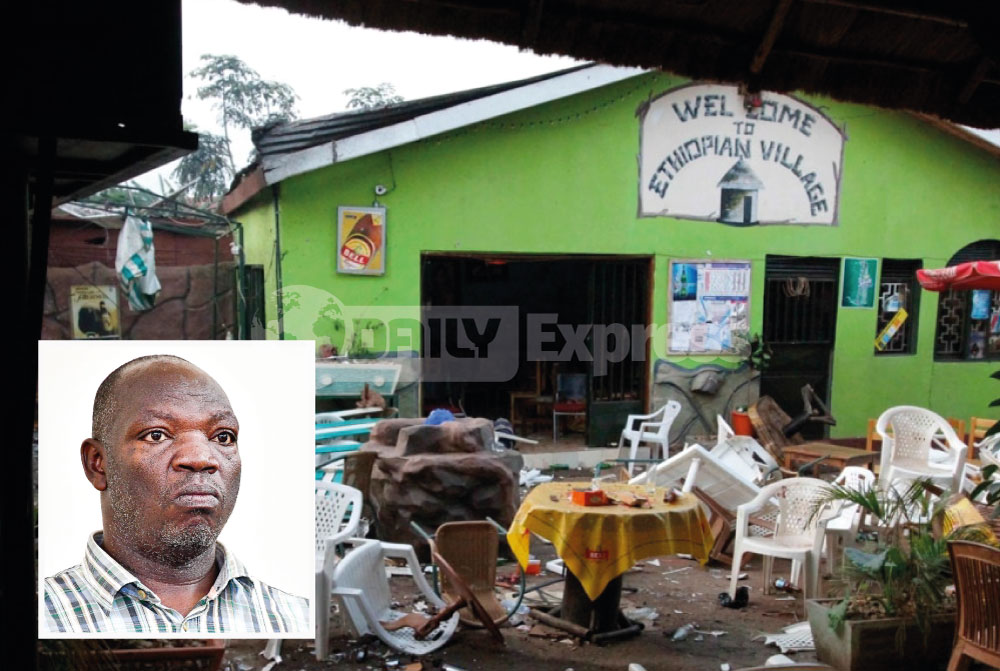
Kampala, Uganda: Fifteen years after the devastating 2010 twin bombings that killed nearly 100 people watching the World Cup final in Kampala, fresh claims have emerged accusing former top police operative Nixon Karuhanga Agasiirwe of knowingly facilitating the attacks in a quest for personal power, fame, and influence.
According to a chilling first-hand account published by a Ugandan Investigative outlet, The Investigator News, a businessman codenamed Thomas Mugalu, for security purposes as this is a highly senstive case, has recounted how, in June 2010, he unknowingly helped connect terror suspects to sources of unregistered SIM cards and burner phones, tools later used to coordinate the suicide attacks.
It started as a routine bar conversation at Mugalu’s establishment along Luwumu Street when a familiar patron, Ahmed Issa Luyima, approached him seeking unregistered phones. Mugalu thought little of it until a middleman, Godfrey, returned days later with grim news: Ahmed needed the devices to set off bombs.
Determined to avert a tragedy, Mugalu says he approached Ismael, an Internal Security Organisation (ISO) operative, who led him to the Rapid Response Unit (RRU) offices in Kireka. There, the matter landed on the desk of Nixon Agasiirwe, a senior tracker.
“I narrated everything to him,” Mugalu recalls, as quoted by The Investigator. “He told me never to talk to anyone about it, even Ismael.”
Instead of moving to stop the plan, Agasiirwe allegedly instructed Mugalu to convince Godfrey to sell the equipment to the suspects on the promise that he would “handle the rest” and threatened him with death if he disobeyed.
The Deadly Outcome
A month later, on 11th July 2010, twin blasts tore through Kyadondo Rugby Grounds and Ethiopian Village in Kabalagala, killing and maiming scores of unsuspecting football fans. In the aftermath, Agasiirwe became one of the most visible police figures as he led raids and arrests, including the apprehension of Luyima.
While the official narrative attributed the attack to Somalia-based al-Shabab in retaliation for Uganda’s AMISOM deployment, the fresh testimony raises troubling questions about whether parts of Uganda’s security apparatus had advance knowledge and failed to act, or worse, were complicit.
The Killing of Prosecutor Kagezi
Beyond the 2010 bombings, Nixon Agasiirwe is also implicated in the assassination of Senior Principal State Attorney Joan Kagezi, who was gunned down in March 2015 while prosecuting the very suspects of the Kampala terror attacks.
According to sources cited in The Investigator News, Kagezi’s meticulous efforts to expose the internal complicity behind the bombings, particularly allegations that elements within Uganda’s security agencies abetted the attackers, made her a target.
“She was close to unearthing the chain of command that enabled the bombs to be planted and detonated,” said a security source who requested anonymity. “She had collected testimonies that pointed fingers at senior officers, including Agasiirwe himself.”
It is alleged that in the weeks before her murder, Kagezi received multiple threats warning her to abandon inquiries into the role of rogue police commanders. Despite heightened personal security, she was ambushed and shot dead in front of her children as she returned home from work.

To date, no convictions have been secured for her killing, fueling speculation that it was orchestrated to permanently silence her investigations.
A Betrayed Law and an Unanswered Case
Legal experts note that under Ugandan law, any official who conceals intelligence about an imminent crime can be charged with obstruction of justice or aiding terrorism. Yet, to date, no investigation has scrutinized Agasiirwe’s alleged role.
This is not the first time Agasiirwe has faced controversy. He has previously been charged with unlawful detention, murder, and torture in unrelated cases.
A Life Destroyed
For Mugalu, the fallout has been ruinous. His thriving bar business collapsed under suspicion and fear. Forced to flee Uganda for years, he returned home only to be jailed without charge for three months.
Today, frail and impoverished, he lives in obscurity, haunted by what he tried and failed to prevent.
“I wonder sometimes, if I had stayed quiet, would people still have died?” Mugalu reflected. “But I spoke up, and instead of stopping it, they used me to cover it up.”
If you would like your article/opinion to be published on Uganda’s most authoritative news platform, send your submission on: [email protected]. You can also follow DailyExpress on WhatsApp and on Twitter (X) for realtime updates.