

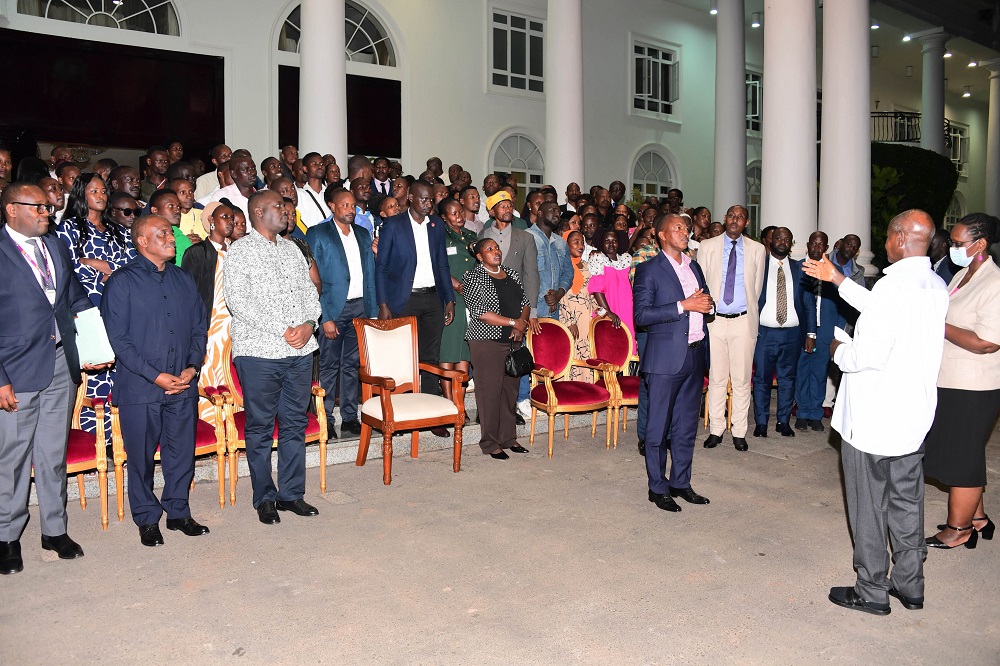
Museveni says local leaders, LC1 committees, and respected elders are better placed to confirm who qualifies as a Ugandan citizen.
Kampala, Uganda: President Yoweri Museveni has directed that all citizenship verification and registration processes be decentralized to local communities, in a sweeping move aimed at resolving longstanding disputes over the status of immigrants, particularly the Banyarwanda, in Uganda.
In a statement issued after a meeting with representatives of the Banyarwanda community on June 23, Mr Museveni said he had become “irritated” by claims of mistreatment but acknowledged the process had been mishandled by bureaucrats who often ignored community structures.
“The problem of citizenship in Uganda is a mass, community issue, best known to and best handled by the communities, area by area,” Museveni said. “The bureaucrats in Immigration or NIRA should not have been the ones to take the lead.”
Museveni, now 80, explained that local leaders, LC1 committees, and respected elders are better placed to confirm who qualifies as a Ugandan citizen.
New Framework for Verification
Under the new directives, Museveni urged that all citizenship registration will be conducted locally. Verification committees at the parish level will include LC1 officials, Internal Security Organisation (ISO) staff, and an elder from the area. NIRA will only process applications and issue IDs based on these local recommendations.
Where there is doubt, cases will be escalated to newly established District Citizenship Verification Committees chaired by the Resident District Commissioner, which will act as final arbiters.
President Museveni further ordered that no payments be demanded from families that settled in Uganda before 1962. Only those who arrived after independence will be required to pay for immigration services.
“Those categories are facts, and nobody who does not have an evil ulterior motive should have a problem with facts,” he said, rejecting proposals to remove the historical classifications of citizenship by date of settlement.
Museveni further revealed how reliance on bureaucrats in Kampala had led to unnecessary delays, unfair treatment, and situations where people born in Uganda were forced to “beg the Board of Immigration for their rights as citizens.”

“It is totally unfair and unnecessary to waste the time of our people with bureaucrats in Kampala to determine who is a Ugandan and who is not,” he declared.
The president also hinted that Uganda could one day adopt an East African Federation citizenship system, but maintained that, for now, dual citizenship will only apply to Ugandans who fled to Europe, Asia, or Arab countries during the past instability.
“Many of the refugees went back. However, of those who remained, if they want to become Ugandans, we should allow them after amending the law. With the East African Federation, we shall have the Citizenship of East Africa,” he emphasized.
“Dual Citizenship should, for now, be for our children who had to go to European, Arab, and Asian Countries, mainly because of the insecurity here and their descendants. If the language is the one confusing when the law refers to citizenship by birth, that can be studied when we have time.”
Museveni also warned that making false declarations during the verification process remains a crime punishable by law.
If you would like your article/opinion to be published on Uganda’s most authoritative news platform, send your submission on: [email protected]. You can also follow DailyExpress on WhatsApp and on Twitter (X) for realtime updates.