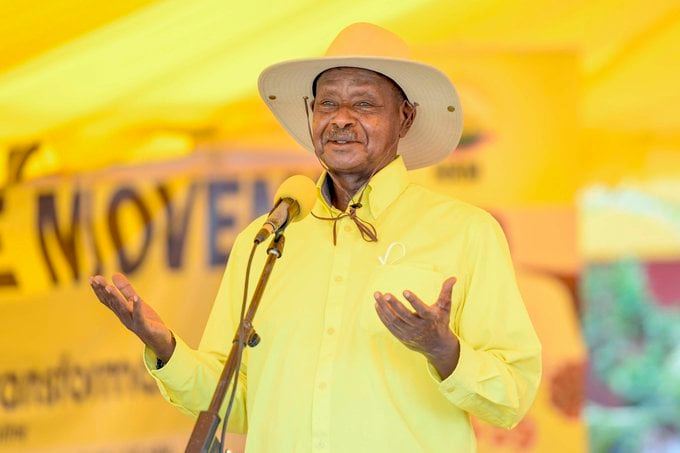
Kampala, Uganda: In his acceptance speech as the NRM presidential flag bearer for the 2026 elections on Saturday, July 05, President Yoweri Kaguta Museveni coined himself a new self-declared title, “Ssemalungu”, stirring cultural and linguistic curiosity across the country.
“His Excellency Yoweri Kaguta Museveni, General (Rtd), Ssabalwanyi Ssemalungu, President of the Republic of Uganda,” Mr Museveni said as he concluded his address at the NRM Electoral Commission headquarters in Kampala over the weekend.
The term “Ssabalwanyi,” meaning “chief fighter” or “fighter among fighters,” was first publicly used by Museveni in 2011 to assert his revolutionary credentials, but the new title “Ssemalungu” is a relatively obscure Luganda term, one that does not exist in standard dictionaries but appears to carry significant symbolic weight.
Experts Decode “Ssemalungu”
Christopher Ssensasile, a professional Luganda language expert, told Monitor that “amalungu” refers to remote, untamed bushlands, places of low human settlement and potential danger, often teeming with wild animals.
“So, in this context,” Ssensasile explained, “he looks at himself as one who dominated and survived in such terrains. A Ssemalungu is someone hardened by the wilderness.”
Luganda uses the “Sse-” prefix to denote dominance or mastery, commonly found in titles such as Ssesente (one with wealth), Ssenkoko (one with many chickens), or Ssabasajja (man of men, a title for the Kabaka). By invoking “Ssemalungu,” Museveni may be positioning himself as “master of the wilderness” or “overseer of no-man’s-land,” drawing from his bush-war legacy.

Another Luganda authority, quoted by the authoritative Ugandan publication, Twaha Mukisa, interprets “Ssemalungu” as “an accomplished villager” – a seasoned grassroots survivor who understands life in rugged, rural terrains and thrives regardless of hardship.
However, not everyone agrees with the symbolic use of the term.

Ambiguity or Masterstroke?
NTV Uganda news editor Solomon Kaweesa, a respected folklorist, said the term lacks linguistic grounding. “There’s no such word in standard Luganda. It might be derived from ‘desert’ or ‘desolate land,’ but calling oneself Ssemalungu without clarity is ambiguous,” he said.
Kaweesa adds that a better choice would have been Ssemaluulu, a proverbial Luganda term that mocks leaders who overstay in power, perhaps an ironic nod if used intentionally.
Still, Ssensasile insists that the creativity in coining “Ssemalungu” is linguistically permissible under the poetic liberties of Luganda. “Words can be born through storytelling and symbolism. In that sense, the President’s usage is not only clever, it’s masterful,” he said.
Whether it will catch on in political or cultural lexicon remains to be seen. But one thing is clear: President Museveni is continuing to shape his legacy, not just through politics, but also through language.
If you would like your article/opinion to be published on Uganda’s most authoritative news platform, send your submission on: [email protected]. You can also follow DailyExpress on WhatsApp and on Twitter (X) for realtime updates.