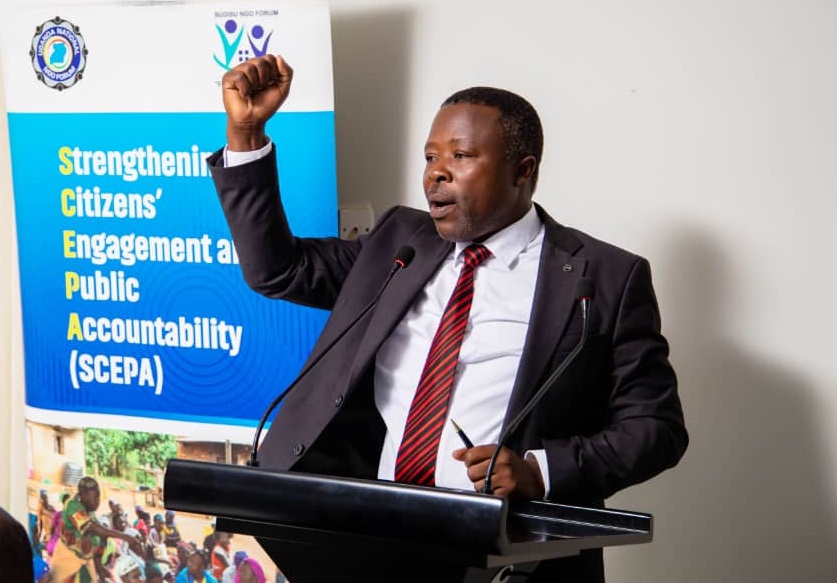
By Steven Masiga
Spokespersons occupy a vital role within any organization, acting as the official mouthpiece, guardian of reputation, and interpreter of policies. Whether in government departments, cultural institutions, or military and law enforcement agencies, a spokesperson is the bridge between an organization and the public.
Personally, I regard Jesus Christ as among the earliest and most influential spokespersons, deployed to articulate the cause of salvation on behalf of He who sent him. Prophet Muhammad (PBUH) likewise undertook the duty of proclaiming a message that was often misunderstood and violently resisted by his own kin.
These figures remind us that spokespersons, by virtue of their duty, often walk a path of both admiration and hostility.
History is replete with examples of spokespersons who faced persecution. In the Democratic Republic of Congo, the spokesperson for the M23 rebels was sanctioned by the international community for defending a cause deemed controversial.
During the Iraq war, the then-government spokesperson became a marked man, exiled after Saddam Hussein’s fall. Eventually, he was cleared of wrongdoing — a reminder that sometimes a spokesperson is simply doing their job.
Who Is a Spokesperson?
According to Black’s Law Dictionary, a spokesperson is a person who speaks on behalf of an organization, conveying its views, information, or policies to the public. The Law Dictionary further adds that a spokesperson is typically a well-known individual who serves as a regular voice for a cause.
Spokespersons have the authority to represent their organization’s official position and are the first point of call in times of crisis, policy clarification, or strategic communication. Their words carry more weight than anyone else within the institution when it comes to formal matters.
Roles and Expectations
The spokesperson’s duties include: conveying official views, policies, and statements through media briefings, interviews, and public addresses, representing the institution during both positive and difficult moments, managing public perception and crisis communication, and dismantling misinformation and offering counter-narratives that reflect the organization’s true position.

Importantly, a spokesperson must sometimes defend a stance they may not personally agree with, loyalty to the institution takes precedence over personal opinion.
When I Defended the Bugisu Cultural Institution
As the current spokesperson of the Bugisu Cultural Institution, I’ve had my fair share of trials and responsibilities. When the government recently corrected the official name of our institution, changing it from a company name (Inzu Ya Masaba) to Bugisu Cultural Institution in line with Article 10 and Schedule 3 of the Constitution, some detractors tried to tag this development on our leadership.
Using platforms such as UBC TV, Daily Monitor, DailyExpress, and others, I issued clarifications that the power to correct the names of cultural institutions is vested solely in the Minister of Gender. Our people listened. Facts triumphed over distortion.

I also recall responding robustly to a defamatory article by one Dr. Khisa, who targeted our cultural leader, the Umukuka. I challenged him until he issued a public apology. A spokesperson must, with firmness and grace, confront and neutralize such attacks to protect the dignity of the institution.
Qualities of a Good Spokesperson
A competent spokesperson must possess:
- Media literacy and public speaking skills.
- Legal knowledge, particularly on matters affecting the institution.
- Writing skills to craft credible statements and rebuttals.
- Consultative wisdom, avoiding over-reliance on others lest it signals incompetence.
Moreover, he or she must be a respected public figure, a people-person, and well-versed in the policies and protocol of their organization.
A Personal Testament
In 2020, when the current Umukuka was fighting for leadership, he contacted me through intermediaries to use my media networks to support his rightful claim. I accepted the call of duty, and we pushed until he was gazetted in 2023. Today, he continues to serve with distinction, and I move across schools, from primary to university, advocating for education among our youth.
Indeed, being a spokesperson is not just about communication. It is about defending the truth, upholding institutional integrity, and leading from the front, even in the face of adversity.
The author is the official spokesperson of the Bugisu Cultural Institution (0782-231577).
If you would like your article/opinion to be published on Uganda’s most authoritative news platform, send your submission on: [email protected]. You can also follow DailyExpress on WhatsApp and on Twitter (X) for realtime updates.