
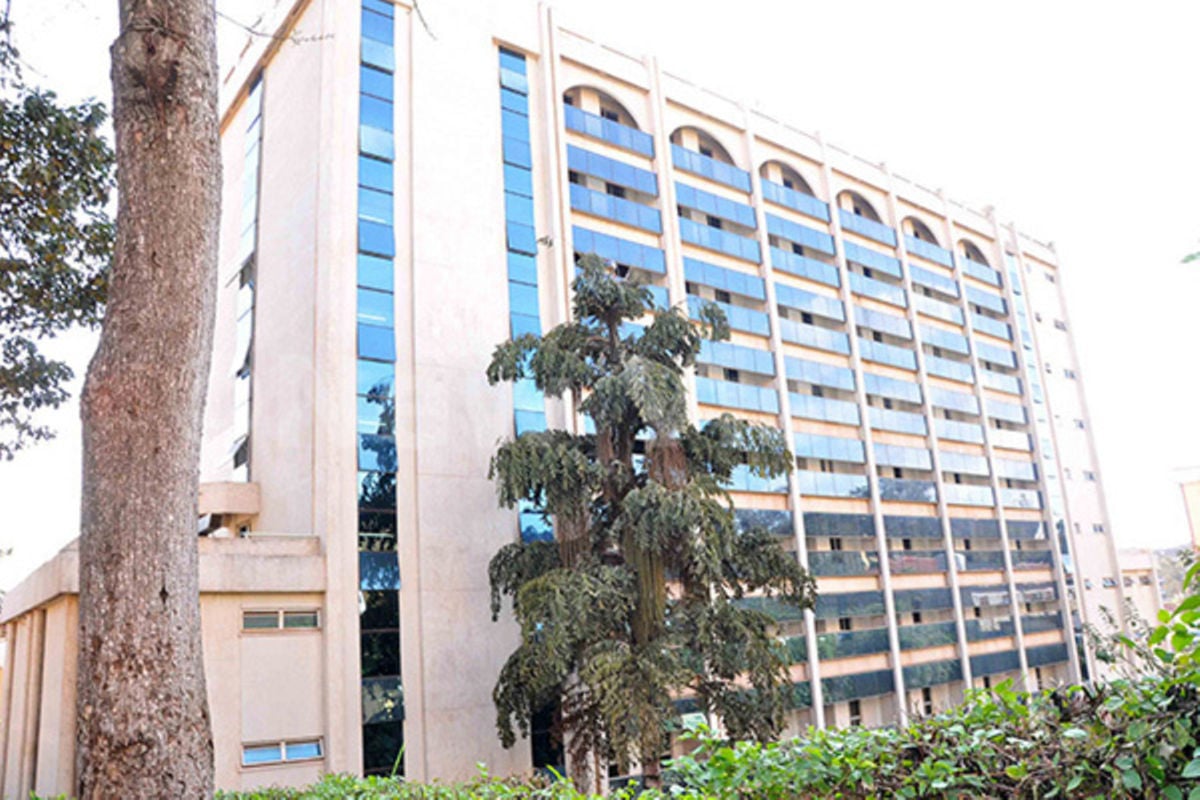
Justice Harriet Magala ruled in favor of Equity Bank in the Simbamanyo loan dispute, upholding the bank’s $10 million syndicated facility and dismissing fraud claims.
Kampala, Uganda: The Commercial Division of the High Court has dismissed Simbamanyo Estates Limited’s legal challenge against Equity Bank, ruling that the $10 million post-import loan facility at the heart of a years-long dispute was lawful, enforceable, and free from fraud or undue influence.
In a landmark ruling delivered on July 25, 2025, Justice Harriet Grace Magala found that the syndicated loan structure involving Equity Bank Uganda, Equity Bank Kenya, and Mauritius-based Bank One Limited did not breach the Financial Institutions Act or Uganda’s banking regulations.
The judge declared the transaction as a “permissible and commercial necessity,” effectively ending Simbamanyo’s long quest to reclaim its mortgaged properties, Simbamanyo House and Afrique Suites Hotel, which were auctioned off in 2020.
“The court finds that the 1st and 2nd defendants did not conduct financial institution business in Uganda unlawfully. The syndicated loan arrangement was a permissible and commercial necessity,” Justice Magala stated in her 67-page ruling.
The saga dates back to 2012 when Simbamanyo secured a $6 million syndicated loan from Equity Bank Uganda and Equity Bank Kenya. A subsequent $10 million bridge facility was obtained in 2017 from Bank One, backed by a standby letter of credit issued by Equity Bank Kenya.
When Simbamanyo defaulted, Equity Kenya paid off the obligation under the letter of credit, thereby activating a post-import loan obligation with Equity Uganda.
Simbamanyo challenged this, arguing that the local lender was not the designated party to enforce the loan and that no utilization request had been issued to authorize disbursement. The court dismissed this argument, noting the self-executing nature of the facility.
“The utilization request under clause 5.1(a) was optional, not mandatory. The facility was self-executing upon default and encashment of the standby letter of credit,” the judge ruled.
Justice Magala rejected the claim that foreign banks, Equity Kenya, and Bank One had illegally operated in Uganda. She clarified that the Financial Institutions Act prohibits unauthorized deposit-taking within Uganda but does not forbid foreign lending.
“The Financial Institutions Act was never intended to forbid borrowing from foreign entities. Had Parliament intended such a restriction, it would have said so explicitly,” she emphasized.

On the structure of the syndicated loan, the judge explained it was necessary to prevent Equity Bank Uganda from exceeding its credit exposure thresholds.
“The plaintiff and the 2nd defendant entered into a syndicated loan facility, which was necessary because the 1st defendant would otherwise exceed its credit and exposure limit,” she ruled.
Simbamanyo also faulted the banks for triggering the standby letter of credit without prior notice. However, the court held that no such notice was required, citing the autonomous nature of standby credit instruments.
“A standby letter is a separate security agreement. Once triggered, the issuing bank is obligated to pay regardless of the borrower’s awareness,” Justice Magala ruled.

The company further alleged fraud, undue influence, and breach of fiduciary duty. But the court found no supporting evidence, ruling instead that all transactions were properly executed within the bounds of contract law.
“There was no fraudulent misrepresentation, undue influence, or breach of fiduciary duty proved against the defendants,” she ruled.
Justice Magala also noted that the absence of a formal written demand did not harm Simbamanyo’s legal standing, as the borrower was aware of the agreed repayment timelines and terms.
“The absence of a written demand did not prejudice the plaintiff, who was aware of the facility timelines and obligations,” the court added.
The ruling upholds the controversial sale of Simbamanyo House and Afrique Suites Hotel. Simbamanyo House was bought by Meera Investments, owned by business mogul Sudhir Ruparelia, while Afrique Suites was acquired by Luwaluwa Investments. Simbamanyo had previously launched multiple legal applications seeking to overturn the sales.
The Commercial Court’s ruling affirms the rights of banks to enforce foreign-backed credit facilities, with analysts saying it sets a significant precedent for future commercial disputes involving syndicated loans, especially those involving foreign lenders and complex credit structures.
The decision concludes a high-profile case that attracted national attention, involving court appeals, political interventions, and over a decade of litigation. While Simbamanyo may still appeal, legal experts argue that the chances of reversing the outcome are slim given the depth and clarity of Justice Magala’s judgment.
If you would like your article/opinion to be published on Uganda’s most authoritative news platform, send your submission on: [email protected]. You can also follow DailyExpress on WhatsApp and on Twitter (X) for realtime updates.