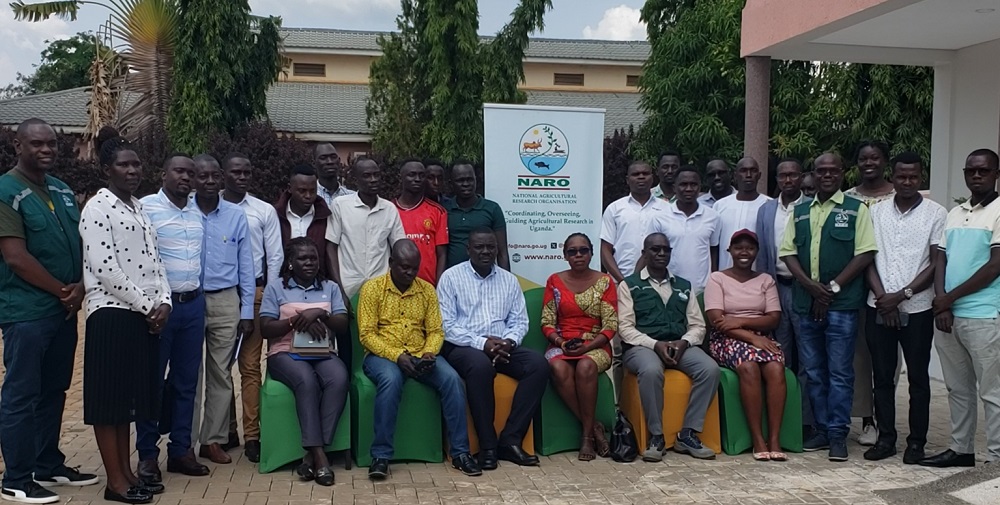
Lira, Uganda: The Head of Communications at the National Agricultural Research Organisation (NARO), Mr. Frank Mugabi, has challenged journalists to prioritize accuracy when reporting agricultural research, warning that misinformation undermines innovation and development in Uganda’s farming sector.
Speaking during the launch of a nationwide media training programme held at Gracious Palace Hotel in Lira City on Wednesday, July 23, 2025, Mugabi emphasized that agricultural reporting must be rooted in facts, especially given the critical role research plays in transforming Uganda’s economy.
“Research has been the bedrock of agriculture in Uganda and across the region. Many of our locally developed crop varieties have been widely adopted by neighboring countries,” he said.
Mugabi added that journalists need regular access to verified data and technical context to effectively report on the sector that employs over 70% of Ugandans. “We place a premium on accuracy because we generate technologies for a sector that occupies the majority of Ugandans,” he stressed.
The training in Lira, targeting journalists from the Lango sub-region, marked the first phase of NARO’s countrywide initiative to equip media professionals with the knowledge necessary to promote research-backed agricultural development.
Participants were introduced to NARO’s governance structure, its national and zonal research institutes, and its thematic areas of work, including crops, livestock, fisheries, forestry, coffee and cocoa, and climate-resilient innovations.
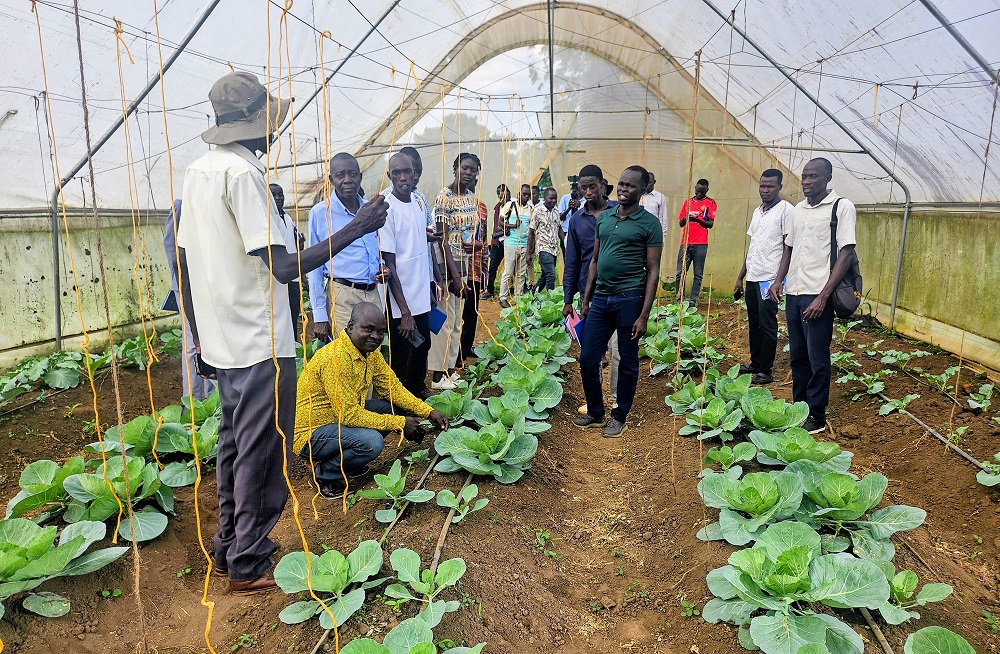
Journalists took a tour around the Ngetta Zonal Agricultural Research and Development Institute (Ngetta ZARDI), where they interacted with scientists working on adaptive research for Uganda’s agro-ecological zones.
Among the highlights was a deep dive into the newly developed anti-tick vaccine, improved seed varieties, and high-performance livestock breeds; solutions aimed at tackling climate change, pests, and productivity constraints.

Mr. Eria Arinaitwe, Ngetta ZARDI’s Director, led the journalists through the institute’s research hubs, explaining the vital connection between laboratory innovation and real-world farming outcomes.
Prof. John Opolot, a research advisor with NARO, stressed that bridging the gap between scientists and the public requires journalists who can interpret and contextualize complex scientific findings.
“Without informed communication, research remains in the labs. Our farmers need to hear about these solutions in language they understand and through platforms they trust,” he said.

The training comes at a time when Uganda is scaling up its agricultural transformation under key programs such as the Parish Development Model (PDM) and the Agro-Industrialisation Strategy. It also supports the country’s commitments to continental and global frameworks such as the African Union’s Agenda 2063 and the UN Sustainable Development Goals (SDGs), particularly those on food security, climate action, and innovation.
Journalists who participated praised the initiative. “The training and field experience were educative. I learnt the importance of the NARO anti-tick vaccine. I will do my best to spread the knowledge to our audience,” said Auma Winnie, a reporter with Unity FM in Lira.
“This session greatly enhanced my agri-journalism skills, deepening my understanding of agricultural research, especially the anti-tick vaccine’s role in livestock health and farmer livelihoods,” said Atim Nancy of Q FM.
Patrick Okino, Chairperson of the Lango United Journalists Association, described the event as a milestone. “This is the beginning of a long partnership between NARO and the media in Lango. It shows that NARO recognizes the media as a vital partner in the dissemination of science, research, and innovation,” he said.
According to NARO, similar trainings will be rolled out in other regions with the goal of building a network of agricultural media champions committed to evidence-based reporting that shapes public policy and improves uptake of innovations by farmers across Uganda.
If you would like your article/opinion to be published on Uganda’s most authoritative news platform, send your submission on: [email protected]. You can also follow DailyExpress on WhatsApp and on Twitter (X) for realtime updates.