
Mbale, Uganda: Bamasaaba farmers have been challenged to improve their agricultural practices if they are to benefit meaningfully from farming, especially in the coffee sector.
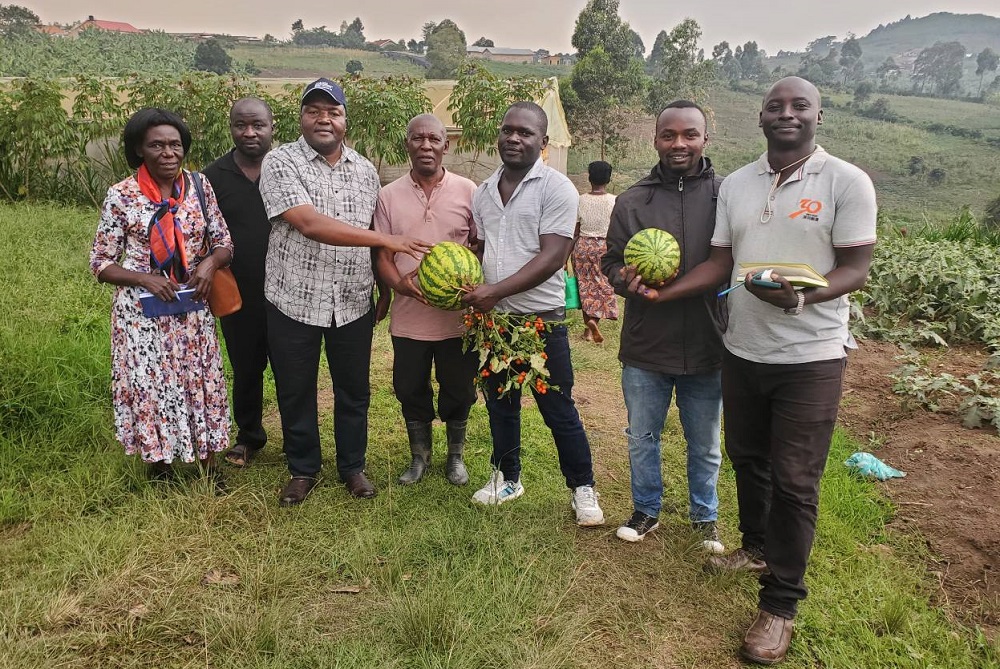
The call follows a recent benchmarking visit by a delegation of journalists and researchers to Rukungiri District in western Uganda, where they observed high-yield farming models and successful coffee growers.
Speaking to DailyExpress, Mbale-based Time FM presenter Isaiah Kutosi, who was part of the visiting delegation, said the trip was an eye-opener for farmers from the Bugisu sub-region, which includes Mbale, Bulambuli, Sironko, Manafwa, Bududa, and Namisindwa Districts.
“We recently had the chance to visit Rukungiri District, where we learned from farmers who are doing well in coffee and other crops. The dedication and hard work shown by these farmers were inspiring. One remarkable story was with Mr. Boaz, who shared his achievement of harvesting 100 kg of coffee from a single tree each harvest,” Kutosi said.
“What’s striking is that in our region, a coffee tree typically produces just 5–7 kg per harvest. Our visit to over eight farms left us with one clear message—as Bamasaba, we must act now and improve our farming methods,” he emphasized.
The delegation, which included researchers Mubakye Joel Peter and Dinah Masaba, as well as journalists Namboyo Isaiah and Masumba Jabbi, was warmly received by Rukungiri Chief Administrative Officer Mr. Wasswa Masokoyi, who hails from the Bamasaba community.
“We were deeply impressed by the innovative techniques and practices we witnessed. We’re now working on a documentary that will showcase these best practices and the stories of successful farmers,” Kutosi added, while thanking sponsors Mr. Wanyina Francis, Ikokwa Ye Bakoffu, and the Coffee Pilgrimage Movement for making the trip possible.
Why Coffee Matters, and Why the Gap Must Close

Uganda is Africa’s second-largest coffee producer after Ethiopia, with more than 70% of the population engaged in agriculture. Coffee remains the country’s top cash crop, mainly grown by smallholder farmers. It not only sustains households but also drives education, health, and access to other basic needs.
As Fabrice Pinard, agronomist and EU ROBUST Project coordinator at CIRAD, once put it, “Coffee never lies. It is the cornerstone of daily life for families, villages, and nearby towns—and can always be relied on.”
Coffee from Uganda is transported by truck to Mombasa, Kenya for export, supported by a strong network of cooperatives and coffee factories that help farmers with storage, processing, and market access. However, experts warn that despite its low CO₂ emissions, Uganda is already seeing the effects of climate change on its coffee yields—especially through unpredictable rains and prolonged droughts.

Coffee Regions, Varieties, and Opportunities
Uganda grows both Robusta and Arabica coffee. Robusta thrives around Lake Victoria and western Uganda at altitudes of 900–1500 meters, while Arabica dominates Mount Elgon’s slopes and parts of western and southwestern regions.
Key varieties include, Robusta: Nganda, Erecta, and high-yielding clonal varieties, and Arabica: Typica, SL 14, SL 28, and Kent.
Some regions grow both types, offering flexibility to farmers. The government is actively promoting replanting and branding of Ugandan coffee as a premium product, especially with increasing global demand for ethically grown and climate-smart coffee.
For the Bamasaba, the message from Rukungiri is clear: better yields and bigger profits are possible with disciplined farming, knowledge-sharing, and adaptation to modern techniques.
If you would like your article/opinion to be published on Uganda’s most authoritative news platform, send your submission on: [email protected]. You can also follow DailyExpress on WhatsApp and on Twitter (X) for realtime updates.