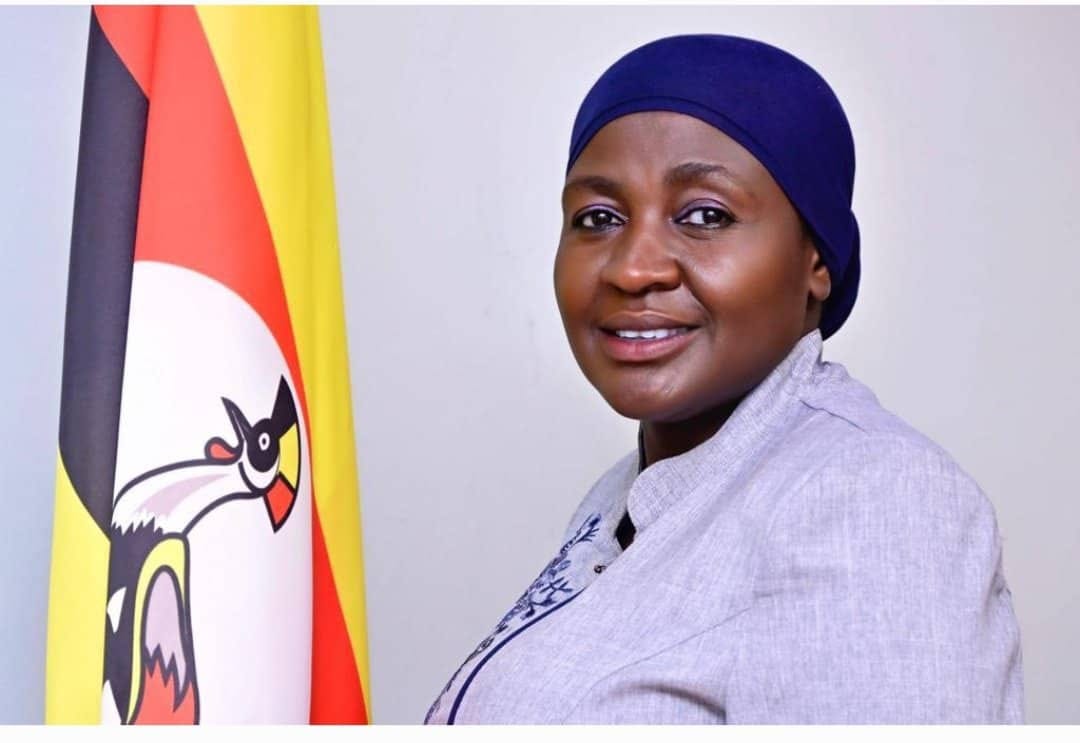
By Hadijah Namyalo Uzeiye
EDITOR: Towards the end of last month, the global economic body, the International Monetary Fund (IMF), upgraded its global growth forecast, commonly known as the World Economic Outlook. IMF defines the World Economic Outlook as a survey of prospects and policies by its staff, usually published twice a year, with updates in between.
The outlook provides analysis and projections of the world economy in the near and medium term, which are vital elements of the IMF’s monitoring of economic developments and policies in its member countries and of the global economic system.
Following the founding of the IMF and World Bank, arising from the Bretton Woods meeting in 1944, Uganda became a member of the IMF in 1963 before its independence. The IMF is one of 15 specialised agencies of the United Nations, with 190 countries under the IMF that work in harmony together to try to stabilise the global economy.
Since Uganda became a member, the IMF has been extending an advice-giving responsibility on the economic trajectory of Uganda. It carried on the same role when the National Resistance Movement (NRM) seized state power in January 1986. And at the time the NRM took over the country’s leadership, IMF statistics showed that our country was in shambles.
As President Yoweri Museveni keeps reminding us, Uganda’s economy then was an enclave economy dependent on cotton, coffee, copper, tobacco, and tourism.
The NRM leadership’s strategic economic measures have since turned the economy into an open economy. These measures gave life to the NRM Manifesto, whose key deliverable, according to the President’s 2021 address, has been to move the country into a modern economy.

Addressing the State of the Nation Address, President Museveni assured the country that his government will increase the size of Uganda’s economy to $500b by the year 2040. This will be achieved as a result of the strategy his government has instituted anchored on four sectors: agro-industrialisation, mineral development, including oil and gas, science, tourism development, technology and innovation.
In the particular case of tourism, the president holds that its value chain has a $50b potential.
In light of the strong foundation the NRM government has laid for the country’s economy, the gross domestic product (GDP) per capita is $1,263. And Uganda is, therefore, on a quick march to upper-middle-income status. Such a strong economic status lured the IMF to rank Uganda as the seventh fastest growing economy in the world.

Despite global shocks, Uganda’s economy has continued to register impressive growth rates. The IMF predicts that Uganda’s growth rate will be 6.3% in 2025 and 7% in 2026 compared to the global forecast of 3% in 2025 and 3% in its earlier April report. The expected increase in growth rate is partly attributed to US government decision to soften on tariffs on goods.
The good news is that in the IMF forecast, Uganda records impressive growth figures. Already, the Ministry of Finance had projected in this year’s budget speech that Uganda’s GDP growth will be at 6.3% in 2025/2026 and 7% in 2026/2027. Besides, the Uganda shilling has been appreciating to 40-year all-time highs.
The idea is to be able to declare the Uganda shilling as the most stable currency in Africa. Its stability is attributed to strong export receipts, foreign direct investments, and remittances.
Now that the IMF global economic forecast is positive, it is high time the NRM Government intensified its support to small businesses so that we can hit the targeted $500b economy by the year 2040.
The writer is a senior presidential adviser, political affairs, Office of the National Chairperson/National Resistance Movement (NRM).
If you would like your article/opinion to be published on Uganda’s most authoritative news platform, send your submission on: [email protected]. You can also follow DailyExpress on WhatsApp and on Twitter (X) for realtime updates.