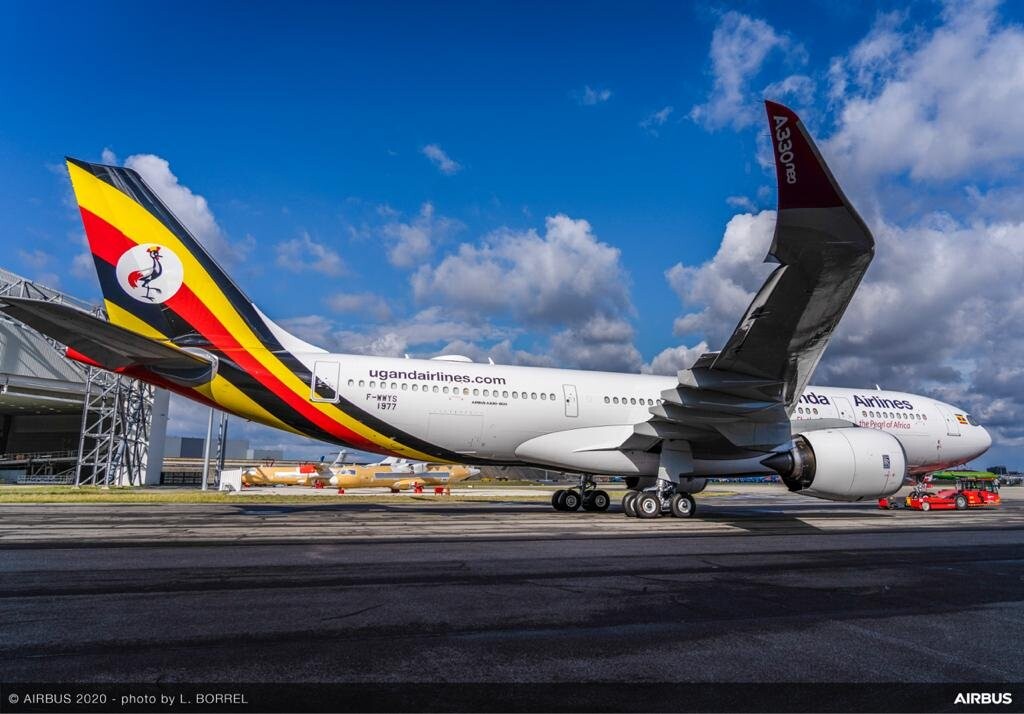
Kampala, Uganda: A staggering Shs 26.5 billion (USD 7.2 million) appears to have vanished into thin air at Uganda Airlines, the state-owned carrier, in one of the most audacious cases of fuel mismanagement ever exposed in the country.
A special audit by the Office of the Auditor General, tabled in March 2025, has revealed that millions of taxpayer shillings were paid to fuel supplier MixJet for deliveries that never happened.
The report paints a picture of systematic fraud, phantom invoices, and shocking accounting lapses between 2021 and 2024, suggesting that Uganda Airlines’ fuel procurement system was alarmingly lax — or worse, a cash drain deliberately exploited.
How the Money Vanished
Phantom Fuel: The audit uncovered 215 “ghost” invoices, while only 266 flights actually departed against 483 billed invoices. This discrepancy alone signals potential duplicate billing or outright fraud.
Impossible Charges: Auditors identified 761 instances where billed fuel volumes exceeded aircraft tank capacities, amounting to Shs 10.5 billion (USD 2.86 million) in overcharges. Planes physically could not carry the fuel billed.
Unexplained Penalties: MixJet invoiced Shs 4.2 billion (USD 1.15 million) in penalties with no contractual justification or breakdown.

Invoices for Nonexistent Assets: Some charges were recorded for aircraft that Uganda Airlines does not even own, while Shs 4.5 billion (USD 1.22 million) in payments appear only in the airline’s books, missing entirely from MixJet statements.
Even small variances between aircraft technical logs and supplier receipts indicate a deeply flawed reconciliation system, potentially masking even larger losses.
Auditors Sound the Alarm
The Auditor General has issued urgent recommendations, among which include the need to enforce “three-way matching” of invoices, tech log, and supplier receipts, before any payment, deploy automated reconciliation systems linked to flight records, and to immediately recover unsupported payments from MixJet and other suppliers.

“Paying fuel invoices without proper documentation is a recipe for fraud. The sums involved here are shocking and cannot be ignored,” the report warns.
A Pattern of Mismanagement?
This is not Uganda Airlines’ first brush with scandal. Since its revival in 2019, the airline has relied heavily on state bailouts, and now, fuel procurement has emerged as a cash-draining loophole threatening both public trust and potential legal scrutiny from international regulators.
In 2021, Parliament flagged procurement irregularities and nepotism in the airline’s leadership, and a year later (in 2022), management admitted to investigating suspected fraud in overseas transactions, some of which were referred to Interpol.
Attempts to reach MixJet for comment were unsuccessful, while Uganda Airlines spokesperson Shakira Rahim Lamar promised a response but had yet to provide details at the time of publication.
If you would like your article/opinion to be published on Uganda’s most authoritative news platform, send your submission on: [email protected]. You can also follow DailyExpress on WhatsApp and on Twitter (X) for realtime updates.