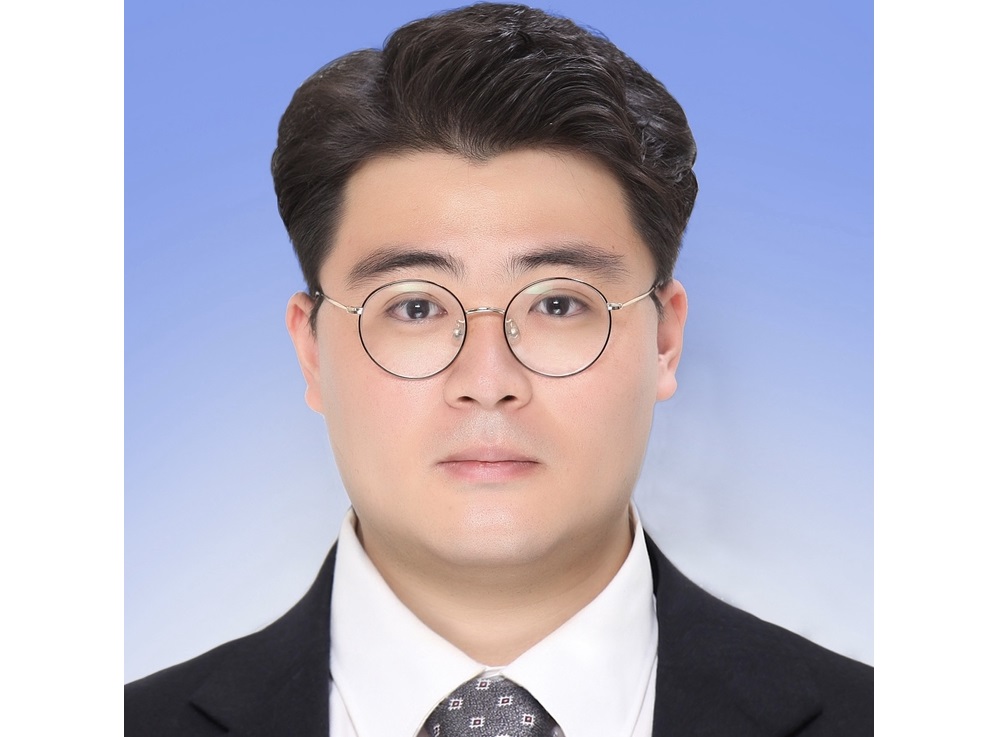
By Sinmyung Park
Uganda today finds itself at the intersection of demographic urgency and social responsibility. With one of the youngest populations in the world and persistent unemployment, the country is under pressure to provide meaningful pathways into the labor market for millions of youth. Among these, persons with disabilities often remain at the margins, not because of a lack of ability but because of social stigma, structural exclusion, and missed opportunities.
The debate over how to foster inclusion has increasingly turned to vocational education and training, a field that has historically been undervalued but is now recognized as central to national development. For Ugandans with disabilities, vocational training holds the potential to do more than provide technical skills: it can challenge perceptions, restore dignity, and lay the foundation for greater social participation.
The urgency of this conversation is underscored by the numbers. Uganda’s latest National Population and Housing Census estimated that nearly 13 percent of the population lives with some form of disability. This figure represents millions of citizens, many of them in rural areas where opportunities are already limited.
For decades, disability was associated with dependency, and persons with disabilities were often hidden away, excluded from schools and workplaces. Yet in recent years, a slow transformation has begun to take root, driven by both domestic advocacy and international commitments such as the United Nations Convention on the Rights of Persons with Disabilities, to which Uganda is a signatory. The challenge is to translate legal frameworks into tangible opportunities.
Vocational education has been placed at the center of this effort. The government’s Skilling Uganda strategy, launched in 2011, was intended to overhaul technical and vocational education by aligning it with labor market needs. The rationale was clear: in an economy where the majority of work is informal and survival depends on practical skills, training in trades such as carpentry, tailoring, mechanics, catering, or information technology could provide a bridge from poverty to self-reliance.
For youth with disabilities, vocational training offers an especially vital route, since barriers to formal academic education remain high. But while policies have acknowledged this, practice has lagged. Many training institutes lack even the most basic adaptations: ramps for wheelchair users, instructional materials for visually impaired learners, or sign language interpreters for those who are deaf. Teachers are often unprepared to adjust their pedagogy to diverse learning needs. The result is that many young people with disabilities remain excluded from the very opportunities designed to empower them.
The gaps have prompted a range of responses. Ugandan organizations such as the National Union of Disabled Persons of Uganda (NUDIPU) have lobbied persistently for disability inclusion in education and employment policies. Cheshire Services Uganda has developed community-based rehabilitation programs that link vocational training with livelihood support, helping youth with disabilities acquire practical skills and then offering start-up kits or seed funding to launch small enterprises.
International partners have joined these efforts with pilot projects and targeted support. One project in Western Uganda, “Suppport for Vocational Training Schools for Persons with Disabilities and Raising Disability Awareness in Western Uganda,” supported by the Korea International Cooperation Agency (KOICA) in partnership with International Development Institute Uganda (IDI Uganda), has worked with three polytechnics to train students with disabilities and raise awareness among surrounding communities.
The project is now in official partnership with Uganda’s National Council for Persons with Disabilities, which lends it both legitimacy and a stronger link to national policy frameworks. Such partnerships are crucial, as the long-term success of these efforts depends on sustained government commitment, reliable funding streams, and effective coordination across multiple stakeholders. Without these conditions, even promising models risk remaining isolated examples rather than serving as catalysts for systemic change.
The voices of learners themselves bring these issues into focus more sharply than policy documents ever could. At Kisomoro Technical Institute, a young man named Reagan is pursuing agriculture. Living with a physical disability, he recalls that before enrolling in the vocational training program he often roamed the community without purpose, but now he has gained direction and a sense of responsibility. His self-confidence has grown as well, giving him the ability to speak publicly with ease. Perhaps most importantly, Reagan says vocational training has helped him overcome feelings of isolation.
For the first time, he feels a sense of belonging and inclusion, as fellow students, teachers, and community members treat him with respect. The young man’s experiences clearly captures the dual function of vocational education: it creates economic opportunities while also reshaping community perceptions of what persons with disabilities can achieve.
Despite these successes, the obstacles remain formidable. Infrastructure is inadequate, and even low-cost modifications like handrails or wider doorways are often absent. The shortage of trained instructors in special needs education means that many students are left to improvise their way through courses designed for learners without disabilities.
Funding is inconsistent, with most programs dependent on external donors and vulnerable to discontinuity when project cycles end. And beyond material barriers lies the deeply entrenched challenge of stigma. In some households, parents still discourage children with disabilities from attending school or training, convinced that investment in their education is futile. Such attitudes do not change quickly; they require sustained community engagement and visible examples of success.
However, it is important to note that the policy environment in Uganda is, at least on paper, progressive. The Persons with Disabilities Act of 2020 reaffirms the right to inclusive education and seeks to operationalize Uganda’s commitments under the UN Convention. National development plans increasingly reference disability inclusion. Yet implementation is uneven. Local governments often lack the resources to enforce mandates, and employers remain reluctant to hire graduates with disabilities.

This policy-practice gap is most evident in the transition from training to employment. A young person may complete a vocational course, but without access to start-up capital, apprenticeships, or inclusive workplaces, the pathway to independence is blocked. Some organizations have attempted to fill this gap by providing toolkits, connecting trainees to cooperatives, or negotiating with local businesses to accept apprentices. But these efforts are fragmented and insufficient compared to the scale of the challenge.
The argument for expanding and institutionalizing such initiatives is not only moral but economic. Uganda’s youthful population is both a risk and an opportunity. High unemployment among youth threatens social stability, while harnessing their potential could drive growth. To exclude millions of persons with disabilities from this equation is to squander human capital.
Advocates often frame the case in terms of rights, but there is an equally compelling argument rooted in economics: inclusion makes sense because it strengthens national productivity and resilience. Employers who open their doors to graduates with disabilities often discover that the barriers were more perceived than real, and that inclusive hiring practices can bring loyalty, creativity, and new perspectives to their businesses.
The broader societal impact should not be underestimated either. When communities witness persons with disabilities running small enterprises, working in workshops, or contributing to local economies, the narrative of incapacity begins to erode. Parents who once doubted the value of education for their children with disabilities may change their minds when they see neighbors succeeding. Religious and cultural leaders, when engaged, can play important roles in shifting attitudes. This cultural transformation is as important as the technical aspects of vocational training, for without it, inclusion risks being superficial.
Still, the work is only beginning. Uganda’s vocational education sector is underfunded even for the general population, and expanding inclusion will require sustained investment. Teacher training colleges need to integrate special needs pedagogy into their curricula. Infrastructure upgrades must become a budgeted priority rather than an optional add-on. Employers need incentives—whether through tax breaks, public recognition, or legal enforcement—to embrace inclusive hiring.
And perhaps most importantly, persons with disabilities themselves must be involved in designing and evaluating programs, ensuring that training responds to their aspirations rather than imposing external assumptions.
For Uganda, inclusion is not a peripheral issue. It is central to the question of what kind of society the country wants to become. Vocational education, when genuinely inclusive, can offer a glimpse of that society: one where all citizens, regardless of ability, have the tools to contribute and the dignity of being recognized as full participants. The task now is to ensure that such glimpses become the norm rather than the exception. The call now is to act with urgency, to make inclusion the rule, and to weave it into the very fabric of Uganda’s development. Anything less is to accept a diminished vision of what Uganda can become.
About the Author: Sinmyung Park is a Ph.D. candidate in Arizona State University (ASU)’s School of Social Transformation and a Global Human Rights Hub Fellow at ASU’s New College. He received his MSc in International Relations from the London School of Economics and Political Science (LSE) and his BA in International Studies from Kyung Hee University, Korea.
He currently serves as the Project Manager for the KOICA-KFHI Partnership in Western Uganda, titled “Support for Vocational Training Schools for Persons with Disabilities and Raising Disability Awareness in Western Uganda.”
If you would like your article/opinion to be published on Uganda’s most authoritative news platform, send your submission on: [email protected]. You can also follow DailyExpress on WhatsApp and on Twitter (X) for realtime updates.