

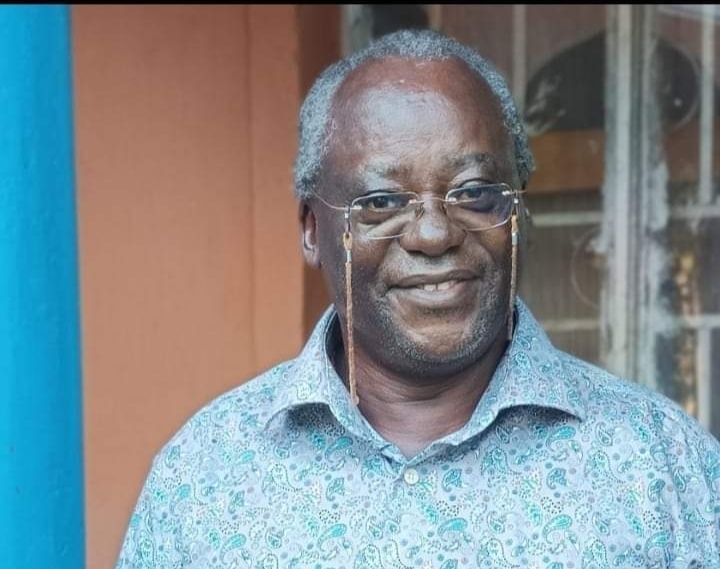
By Oweyegha Afunaduula
By incongruence, I mean a mismatch between two contending parties with regard to perception, understanding, concern, action, interests, perspectives, interpretation, needs, and goals.
In the case of the knowledge workers of Uganda (i.e., teachers, lecturers, and professors) and the National Resistance Movement (NRM) government since 1986, there has been a mismatch between the two contending entities regarding resolution of conflicts in the education system in general, and in universities and schools in particular.
The reason is that while the knowledge workers have preferred negotiation, the government has tended to adopt ignoring them and applying the command–obey approach to solving the labour conflicts of particular interest to the knowledge workers.
Right now, knowledge workers in public universities and schools are not happy that their value to society has been eroded by the disrespectful stance of the government towards them in terms of salaries, benefits, and the government’s determination to apply discrimination between the artists, humanists and social scientists on the one hand, and natural scientists on the other.
The government has shown that it will do everything possible to value natural scientists far more than the other knowledge workers in terms of salaries, benefits, etc.

Knowledge workers are knowledge labourers. They work by brain, not by hands. When there is a labour conflict between such workers and their employers (private or government) it is more sensible to negotiate with them rather than ignore or coerce them with threats of dismissal. The threats will be recorded in their heads and interpreted as high-handedness, arrogance, and disrespect of their profession and fraternity by people in power who were products of their commitment to the teaching profession.
They may be compelled to go back to the classroom and the lecture theatre, but they will unwillingly go back physically while leaving their minds outside the classroom or lecture theatre. Students and pupils will continue to suffer, as before, when the knowledge workers withdrew their labour. Therefore, not listening to the knowledge workers and/or forcing them to appear physically in the classrooms and/or lecture theatres will harm the learners further and undermine the nation in diverse ways.
Antagonizing them by devaluing or forcing them to produce without meeting their demands will further disorganize the already disorganized education sector, create a body of discontented knowledge workers, harm learners across the education spectrum, and enhance the uncertainty of a nation that seems to manifest as if it is still in the 20th Century.

Overall, the incongruence between knowledge workers and the NRM government highlights the need to de-emphasise power and emphasise effective communication, negotiation, and conflict resolution mechanisms in the education system to protect the rights of the knowledge workers, students, pupils, and the parents hard-hit by poverty and unsure of what the future holds for their children. It also calls for a rethinking of how the National Budget is spent and what is emphasized in the budget.
Currently, unfortunately, the emphasis seems to be on the army, politics, and power retention. However, the command–obey approach to resolving conflicts in education has no place in the 21st Century—the century of knowledge and information.
For God and My Country.
The author is a Conservation Biologist, Center for Critical Thinking and Alternative Analysis
If you would like your article/opinion to be published on Uganda’s most authoritative news platform, send your submission on: [email protected]. You can also follow DailyExpress on WhatsApp and on Twitter (X) for realtime updates.

