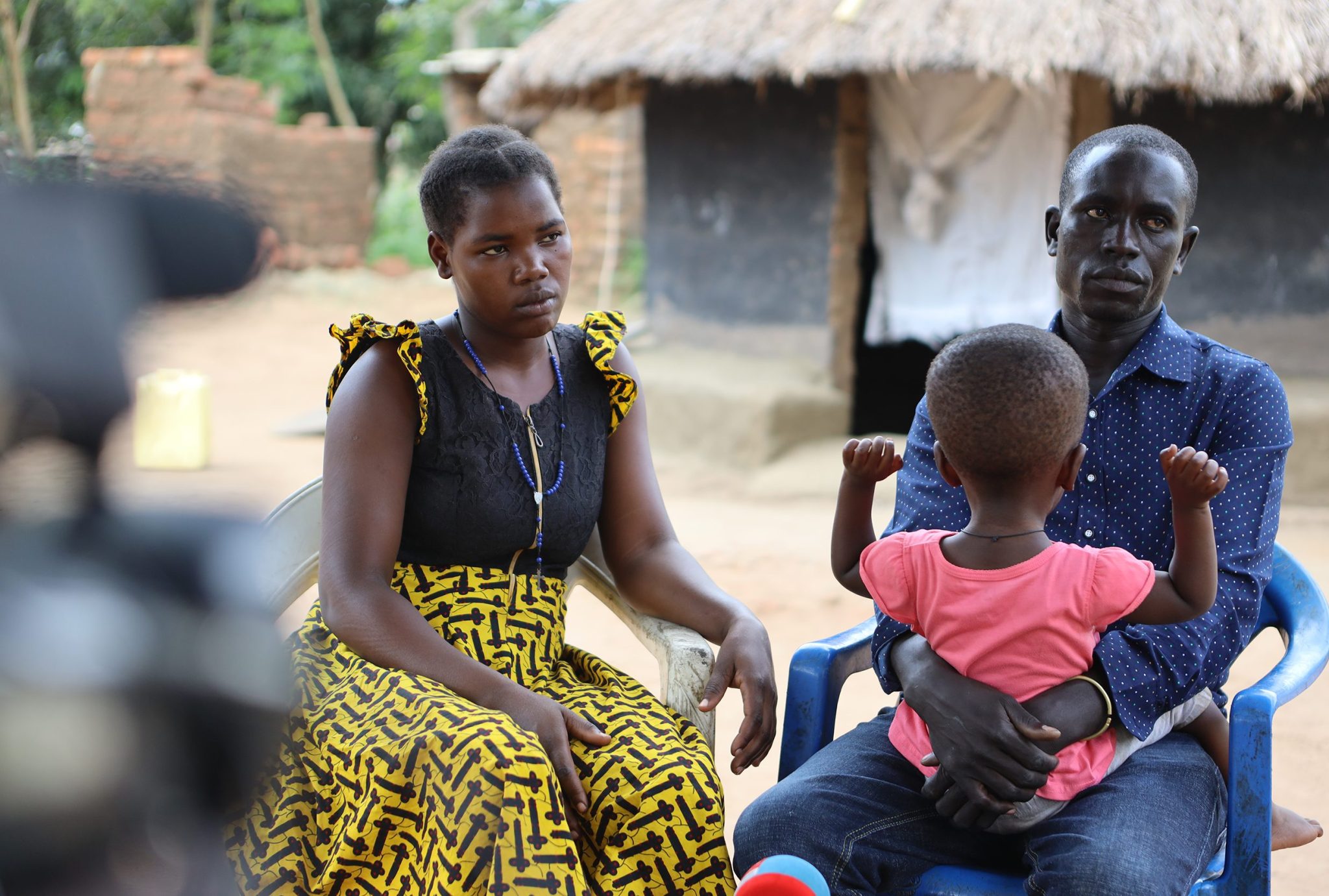
Northern Uganda: The sub-regions of Acholi, Lango, and West Nile in Northern Uganda are facing a growing public health concern, with more than 957 children reported to be living with spina bifida and hydrocephalus, prompting renewed calls for government and community intervention.
Spina bifida, a congenital defect where the spinal cord and membranes fail to close properly during early pregnancy, affects about 800 Ugandan children annually. Experts say the actual numbers could be much higher due to underreporting and stigma in rural communities.
During a stakeholders’ meeting held on October 18, 2025, at Gaf Apartment and Entertainment Center in Nebbi Municipality, Acan Judith Okech, a representative of AVSI Uganda, described the situation as a “deep-seated yet silent” health crisis that requires urgent awareness and community response.
“West Nile, Acholi, and Lango have over 957 cases of spina bifida. We must raise awareness and provide information about these conditions affecting our communities,” Acan emphasized.
She identified inadequate folic acid intake during pregnancy and environmental factors as major risks. “Folic acid deficiency, often due to poor dietary balance, remains a key factor. Expectant mothers should deliver in health facilities and abandon harmful cultural practices that increase risks,” she advised.
The Spina Bifida and Hydrocephalus Association of Uganda (SHAU) and AVSI Uganda have rolled out a five-year campaign across Nebbi, Gulu, and Lira under the Collective Action for Disability Project, implemented in partnership with NUDIPU and Mental Health Uganda, and funded by the Norwegian Association of Spina Bifida and Hydrocephalus (RHF).
Financial constraints continue to hinder timely interventions. Nebbi Municipality Mayor Geofrey Ngiriker shared his personal loss, recounting how he lost a child due to the challenges of referral and travel costs. “Many families lose their children because of financial barriers,” he said.
Since 1994, AVSI’s Gulu Regional Rehabilitation Center has provided rehabilitation services to more than 1,400 patients, improving lives through medical and community-based support.

Justine Kamakune of SHAU underscored the importance of grassroots awareness: “We have the knowledge; let’s encourage our communities to seek help instead of suffering in silence.”
Recently, SHAU identified two children in Nebbi’s Erussi Sub-County and Nyaravur-Angal Town Council who are now receiving surgery at Mbale Regional Referral Hospital, with the organization covering surgical costs while families handle transport.

Local leaders including Innocent Adubu, Male Councillor for Persons with Disabilities in Kucwiny Sub-County, and Alex Judagi, LCIII Chairperson of Nyaravur-Angal Town Council, urged collective action and collaboration with NUDIPU to fight the condition.
Nebbi General Hospital Administrator Christopher Ongom called for more community sensitization to identify affected children early, while Mayor Ngiriker appealed to local leaders to use community gatherings—such as churches, mosques, and funerals—to spread information.
SHAU also plans to train Village Health Teams (VHTs) and health workers in rural and urban areas to enhance early detection and referral. According to AVSI, spina bifida and hydrocephalus occur in about one in every 1,000 births in Uganda, with northern Uganda bearing the highest burden.
Over the last six years, more than 5,900 children have undergone successful surgical interventions—offering hope to families once left in despair. SHAU will hold a major health camp on October 20, 2025, at Nebbi General Hospital, and has recently trained journalists in Greater Nebbi to improve ethical reporting on disability-related issues.
“We need leaders, health workers, and communities to champion dialogue and action to address these conditions,” Kamakune concluded.
If you would like your article/opinion to be published on Uganda’s most authoritative news platform, send your submission on: [email protected]. You can also follow DailyExpress on WhatsApp and on Twitter (X) for realtime updates.