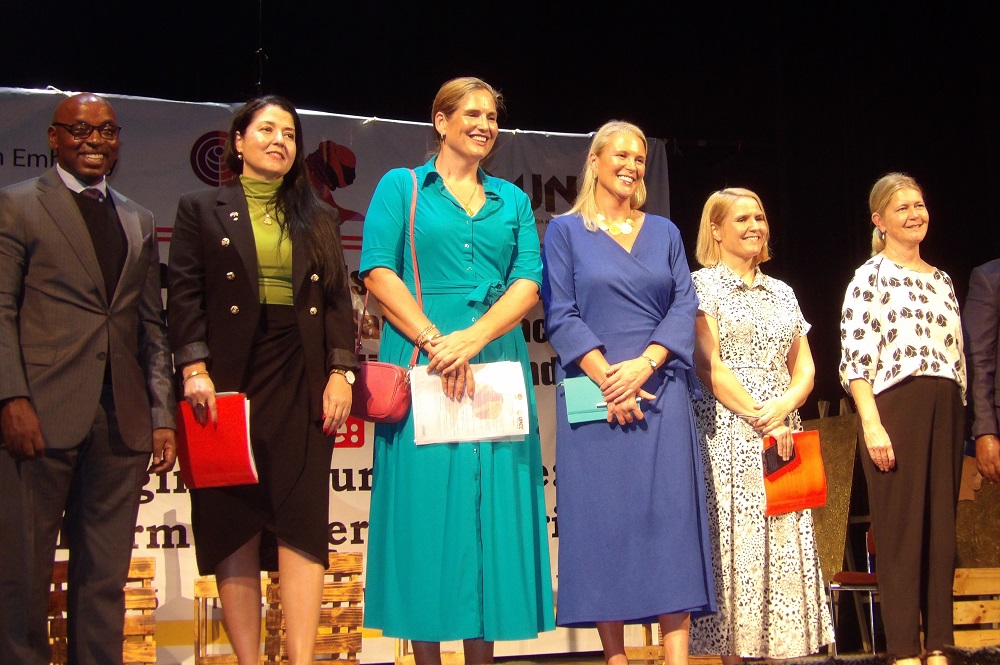
Kampala, Uganda: European Heads of Missions in Uganda have renewed calls for an end to Female Genital Mutilation (FGM), describing the practice as a grave human rights violation that continues to destroy the lives and futures of girls and women in Karamoja sub-region.
The diplomats made the appeal during the National Dialogue on Challenging Harmful Practices Affecting Gender Equality, held on Thursday, October 23, 2025, at the National Theatre in Kampala.
Among the key envoys present were H.E. Lisa Chesney, the British High Commissioner to Uganda; H.E. Frederieke Quispel, the Ambassador of the Netherlands to Uganda; and H.E. Dr Katja Kerschbaumer, Head of the Austrian Embassy in Uganda.
They called on government agencies, cultural leaders, artists, and communities in Karamoja to intensify campaigns to end FGM, warning that the practice not only causes physical and psychological harm but also perpetuates gender inequality.
‘Culture Can Change’ – British envoy
In her remarks, H.E. Lisa Chesney, the British High Commissioner, emphasized that cultural traditions should not be used to justify violence or discrimination against women and girls.
“Culture is not static; it can change. For change to happen, everyone must raise their voices to end FGM in Karamoja,” she said. “Artists and cultural leaders in the region should do everything possible to stop this harmful practice.”
She stressed that the campaign to end FGM must be collective and community-driven, highlighting that protecting young girls requires both advocacy and empowerment.
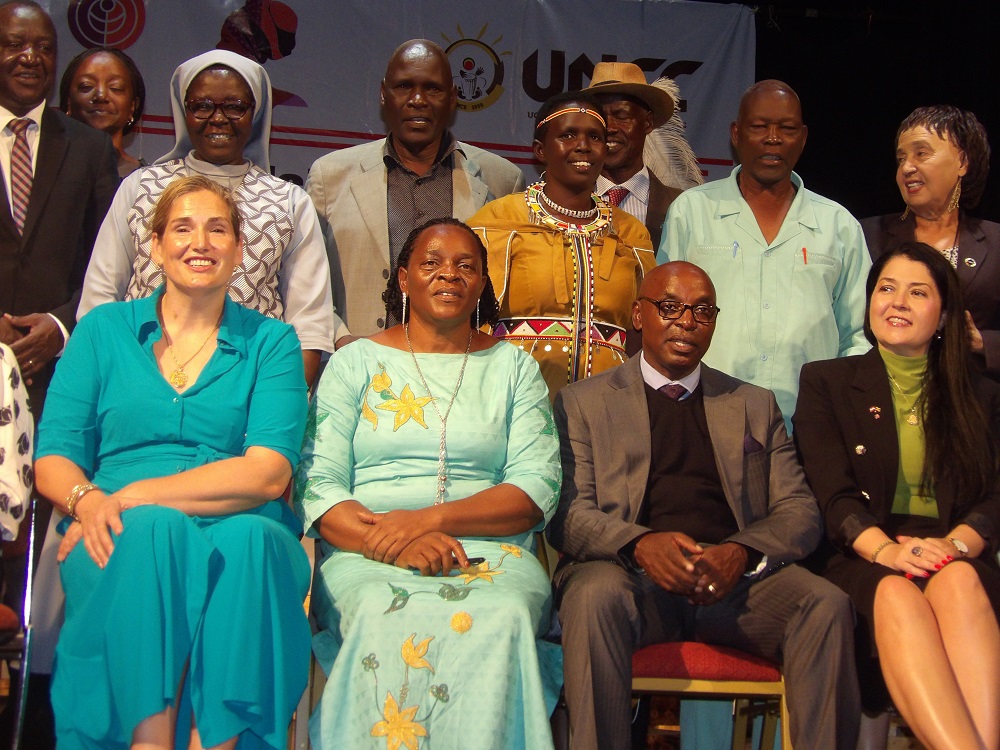

H.E. Frederieke Quispel, the Dutch Ambassador to Uganda, said education remains the strongest weapon against harmful cultural practices. “If girls in Karamoja are educated and trained with different skill sets, they will be in a position to access the same opportunities men get. By doing so, practices like FGM will naturally fade away,” she noted.
She urged the Ugandan government to increase investment in education and vocational training in rural regions, arguing that economic empowerment helps break the cycle of cultural subjugation and gender-based violence.
Local Voices: ‘Social Pressure Driving the Practice’

Angella Nakafeero, Commissioner for Gender and Women Affairs at the Ministry of Gender, Labour and Social Development, said that social pressures continue to drive young girls into undergoing FGM. “In Karamoja, a girl who refuses FGM is often seen as less of a woman. Some are denied the right to attend cultural ceremonies or face rejection in marriage,” she said.
Nakafeero explained that families encourage the practice because girls who undergo FGM attract higher bride prices, perpetuating the cycle of abuse. She stressed that keeping girls in school remains the most effective strategy to change mindsets and protect them from harmful traditions.

Tweituk David, a Sabiny cultural leader, acknowledged that despite the 2010 law criminalizing FGM, the practice persists, especially in remote areas. “Most of these operations now happen secretly at night because of fear of arrest,” he said, urging stronger community engagement and sensitization.
Meanwhile, State Minister for Gender, Culture and Social Development Hon. Peace Mutuuzo reaffirmed government’s commitment to ending FGM, saying that education remains the key to lasting change.
“We are aware this practice still exists in Karamoja. The government outlawed it, but the only sustainable solution is free and quality education,” Hon. Mutuuzo said. “Education transforms attitudes, empowers families, and changes communities.”
If you would like your article/opinion to be published on Uganda’s most authoritative news platform, send your submission on: [email protected]. You can also follow DailyExpress on WhatsApp and on Twitter (X) for realtime updates.