

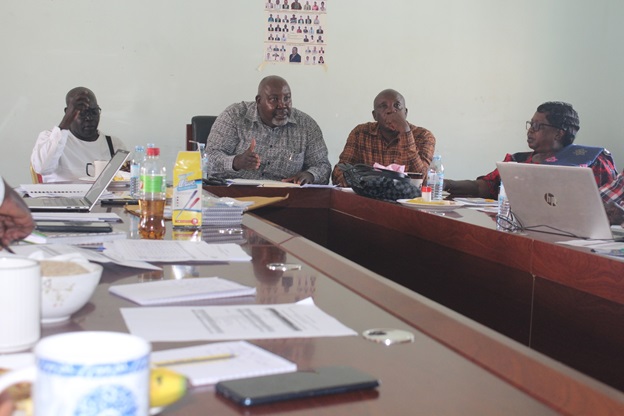
Kiryandongo, Uganda: Kiryandongo District is positioning itself as a model for sustainable forestry and environmental conservation through the Investing in Forests and Protected Areas for Climate Smart Development (IFPA-CD) project, a World Bank-funded initiative aimed at promoting tree farming and climate resilience among rural communities.
The project seeks to mobilize farmers to establish and manage woodlots, with a national target of 9,754 hectares of new forest cover across 19 districts in Uganda — and Kiryandongo is among the leading beneficiaries.
Speaking at the project’s inception meeting at the Kiryandongo District Headquarters, Chief Administrative Officer (CAO) Anselm Kyaligonza emphasized that success will depend not only on new tree planting but also on the sustainable management of existing forests.
“We must focus on maintaining and improving what we already have,” Kyaligonza said. “Supporting existing forest owners will inspire others to take up tree planting, creating a ripple effect of environmental stewardship.”
He encouraged the NIRAS consulting team and the IFPA-CD coordinators to strengthen community engagement and ensure that farmers receive both technical and material support to sustain forest growth beyond the planting phase.
Farmers to Receive Subsidies and Training
Steve Nsita, from NIRAS Consultants, explained that the project will invest in extension services to educate farmers about best forestry management practices, pest control, and soil preservation.
“We are also establishing tree nursery beds to promote native species and ensure proper reforestation,” Nsita said. “Farmers will receive financial subsidies after six months of caring for their trees as an incentive to maintain and expand their woodlots.”
The approach aims to blend community livelihood improvement with environmental protection, ensuring that farmers benefit economically while contributing to Uganda’s reforestation goals.

Kiryandongo Deputy Resident District Commissioner (RDC), Mr Jonathan Akweteireho, called for free land titling for individuals who establish and maintain forests, noting that it would secure ownership rights and motivate long-term investment in sustainable land use.
“Free land titling can serve as a reward for environmental responsibility,” he said. “It encourages our people to protect their land and invest in climate-smart development.”

Akweteireho further urged district leaders to stay engaged with World Bank and development partner projects, saying continuous evaluation of their impact will ensure that community priorities are fully met.
A Model for Green Growth and Empowerment
The IFPA-CD project is designed to serve as more than a forestry drive; it represents a holistic approach to community empowerment, climate resilience, and green economic growth.
Through this initiative, Kiryandongo’s farmers are expected to balance economic gains with ecological responsibility, setting a precedent for sustainable development across the country.
“This is a call to action for every farmer to take part,” said Kyaligonza. “Our environment sustains our lives, and now, it can also sustain our livelihoods.”
If you would like your article/opinion to be published on Uganda’s most authoritative news platform, send your submission on: [email protected]. You can also follow DailyExpress on WhatsApp and on Twitter (X) for realtime updates.

