
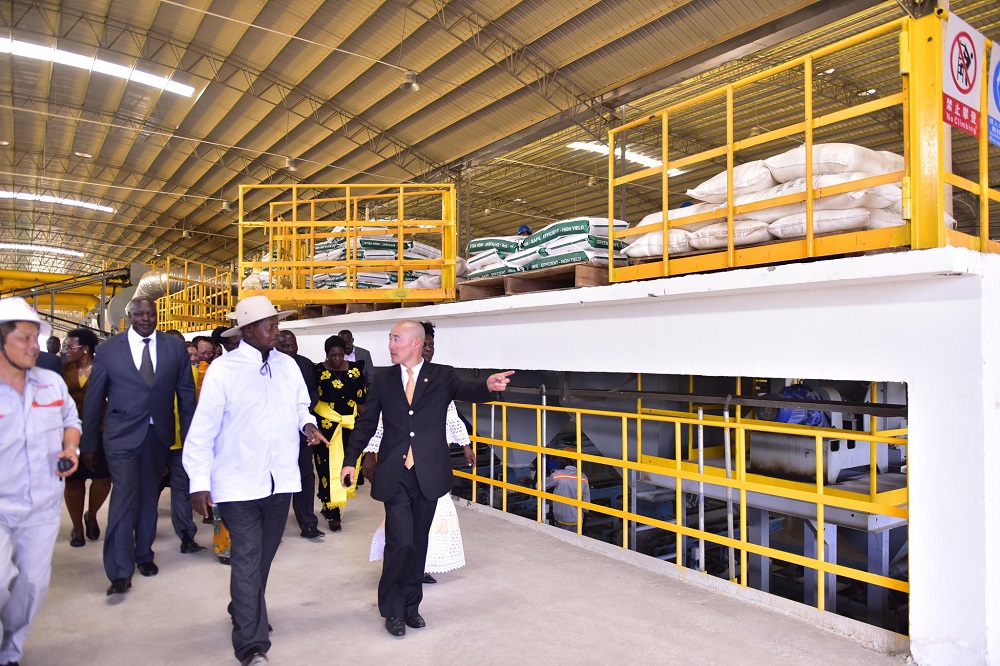
Kampala, Uganda: President Yoweri Kaguta Museveni’s 2026–2031 manifesto places industrialization at the core of Uganda’s next economic leap, outlining an ambitious plan to transform the country into a regional manufacturing powerhouse driven by value addition, innovation, and youth-led productivity.
In what he terms “a bulky industrial revolution to power national prosperity,” Museveni’s vision positions manufacturing as the main engine of Uganda’s economic renaissance — shifting from an import-dependent model to a self-sustaining, export-driven economy.
Since the NRM took power in 1986, Museveni’s industrial mission has revolved around adding value to raw materials, cutting import reliance, and creating decent jobs for Ugandans. Back then, Uganda imported nearly everything it consumed. Today, it exports what it once imported — from soap and sugar to cement, steel, dairy, and beverages.
Over the last 15 years alone, Uganda has added 31 new value-added products to its export basket, including ceramics, pharmaceuticals, cosmetics, textiles, and processed foods. Manufacturing now contributes 15.6% to GDP (USD 9.6 billion) and accounts for 23% of national exports (USD 2.4 billion) as of June 2025 — clear indicators of industrial maturity and competitiveness.
Museveni’s next phase is about climbing the value chain. Uganda, he says, must go beyond primary production into secondary and tertiary manufacturing — producing refined, high-value products that compete globally.
“We are no longer spectators in the industrial game,” Museveni notes in the manifesto. “We are the players shaping Africa’s future economy.”

To drive this transformation, the NRM outlines a multi-layered industrial growth strategy:
- Capitalization of UDC and NEC to co-invest with the private sector in priority industries.
- Expanded UDB funding to offer affordable, long-term financing for factories and agro-processors.
- Development of new industrial parks with ready infrastructure for investors.
- Reduced power tariffs for manufacturers from 8.5 to 5.5 cents per kWh, with a 5-cent target.
- Investment in industrial innovation hubs and vocational training to equip youth with technical skills.
The manifesto also pledges heavy investment in rail and water transport to lower cargo costs, alongside a digitalized government system (e-payments, e-procurement, e-taxation) to streamline business operations.

Central to the strategy is the Buy Uganda, Build Uganda (BUBU) policy — prioritizing local manufacturers in government procurement. Museveni says this will ensure that “every shilling of public expenditure strengthens the local economy.”
The President also promises to expand industrial research and incubation centers across regions, link factories with universities, and support youth innovators to commercialize their products. “Uganda’s youth will not just be job seekers—they will be job creators,” reads the manifesto. “They will design, manufacture, and lead.”
Museveni frames the manifesto as a promise of prosperity, not just a plan — a commitment to make Uganda’s industrial label a global badge of pride and quality. “Every bolt, bottle, and brick produced in Uganda will tell a story of resilience, innovation, and progress,” the President affirms.
Under the NRM’s industrial agenda, Uganda is not just building factories — it is building a future, one powered by steel, energy, and national confidence.
If you would like your article/opinion to be published on Uganda’s most authoritative news platform, send your submission on: [email protected]. You can also follow DailyExpress on WhatsApp and on Twitter (X) for realtime updates.