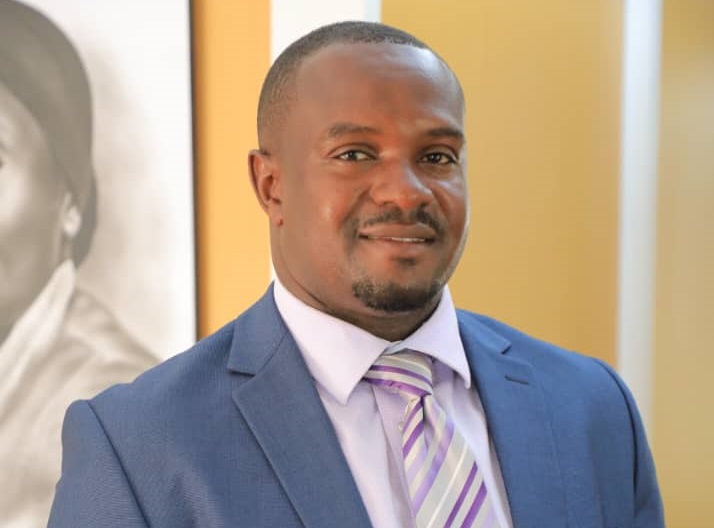
By Kazibwe Jamil
In recent years, Buganda’s political influence at the national table has quietly diminished; not because the region lacks capable leaders, but because internal disunity and political fragmentation have diluted its collective bargaining power.
Once a formidable force in shaping Uganda’s political and administrative direction, Buganda now finds itself underrepresented in the country’s most decisive power circles. The current political setup, from the Vice Presidency to the Speakership, to other key policy and program portfolios, reflects a growing regional imbalance that raises questions about how political reward and representation are determined.
The Shift in Regional Balance of Power
Uganda’s post-independence history shows that regional political strength often translates into tangible benefits: roads, projects, appointments, and proximity to decision-making. But a quick look at the current political structure reveals that Buganda, once a core pillar of the NRM’s political base, now wields limited direct influence at the top.
For example, both the Vice President and the Speaker of Parliament hail from the east, and the Deputy Speaker from the west. The strategic national programs, such as the Parish Development Model (PDM), Emyooga, are dominated by policymakers and implementers from outside Buganda, save for Dennis Galabuzi Ssozi, the National Coordinator of the former.
This reality has stirred quiet debate within Buganda’s political circles: how did the region that once produced national figures like Samson Kisekka, Prof. Apollo Nsibambi, Edward Kiwanuka Ssekandi, and Gilbert Bukenya, among others, lose its proximity to the country’s decision centre?
The answer lies not only in national political calculations but also within Buganda’s internal contradictions. Political competition in the region, often split between NRM, FDC, NUP, and other parties, has become less about ideology and more about rivalry.
Leaders spend more time undermining one another than building a unified agenda for the region. Even those aligned with the ruling government find themselves isolated or opposed by fellow Baganda, weakening the region’s collective voice.
When individuals like Hajjat Hadijah Namyalo Uzeiye, who hold influential mobilization positions, face internal hostility rather than support, it reflects a broader leadership crisis: Buganda’s elite often fight from within, while other regions negotiate from a position of unity.

Uganda’s political system, whether by design or by political culture, tends to reward regions based on voting patterns and perceived loyalty. Areas that speak with one voice tend to attract more appointments and projects.
In contrast, Buganda’s divided political identity has made it difficult for any government to determine who genuinely represents its interests. The result: national power-sharing tilts toward regions with clearer political alignment, leaving Buganda with symbolic rather than strategic roles.
This isn’t about partisanship, it’s about political arithmetic. When a region fractures its vote and message, it loses leverage in negotiations for representation and development priorities.

Reclaiming Influence Through Unity and Vision
Buganda’s way forward lies not in confrontation but in strategic cohesion. The region must reframe its politics around development priorities, not party lines. Roads, education, industrial growth, cultural preservation, and youth employment should form the core of a shared agenda that transcends party divides.
The Kabaka’s leadership remains a moral and cultural compass, but political actors must learn to speak with one regional voice when it comes to national interests. Constructive engagement, not rivalry, is the key to regaining lost ground.
If Buganda can move past the politics of personality and factionalism, it can once again become a power broker in Uganda’s political landscape, not as a spoiler, but as a stabilizing and development-oriented force.
Conclusion
The issue isn’t whether Buganda supports one political party or another; it’s about whether Buganda can organize itself to matter again in the national equation. The region’s leaders must rediscover what made Buganda a reference point in Uganda’s governance: unity of purpose, respect for leadership, and a shared development vision.
Without that, Buganda risks remaining on the sidelines of power, watching others shape decisions that affect its future.
The writer is a patriotic NRM cadre and ‘son of the Buganda soil’
If you would like your article/opinion to be published on Uganda’s most authoritative news platform, send your submission on: [email protected]. You can also follow DailyExpress on WhatsApp and on Twitter (X) for realtime updates.