
Kiryandongo, Uganda: Cases of Gender-Based Violence (GBV) among refugees in Kiryandongo District have reached alarming levels, with police recording up to four incidents daily, according to the Child and Family Protection Unit.
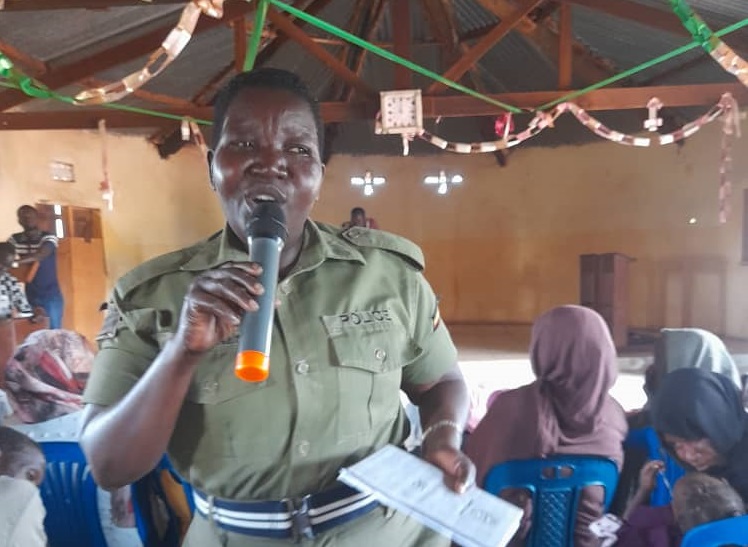
Police Constable Agnes Naiti, attached to the Refugee Settlement’s Child and Family Protection Department, made the revelation during a field outreach and film screening on GBV awareness organized by Kiryandongo Video Advocates (KVA).
The event, which attracted hundreds of refugees from different clusters of the settlement, aimed to raise awareness about the rising cases of violence—particularly among Sudanese refugees from Khartoum—and to encourage survivors to speak out.
“We record between three to four cases of violence every day,” said Constable Naiti. “Most of these stem from forced marriages, poverty, and harmful cultural practices that refugees brought with them from Sudan.”
She cited defilement, rape, child neglect, and domestic violence as the most common forms of GBV reported at the settlement.
Constable Naiti urged parents to stop marrying off their daughters at an early age and instead take advantage of Uganda’s free education policy to keep girls in school. “Government has made education free for all children. Let’s protect our girls and give them a future instead of exchanging them for wealth,” she emphasized.

Refugees speak out
Muhammed Adam Ibrahim, a Sudanese national living in Cluster B, shared his personal experience, saying he fled Khartoum after clan elders attempted to force his daughter into marriage. “I came to Uganda because of that culture. Here, my children are living freely and going to school,” he said.

Another refugee, Sulafa Adam Muhammed from Cluster G, called on community leaders to act decisively against GBV within the settlement. “This issue is destroying families. Our leaders should work with police to stop it completely,” she appealed.
Police, partners intensify awareness
Constable Naiti praised Kiryandongo Video Advocates (KVA) for using community film screenings to sensitize refugees on the dangers of gender-based violence and to encourage survivors to speak out. “KVA’s initiative is helping us reach more people. It makes our work easier by showing real stories and allowing victims to express themselves,” she noted.
The police pledged continued collaboration with partners and community leaders to tackle GBV and promote respect, equality, and education among refugee populations.
If you would like your article/opinion to be published on Uganda’s most authoritative news platform, send your submission on: [email protected]. You can also follow DailyExpress on WhatsApp and on Twitter (X) for realtime updates.