By Vera de Vries
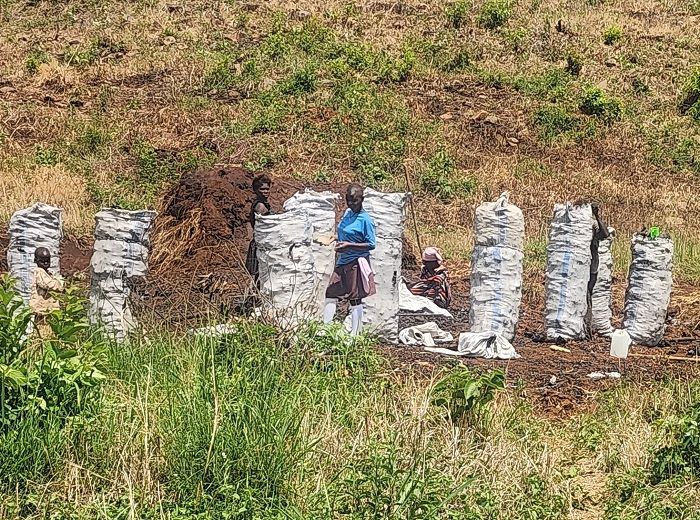
Up to 85% of all households in Uganda use charcoal or firewood (biomass) for cooking their food. This method of cooking leads to deforestation. While it is true that there are tree-planting initiatives by the Government, civil society organisations (CSOs) and private individuals, these initiatives do not match the demand for firewood and charcoal that are used daily in both rural and urban areas.
According to Global Forest Watch, Uganda lost 14% of its tree cover from 2001 to 2023. The Uganda Bureau of Statistics (UBOS) 2020 survey report shows that 57% of all households in urban areas use charcoal for cooking. Therefore, Uganda needs to prioritise an energy transition from reliance on biomass to using cleaner sources of energy to curb the alarming rate of deforestation. Uganda’s funding partners such as the World Bank should push for this transition to be handled as a matter of urgency.
The environmental consequences of charcoal and firewood use are enormous, leading to deforestation and habitat loss, where ecosystems are destroyed, resulting in biodiversity loss. Burning these biofuels emits greenhouse gases that contribute to global warming and accelerate climate change. Additionally, land degradation affects soils by enhancing erosion and desertification, leading to food insecurity.
Recently, the Ugandan Government announced a ban on charcoal burning in Northern Uganda, and the Minister of Energy and Mineral Development is considering plans to ban the sale and use of charcoal in urban areas. While this would be a good step toward curbing environmental degradation, it comes with many challenges. How can citizens who are used to this way of cooking adapt when the alternatives are not readily available or affordable?
In 2022, the Ugandan government launched the Free LPG Starter Kits initiative to distribute one million gas starter kits to households nationwide to promote the transition from biomass fuels (firewood and charcoal) to cleaner energy (gas). While this is a positive step, it remains expensive and still promotes the use of fossil fuel, which is dirty energy itself. The proposed alternatives should be affordable and readily available to everyone; otherwise, Ugandans will always revert to destroying forests and woodlands in search of cheap wood fuel.
The Energy Transition
On December 5, 2023, the Government of Uganda launched the Energy Transition Plan (ETP) at COP28 in Dubai. It is an ambitious plan aimed at achieving carbon neutrality by 2050 and ensuring universal access to electricity by 2030. Though many environmentalists and conservationists welcomed this plan, others questioned whether its targets were realistic.
According to the Ministry of Finance, Planning and Economic Development, by 2024, access to the national electricity grid stood at only 20%, while just 15% of the population had access to clean cooking technologies. This raises doubt over whether, in the few remaining years to 2030, all Ugandans will have reliable electricity access.
In my opinion, the Ugandan government should find a way to slash electricity tariffs by more than 50% if forests are to be saved. The 20% of the population with access to electricity are mostly urban dwellers, yet ironically, they still rely on charcoal for cooking because electricity is too expensive. Charcoal burning can only be curbed effectively if the demand for it in urban areas drops.
It is also notable that Uganda aims to become an oil-producing country by 2027, with the East African Crude Oil Pipeline (EACOP) set to be the world’s longest heated pipeline. According to the ETP, Uganda plans to use oil and gas revenues to boost clean cooking technologies—but this is problematic, as oil and gas are fossil fuels that contribute to climate change.

While the Global North is phasing out fossil fuels and transitioning to renewables such as solar, wind, and hydro power, Uganda is pursuing fossil fuels as a catalyst for its energy transition. This is paradoxical. Investing heavily in fossil fuel infrastructure risks creating a “lock-in effect,” delaying the shift to renewable energy and trapping Uganda in unsustainable dependency.
Uganda should skip the fossil fuel stage altogether and transition directly to renewable energy. The Global North began with firewood and coal, moved to oil and gas, and is now struggling to transition again. Uganda can avoid this trap by investing directly in sustainable energy systems that ensure thriving ecosystems, healthy soils, and improved human wellbeing.
Alternatives
There are many sustainable ways of producing energy. Uganda enjoys high solar radiation throughout the year and sufficient wind potential, making solar and wind-powered cooking solutions a practical fit. Investing in this area would pay off long-term.

According to the UNEPCC, solar energy can save significant costs compared to what households spend on charcoal or gas over time. Indeed, women in different parts of Uganda have begun investing in solar cooking with promising results.
The government should enable every household to have its own energy source to foster energy independence and reduce grid pressure. This would also help connect the 76% of Ugandans who live in rural areas and are currently off the national grid.
To achieve this, the government should subsidise the cost of electricity and solar equipment while offering low- or no-interest loans to citizens to acquire them. Meanwhile, the Global North countries must contribute to this transition, given their historical emissions and economic advantage. Global funding bodies such as the World Bank and International Monetary Fund (IMF) should also prioritise financing Africa’s clean energy shift.
Conclusion
Deforestation in Uganda cannot be stopped without changing the way people cook. Charcoal and firewood remain the main household energy sources, causing environmental degradation, health problems, and food insecurity. Reforestation efforts are insufficient if biomass fuel use continues unchecked.
A sustainable energy transition is crucial. By investing in renewable energy such as solar and wind for cooking, Ugandan households can access safe, affordable alternatives, allowing forests to recover and ecosystems to thrive. Development aid should support this transition in ways that empower local communities rather than deepen dependency.
Prioritising Uganda’s energy transition addresses one of the root causes of deforestation—and in doing so, benefits the climate, economy, and livelihoods of its people.
About the Author:
Vera de Vries is a student at Van Hall Larenstein University of Applied Sciences in the Netherlands and was an intern at the African Institute for Biodiversity and Sustainability (AIBIS) from August to November 2025.
If you would like your article/opinion to be published on Uganda’s most authoritative news platform, send your submission on: [email protected]. You can also follow DailyExpress on WhatsApp and on Twitter (X) for realtime updates.