By: Oweyegha-Afunaduula
Uganda is richer in poverty than in realised wealth. Virtually every form of poverty is visible in the country, environmental, ecological, ethical, moral, intellectual, and technical poverty. Yet Uganda is often described as one of the youngest nations in the world, making it reproductively or biologically rich. The country is also blessed with abundant mineral resources, including gold, iron, uranium, and rare earth elements.
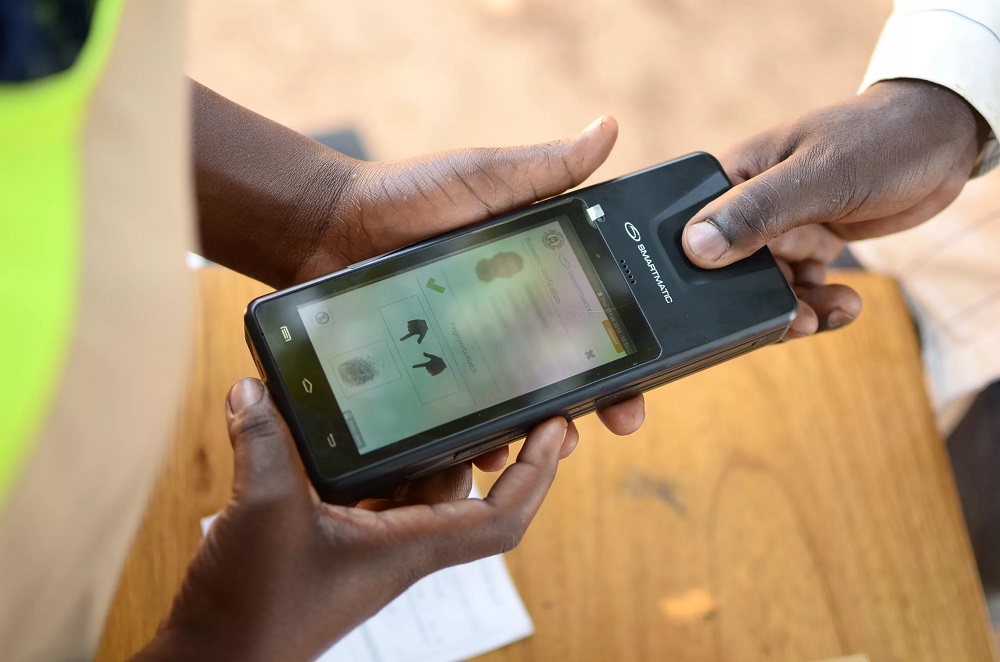
In this article, I wish to focus on Uganda’s technical poverty, particularly in relation to elections. Uganda imports nearly all its technical capacity across every sector of the economy. Even when the government claims it is manufacturing vehicles, what actually happens is the assembling of imported parts. The same dependence applies to the biometric machines used in elections, which are imported from countries like China and Germany.
Uganda first adopted biometric voting technology during the 2016 presidential and parliamentary elections, promoted by the government as a measure to enhance the integrity of the electoral process. Yet, since 1996, when President Yoweri Tibuhaburwa Museveni first presented himself to the electorate, Uganda’s elections have remained contested and militarised. The continued involvement of the police and army in electoral activities, coupled with the President’s own declaration in Seeta, Mukono, that he is “like a quarter pin of a bicycle that goes in by knocking” and therefore cannot be removed by a mere ballot paper, made it clear that biometric voting would not, on its own, deliver electoral change.
Ironically, after the 2021 elections, the President claimed that the National Unity Platform had stolen one million of his votes, a number he later raised to 2.7 million in the lead-up to the 2026 polls. Such shifting claims cast doubt on whether biometric systems can indeed eliminate vote theft.
The ruling NRM party also claims to have over 20 million members, nearly half of Uganda’s population. During its recent registration drive ahead of the 2026 elections, the party included 16- and 17-year-olds, which perhaps explains why its rallies are often filled with schoolchildren. Although this might be viewed as an improvement from the past, when every citizen, including the unborn, was automatically considered a member of the ruling party, it still reflects a lingering culture of control rather than voluntary political participation. The question then remains: Can biometric voting truly defeat the unscrupulous tendencies of politicians who believe they alone are destined to rule Uganda?
Biometric voting refers to an electoral system that relies on unique physical characteristics, such as fingerprints, facial recognition, or iris scans, to identify and verify voters. While it is considered a modern approach to curbing electoral fraud, it is also an extremely expensive undertaking for a country still struggling to provide quality education, healthcare, and infrastructure.
There are various kinds of biometric systems, generally falling into two broad categories: physiological biometrics, which depend on physical features such as fingerprints or facial structure; and behavioural biometrics, which rely on patterns like voice or gait. In Uganda’s case, fingerprint recognition has been the most widely used.
Biometric voting does have notable strengths. It improves voter identification by ensuring that each voter is uniquely recognised, thus reducing the risks of impersonation and multiple voting. It also makes the voting process more efficient, minimising queues and waiting time. The technology increases the security of elections by making it more difficult to fake or manipulate voter data, thereby enhancing the accuracy of voter verification. Additionally, biometric systems can help detect and prevent electoral fraud by flagging attempts at multiple registration or voting.
These advantages explain why many governments around the world have embraced biometric systems as a step toward transparency and efficiency. However, in contexts where political manipulation and institutional weakness remain rampant, these strengths are often overshadowed by serious limitations.
The weaknesses of biometric voting are many, and, in fact, often more influential than its strengths. In countries where justice, freedom, and democracy are routinely undermined, those in power may find the system’s weaknesses more useful than its safeguards.

First, biometric systems are extremely expensive to acquire and maintain. They require substantial investment in hardware, software, and training. In environments where corruption thrives, procurement costs are often inflated to benefit officials involved in the process. Without a corruption-free framework, the system easily becomes another channel for siphoning public resources under the guise of modernization.
Technical failures are also common. Fingerprint recognition errors, power outages, and system crashes can easily disenfranchise voters. In rural or underdeveloped areas where electricity and internet connections are unreliable, entire communities could be prevented from casting their votes. Worse still, where the power supply is politically controlled, electricity can be deliberately cut off in opposition strongholds to suppress voter turnout, turning technology into a weapon of exclusion rather than empowerment.
Biometric data, being highly sensitive, must be protected with strong security systems. Without proper safeguards, it can be accessed or manipulated by unauthorized actors. The example of Kenya’s 2022 elections, where reports alleged foreign operatives interfered with biometric systems, illustrates how fragile such technology can be. When data integrity is compromised, the entire credibility of an election collapses.
Another major concern is the inadvertent disenfranchisement of certain voter groups. Many elderly and disabled people, as well as those unfamiliar with technology, may find the biometric process intimidating or confusing. Unlike traditional voting methods where physical presence suffices, biometric systems can exclude voters who cannot be properly authenticated.

Transparency is another serious challenge. In countries like Uganda, where accountability remains weak and institutions are subservient to the executive, voters have little means of verifying the integrity of results generated by biometric systems. The process can easily be manipulated behind the scenes, allowing election managers to declare preferred candidates as winners regardless of actual votes cast. In previous Ugandan elections, several constituencies complained that those declared winners were not the people they had elected, a reflection of the opacity that can accompany high-tech voting systems.
Finally, biometric voting can also be biased. If the data or algorithms used to design the system are not representative of the country’s full demographic diversity, some groups may be misidentified or excluded. In politically charged environments, such exclusions can be deliberate, another way for power to marginalize opposition supporters under the cover of technology.
If the Ugandan government genuinely believes that biometric voting can strengthen the electoral process, then it must confront some critical questions. How will the country address the enormous technical and financial challenges associated with implementing such a system? What concrete steps will be taken to ensure the security and transparency of biometric data? And how can Uganda design a biometric voting system that is inclusive and accessible to all citizens, especially those in rural and disadvantaged areas?
Modernisation can be desirable, but it must not come at the cost of democracy. In a political environment where power retention outweighs public service, biometric voting risks becoming an instrument of exclusion rather than progress.
Ultimately, elections are controlled by those who organise, count, and announce the results, the government. If such a government values continuity of power over justice and fairness, no amount of technology will make the process free or credible. Biometric systems, in such cases, merely give a modern face to old manipulations.
It is therefore unwise to place blind faith in technology as a guarantor of democracy. Biometric voting, when captured by the powerful, becomes a sophisticated tool for control rather than a safeguard for choice. For Uganda, the real test lies not in adopting modern machines, but in building institutions that are honest, independent, and accountable to the people.
For God and My Country.
The author is a Conservation Biologist, Centre for Critical Thinking and Alternative Analysis
If you would like your article/opinion to be published on Uganda’s most authoritative news platform, send your submission on: [email protected]. You can also follow DailyExpress on WhatsApp and on Twitter (X) for realtime updates.