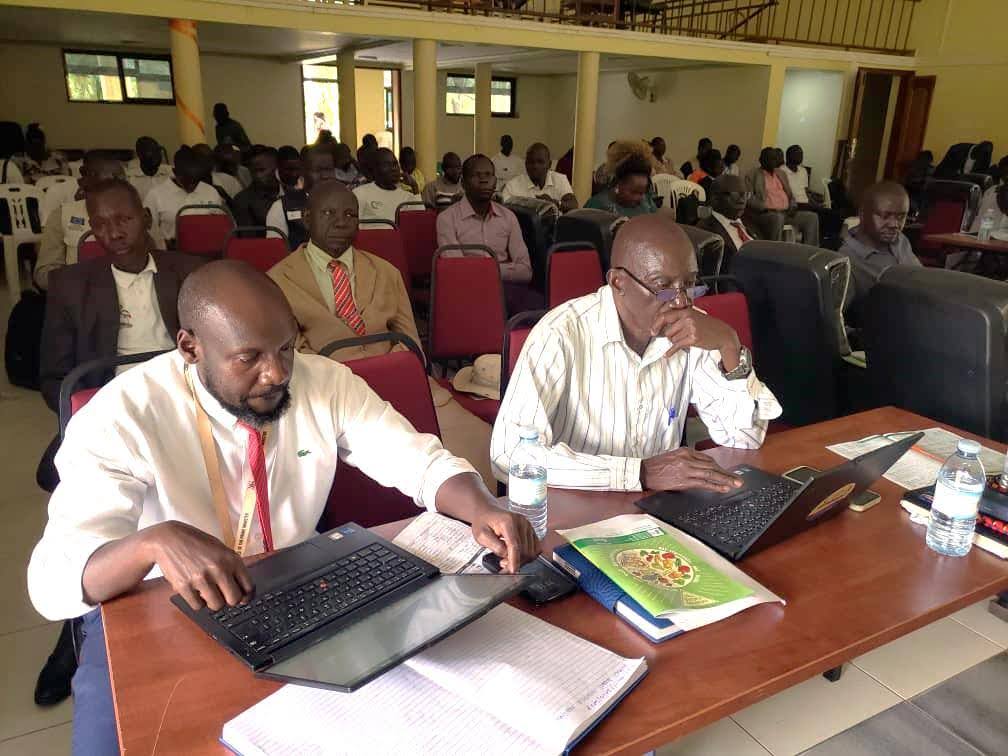
Adjumani, Uganda: West Nile’s Adjumani District is grappling with significant funding shortfalls across critical sectors, severely undermining progress in water supply, road infrastructure, education, and natural resource management.
The concerns were raised during the 2026/2027 Budget Conference held on Monday at the District Council Hall.
Home to more than 528,000 people, including tens of thousands of South Sudanese refugees, Adjumani continues to suffer pressure on its water systems, schools, health services, agriculture, and environment — challenges worsened by chronic underfunding from government ministries and donors.
Water Department Receives Only 47% of Planned Funding
In the 2025/2026 financial year, the Water Department planned to receive UGX 685,125,000, but only UGX 322,819,605 was disbursed, just 47% of the projected amount.
Despite the funding struggles, rural water functionality stands at 96%, and overall safe water coverage improved from 74% to 75%, thanks to new interventions such as 19 newly constructed boreholes, 17 rehabilitated facilities, and upgrades of piped water systems under various programmes, including UNHCR support.
Urban water supply performed slightly better, with a 99% functionality rate and 96% safe water coverage.
However, the district water engineer highlighted persistent problems, including frequent breakdowns of water sources due to poor community management, inadequate water user fee collection, low groundwater potential in several areas, and slow community adaptation to piped water systems. The department plans to operate on UGX 99,206,462 for rural water activities in FY 2026/2027.
Roads Sector Receives Only 39% of Required Funds
Funding for road construction and maintenance remains one of Adjumani’s biggest setbacks. The district had projected UGX 1.72 billion for roads in FY 2025/2026 but received only UGX 676.7 million, translating to 39.1%.
Acting District Engineer Henry Drichi said that for FY 2026/2027, only UGX 98,465,000 has been planned for community access roads. He noted that the district intends to maintain 83.8 kilometres of mechanized roads, but progress is continually hampered by lack of road equipment, insufficient funding for gravelling, rising traffic loads to refugee camps and agricultural zones, and activities such as quarrying which damage road infrastructure.

Drichi also cited inadequate allocations from the Uganda Road Fund, lack of funds for settlement roads, the growing length of the DUCAR network, and low wages for routine road maintenance workers.
Education Sector Overwhelmed by Infrastructure Gaps
The Education Department, presented by Windle Trust Uganda, reported a budget of UGX 4.7 billion for FY 2025/2026, which was fully received. With this, the district employs 231 education staff across nursery, primary, and secondary levels.
However, the sector is overwhelmed by extreme congestion. The teacher–pupil ratio has worsened to 1:125, up from 1:72 in 2024. Latrine ratios remain alarming, with some schools such as Ayilo 1D, Nyumanzi II, and Miniki registering over 100 pupils per stance.

Education officials called for urgent recruitment of more teachers, dislodging full latrines, and introducing double shifts in highly populated community schools if funding remains insufficient.
The education budget for FY 2026/2027 stands at UGX 16.05 billion, covering conditional wage, non-wage grants, local revenue, and transfers. However, by October 2024, the district had spent only UGX 4.4 billion out of a projected UGX 17.9 billion, pointing to persistent absorption and funding challenges.
Key problems include low teacher motivation, absenteeism, slow disciplinary processes, inadequate inspection due to understaffing, weak community support for schooling, lack of desks and teacher housing, and lasting effects of COVID-19 and past industrial actions.
Natural Resource Department Receives Only 1.43% of Budget
The Natural Resources Department was allocated UGX 668.6 million (1.43% of the district budget) for FY 2026/2027. The allocation covers wages, local revenue, conditional grants and UNHCR support. Officials warn that pressure from refugee settlement expansion continues to fuel deforestation, charcoal burning, and land degradation, further impacting agricultural productivity.
Presenting the strategic direction for the district, the Chief Administrative Officer said the FY 2026/2027 budget is anchored on the national theme of “Full monetisation of Uganda’s economy through commercial agriculture, industrialisation, expansion of services, digital transformation and market access.”
The year will also mark the second phase of implementing NDP IV, the first year of the Charter for Fiscal Responsibility (2026/27–2030/31), and the first budget under the next ruling party manifesto.
Priority growth drivers include agro-industrialisation, tourism, mineral development, oil and gas, science and technology, ICT, and creative industries. The tenfold growth strategy emphasises value addition to agriculture and minerals, investment in infrastructure (roads, electricity, irrigation, industrial parks), education, health, security, and strengthening wealth creation initiatives like PDM and Emyooga.
If you would like your article/opinion to be published on Uganda’s most authoritative news platform, send your submission on: [email protected]. You can also follow DailyExpress on WhatsApp and on Twitter (X) for realtime updates.