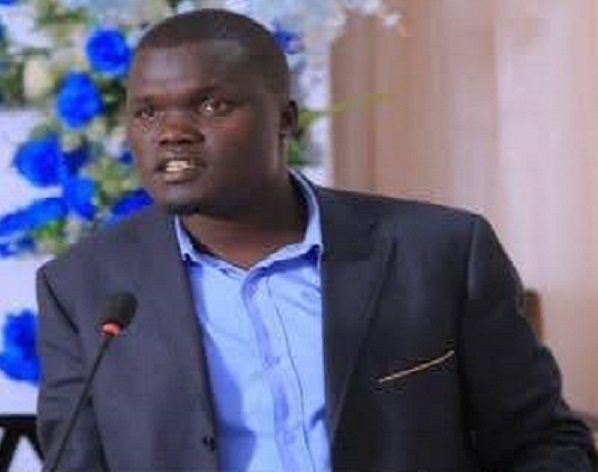
By Boniface Ojas
In the sweltering arena of Ugandan politics, where power plays and personal vendettas often eclipse policy debates, blackmail has emerged as a go-to tactic for settling scores and silencing rivals. Far from the sophisticated intrigue of international diplomacy, this brand of political manoeuvring in Uganda feels more like a playground brawl, petty, impulsive, and ultimately self-defeating.
It is childish in its reliance on whispers, smears, and fabricated scandals rather than substantive arguments, and stupid because it poisons the well of public trust, distracts from real governance challenges like economic inequality and corruption, and perpetuates a cycle of retaliation that benefits no one but the status quo. As Uganda hurtles toward another election cycle in 2026, with President Yoweri Museveni’s long grip on power showing no signs of loosening, the politics of blackmail isn’t just a sideshow; it is the main act, undermining the very democracy it pretends to defend.
A Playground of Smears: How Blackmail Operates in Uganda
At its core, political blackmail in Uganda thrives on the weaponization of personal vulnerabilities, real or invented, to extort compliance, ruin reputations, or derail careers. It is amplified by social media echo chambers, anonymous bloggers, and state-aligned networks, turning whispers into viral storms. Recent scandals illustrate this tactic’s pervasiveness across the ruling National Resistance Movement (NRM), opposition parties like the National Unity Platform (NUP), and even within parliamentary committees.
Take the case of State Minister for Children and Youth Affairs, Balaam Barugahara, a rising star appointed in March 2024 despite lacking the typical political pedigree. By early 2025, Balaam had racked up wins: advocating for youth mobilization, securing the release of detained NUP supporters, and earning praise from Gen. Muhoozi Kainerugaba, the president’s son and de facto NRM heir apparent.
But success breeds envy, and whispers turned to outright sabotage. In February 2025, reports surfaced of a coordinated smear campaign hiring “mercenaries” to fabricate allegations against him, including rape, defilement, corruption, eviction, assault, and even murder. One ploy involved a social media user allegedly paid to pose as a victim, only for Balaam to publicly call her out as a “sister in Christ” hired for the hit job.
The architects? A shadowy cabal of disgruntled Cabinet members, Patriotic League of Uganda (PLU) insiders, and opposition figures miffed that Balaam’s Bunyoro roots and loyalty to Museveni had leapfrogged them. An audio clip even captured one plotter vowing to “finish him both politically and his businesses.” This wasn’t subtle statecraft; it was a tantrum disguised as strategy, exposing the fragility of alliances within Museveni’s inner circle.
Opposition figures aren’t immune either. In June 2024, efforts to censure NUP parliamentary leader Mathias Mpuuga and three others over alleged fund misappropriation devolved into a blackmail circus. Committee chair Theodore Ssekikubo lamented how critics wielded personal dirt—divorces, bed-wetting rumors, and financial threats—to bully dissenters into silence.
“They are now using blackmail; saying those ones have money, this one divorced the husband; so and so urinates on bed, and so on,” Ssekikubo fumed. It is the kind of juvenile mud-slinging that turns serious accountability exercises into gossip sessions, eroding public faith in institutions meant to check executive overreach.
Even high-profile hunger strikes get slapped with the blackmail label. In February 2025, veteran opposition leader Kizza Besigye, detained for months on firearms charges and facing a military trial, embarked on a hunger strike that landed him in hospital. The Commonwealth Secretariat called for his release, decrying it as a blow to democratic norms.
Museveni, ever the counterpuncher, dismissed it outright as “unprincipled blackmail” designed to drum up sympathy and force bail, urging Besigye to demand a speedy trial instead.
From the president’s perch, legitimate protest morphs into extortion; from Besigye’s camp, it’s survival against a rigged system. Either way, the rhetoric reveals a political culture where every act of defiance is recast as a cheap ploy.
Social media has supercharged this nonsense. Fake accounts, doxxing, and viral hit pieces are the new ammunition. In October 2025, Democratic Forum (DF) candidate David Musiri captured the zeitgeist on NTV: “Politics today is full of blackmail, intimidation, and character assassination. As a result, there is a defensive mechanism in place: while they are exposing the flaws of others to the public, there is a corresponding effort… to defend themselves.”

Echoing this, NUP critics on X (formerly Twitter) decry the party’s “old style of politicking” reliant on insults and smears, while others finger ruling party members like Mike Mukula for orchestrating malice against rivals.
One user lamented, “That politics of blackmail is so undemocratic! Malice is a crime!”
It is a digital coliseum where truth is optional, and outrage is currency.
Why This is Childish and Utterly Stupid
Labeling these tactics “childish” isn’t hyperbole—it’s an indictment. Imagine adults in suits, entrusted with a nation’s future, resorting to “he said, she said” rumors or hired goons to spread lies about bed-wetting or phantom rapes. It is the equivalent of pulling pigtails on the schoolyard, but with national stakes. This immaturity stems from a zero-sum mindset: in Uganda’s patronage-driven politics, loyalty to Museveni or Bobi Wine isn’t enough; rivals must be humiliated to deter copycats.
The stupidity compounds the folly. Blackmail doesn’t build coalitions; it breeds paranoia. When mercenaries target Balaam, it doesn’t just dent his career—it signals to every ambitious NRM youth that rising too fast invites daggers from above.

Parliamentary probes stall over whispered threats, leaving corruption scandals like the 2024 budget padding fiasco festering unchecked.
And when Museveni brands Besigye’s defiance as blackmail, it alienates international partners like the Commonwealth, who see through the spin to the authoritarian drift.
Economically, it diverts energy from pressing issues—youth unemployment hovers at 13%, inflation bites at 5%—to endless damage control.
Worse, it normalizes toxicity. Aspiring politicians learn that mud sticks better than manifestos, perpetuating a vicious loop.
In a country where 78% of the population is under 30, this models dysfunction for the next generation, ensuring politics remains a spectator sport of scandals rather than solutions.
Breaking the Cycle: Time for Grown-Up Governance
Uganda deserves better than this circus. Blackmail’s allure—quick wins without accountability—masks its long-term rot: eroded legitimacy, fractured alliances, and a populace too cynical to vote on ideas. Leaders like Musiri are right to call it out, but words need teeth. Parliamentary ethics committees could enforce anti-smear laws with real penalties; media watchdogs might prioritize fact-checks over clicks. Opposition parties, take note: Bobi Wine’s NUP gained traction on anti-corruption vibes, not vendettas—doubling down on smears risks alienating the youth it claims to champion.
Ultimately, ditching blackmail means embracing vulnerability: debating policies openly, admitting flaws, and competing on vision. It is harder, sure—less “stupid” thrills—but infinitely smarter for a nation weary of the drama. Uganda’s politics isn’t doomed to childishness; it just needs leaders willing to act their age. Until then, the blackmail game rolls on, a stupid spectacle in a beautiful country begging for maturity.
The writer is a sustainable development analyst, a human rights defender, and a concerned citizen yearning for a better Uganda.
If you would like your article/opinion to be published on Uganda’s most authoritative news platform, send your submission on: [email protected]. You can also follow DailyExpress on WhatsApp and on Twitter (X) for realtime updates.