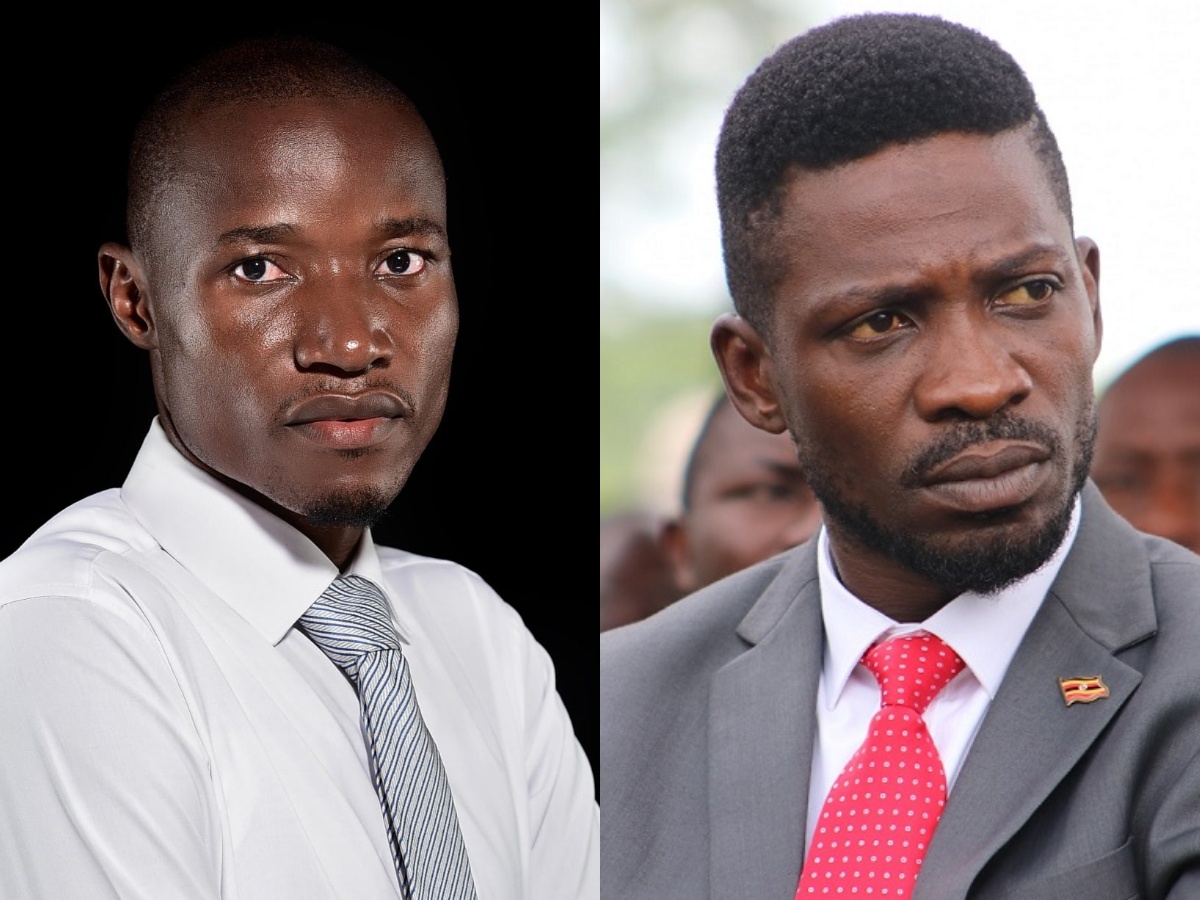
By Hakim Kyeswa
The recent political circus surrounding Mr Robert Kyagulanyi, popularly known as Bobi Wine, in Arua City and parts of the West Nile sub-region has, predictably, sent his supporters and a section of the commentariat into a familiar frenzy. They are quick to paint a picture of a region on the cusp of a political revolt, hoping to create a narrative of momentum.
As a political analyst who has witnessed the ebb and flow of Uganda’s political tides for decades, and one with a deep understanding of West Nile’s unique history and development trajectory, I wish to offer a calming and reality-based perspective. What we are seeing is not a shift in political allegiance, but a familiar political ritual: the excitement of a crowd drawn to musical celebrity and fiery rhetoric, which historically has failed to translate into tangible electoral victory.
Let us be clear-eyed and consult the recent past. In the 2021 general elections, the National Unity Platform (NUP) and its principal managed to pull crowds much like today. However, when it came to the hard, granular work of politics, fielding a competent and full slate of candidates for parliamentary and local government positions, they were found severely wanting across West Nile.
In numerous constituencies, they failed to present a candidate at all. This is not the mark of a political movement with deep, organized roots; it is the hallmark of a seasonal protest movement that thrives on emotion but lacks the structural foundation and a coherent agenda for governance.
The people of West Nile are pragmatic and politically astute. They have not forgotten the dark days of conflict and isolation. They contrast that painful history with the tangible, life-changing gains achieved under the steady leadership of President Yoweri Kaguta Museveni and the National Resistance Movement.

We are not just talking about peace and security, which are the foundational blocks the NRM restored. We are talking about the tarmac roads connecting the region to the national economy, the electricity grids powering homes and businesses, the numerous Health Centres III and IV, and the deliberate policies like the Parish Development Model (PDM) that are directly empowering our people at the grassroots. The opposition offers catchy slogans and promises in a desert of substance; the NRM delivers bridges, schools, and peace.
The crowds that gather for Mr Kyagulanyi are a testament to Uganda’s vibrant political space, which the NRM government has fostered. However, a crowd at a rally does not equate to a majority at the ballot box. The silent, development-minded majority in West Nile, the farmers seeing their livelihoods improve through PDM, the traders using the improved infrastructure, the parents seeing their children educated in UPE and USE schools, do not always attend political rallies. But they do vote, and they vote for continuity and progress.

Therefore, let there be no panic within the NRM ranks. Our task is not to be distracted by the noise but to redouble our efforts in communicating our achievements and our vision for the future. The people of West Nile understand that their prosperity is inextricably linked to the stability and national development championed by President Museveni.
Come the next election, the people of West Nile and Uganda at large will not be swayed by musical rhetoric or empty promises. They will vote to protect the gains we have made together. They will vote for peace over uncertainty, for development over disruption, and for experienced leadership over political experimentation.
I am confident that President Yoweri Museveni will not only win West Nile but will secure a victory margin even more resounding than in 2021. The evidence of development on the ground is our most powerful agent of mobilization, and on that score, the NRM stands unrivalled.
The writer is an NRM cadre and a political analyst.
Email: [email protected]
If you would like your article/opinion to be published on Uganda’s most authoritative news platform, send your submission on: [email protected]. You can also follow DailyExpress on WhatsApp and on Twitter (X) for realtime updates.