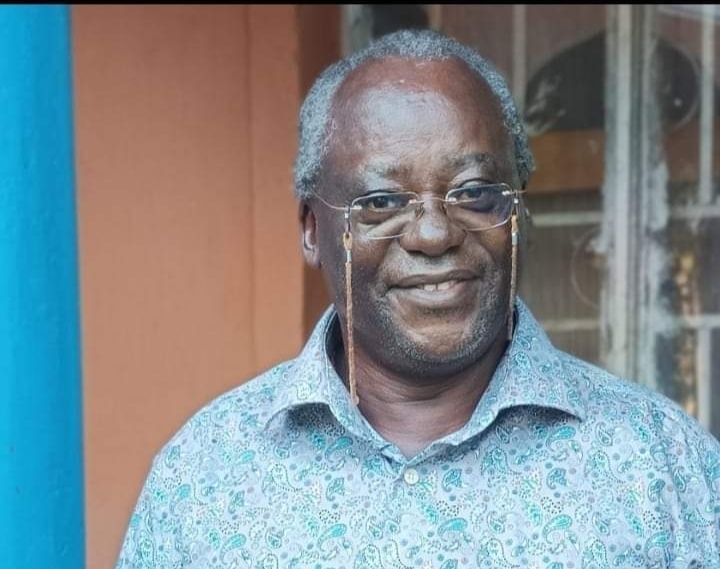
By Oweyegha-Afunaduula
Center for Critical Thinking and Critical Analysis
Date: 26 November 2025
When the British colonial government decided to grant Uganda, initially called the British Protectorate of Uganda during colonial rule and then the Commonwealth Realm of Uganda on 9th October 1962, partial political independence, four Kingdoms were recognized in the new Uganda Constitution 1962: Ankole, Buganda, Bunyoro and Toro. Also recognized was the political Territory of Busoga, which was to manifest as a quasi-kingdom under a political head called Kyabazinga, as was the case since the late 1930s.
I say partial independence because Queen Elizabeth remained the Head of the new State of Uganda until 9th October 1963, when the Commonwealth Realm of Uganda transitioned to Uganda with a new Head of State, Sir Edward Walugembe Muteesa, who manifested as the Non-Executive President, the role Queen Elizabeth manifested in Britain.
The rest of the areas, which were amalgamated together with the Kingdoms of Ankole, Buganda, Bunyoro and Toro and the Territory of Busoga, were to be politically governed as districts, by an Executive Prime Minister, Apollo Milton Obote, and the Non-Executive President, Sir Edward Walugembe Muteesa II. These were Acholi, Bugisu, Bukedi, Karamoja, Kigezi, Lango, Moyo, Sebei, Teso and West Nile.
It was a difficult arrangement. Soon, stresses and strains similar to those that existed between the British colonial Government and the Kingdom of Buganda re-emerged. Buganda started to behave like a special region in Uganda, to the extent of celebrating its own independence on 8th October every year. The British handed the instruments of power to Obote without resolving one issue: The Lost Counties of Bunyoro-Buyaga and Bugangaizi. The counties were given to Buganda by the colonialists in appreciation of the role of the Kingdom in the fight.
It became clear things would not remain the same when Obote decided to implement the constitutional provision of holding a referendum to decide the future of Buyaga and Bugangaizi: Would they belong to Bunyoro or Buganda? The Banyoro never stopped agitating for the return of the counties even after independence. It was helped by the fact that the populations of Buyaga and Bugangaizi were predominantly composed of Banyoro.
Attempts by Buganda to raise the numbers of Baganda in the two areas were frustrated by the Central Government deciding that those who were to participate in the referendum must have been in the two areas by a certain date. When the referendum was held, the people of the two areas decided to be part of Bunyoro rather than Buganda.
Obote was only implementing a constitutional provision. However, Buganda held him responsible for the return of Buyaga and Bugangaizi to Bunyoro. The Baganda of that time never forgave him. The rift between the new post-independence Uganda Government and the Government of the Kingdom of Buganda widened. Matters became worse when the governors at Mengo, the seat of power of the Buganda Kingdom, plotted with some of Obote’s ministers to bring his government down by accusing him and his army commander, Idi Amin, of stealing gold from Congo.
Although Obote and Amin were absolved by a judicial commission composed of high-ranking officers from East Africa, Uganda was never to be the same. In 1966, Obote decided that to keep Uganda as one and governable, he had to abrogate the independence constitution and make a new republican constitution, investing all power and authority in an Executive President. Initially, the new Constitution did not abolish kingdoms. This was ultimately achieved in the Uganda Constitution of 1967.
During the bush war in the Luwero Triangle from 1981 to 1986, the rebel outfit National Resistance Army, led mostly by Rwandese Tutsi refugees, recruited hundreds of thousands of Baganda who thought, believed and were convinced that if Obote and later Tito Okello were removed from power, the Kingdom of Buganda and its King would be reinstated. They never imagined that Kingdoms and Kings could never meaningfully exist in a country where power and authority were concentrated at the centre.
Indeed, historical records show that rebel Yoweri Museveni (as he was called then) moved with the young future King of Buganda, Ronald Mutebi, through the so-called liberated areas in Luwero. Yet the truth was that Yoweri Museveni had no intention of returning Kingdoms and Kings in Uganda.
When Yoweri Museveni captured the instruments of power on 25 January 1986, there was a lot of jubilation and ululation by the Baganda, especially when he was sworn in as President of Uganda under the Uganda Constitution 1967, because they thought the time for their kingdom to be reborn had come. They were wrong.

One time, the President was asked when he was reintroducing kingdoms, and he clarified that he did not go to the bush to return Kingdoms. He later demonstrated this when he introduced a new Uganda Constitution 1995, a product of a long constitutional process he personally presided over.
Indeed, when the final draft of the Uganda Constitution 1995 was produced, there was no article in it mentioning Kings and Kingdoms. Instead, there were articles mentioning so-called Cultural Institutions, which were a distortion, because in the past a kingdom had three institutions: a King who was the political ruler; a cultural leader; and a spiritual leader, who functioned together to sustain the kingdom. The Constitution mentioned Buganda, Bunyoro, Busoga and Toro as Cultural Institutions and provided for many other cultural institutions.
When asked by the press why Ankole and Omugabe were missing on the list of Cultural Institutions and cultural leaders, his answer was ready: “I am the Ssabagabe.”

It was clear the President did not want any contradictory power in his backyard—Western Uganda. In any case, the Cultural Institutions have no political power at all. They are just ceremonial and a conduit for the President to reach out and extend his power in their areas. He may occasionally choose to put up grandiose structures in those areas as expressions of his power, glory and influence.
In fact, a Local Council Chairman 1 is politically empowered when the cultural leader is not. Financially, virtually all cultural leaders depend on central power, which is President Tibuhaburwa Museveni, for maintenance and sustenance. They are somewhat removed from the people they are supposed to lead culturally, mainly because they are predominantly young and digitally driven and organized. Therefore, the digital culture means more to them than the Cultural Institutions provided for in the Constitution.
What all this means is that the Uganda Constitution 1995 made President Tibuhaburwa Museveni the Alpha and Omega. He can cause anything to happen or not happen in the so-called cultural areas of the Cultural Institutions without consulting them. He has given land to foreigners and made refugees settle in them without consulting them. He has okayed foreigners such as Indians, Chinese and Rwandese to exploit minerals in those areas with no gain to the people and their Cultural Institutions.
One time in 1997, while addressing the staff of Makerere University in the Makerere Catholic Conference Centre, the President said he was next to God and that God rules in heaven and he rules in Uganda. He has warned Ugandans that those who want to test his powers can try and they will see. He is right. The Uganda Constitution 1995 appears as if it was made for only him. He does not only appoint and disappoint workers without consulting anyone. He also decides to build roads, hospitals and schools in foreign countries, or send Uganda soldiers to foreign countries without permission from the Parliament of Uganda.
Therefore, if the National Resistance Movement (NRM) replaced Kingdoms with Cultural Institutions, it was to make the President of Uganda, President Tibuhaburwa Museveni, far more sovereign than Uganda and Ugandans. It is unlikely that such a President can easily relinquish power by peaceful means, such as resigning or accepting the results of an election.
Indeed, he has been cited many times telling the people of Seeta, Mukono, that a mere piece of paper, the ballot, cannot remove him from power, and that he is like a quarter pin of a bicycle which goes in by knocking and comes out by knocking. To a large extent, the designers of the Uganda Constitution are to blame, and he was one of them as the Chairman of the Constituent Assembly.
One may ask: “Why do we waste a lot of time, energy and money every five years since 1996 holding Presidential, Parliamentary and Council elections?” The answer is PRESIDENT TIBUHABURWA MUSEVENI, not democracy.
For God and My Country.
If you would like your article/opinion to be published on Uganda’s most authoritative news platform, send your submission on: [email protected]. You can also follow DailyExpress on WhatsApp and on Twitter (X) for realtime updates.