
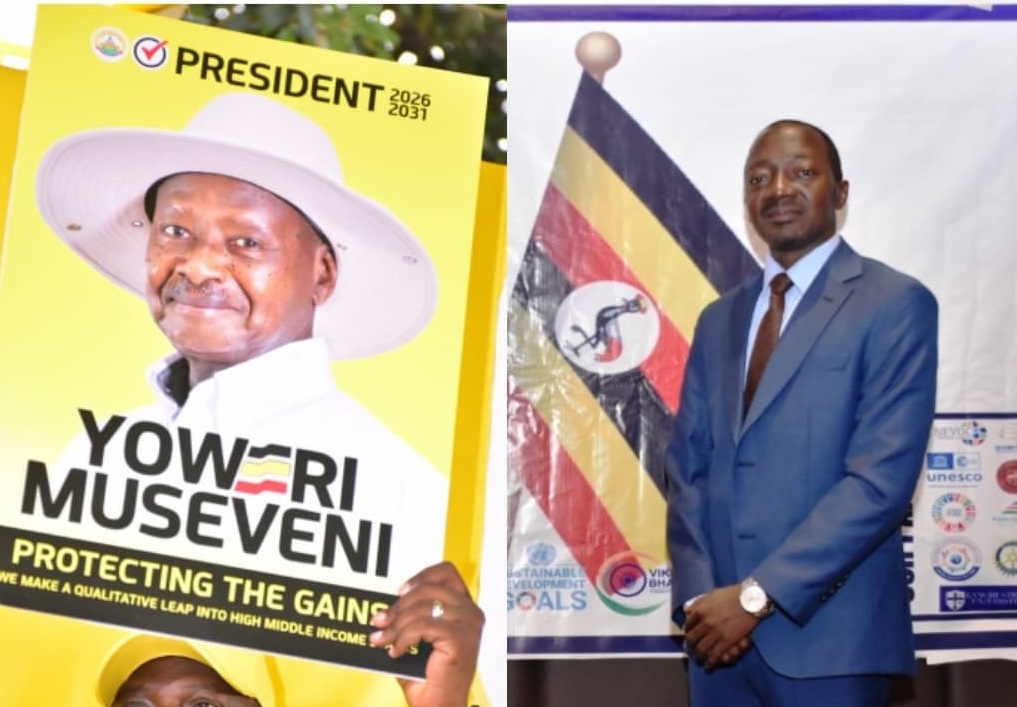
Kampala, Uganda: As Uganda heads toward the pivotal 2026 general election, Public Opinions Team Leader Buyinza Adam Luzindana says many Ugandans are rallying behind President Yoweri Museveni because of his long-standing commitment to East African regional integration.
Luzindana argues that the President’s efforts to strengthen the East African Community (EAC) have produced visible benefits for Uganda and its neighbours; benefits he believes will influence voting patterns in Museveni’s favour.
He notes that the 2026 NRM manifesto places regional integration at the centre of its agenda, aligning with long-standing themes of prosperity, security, and African fraternity. According to Luzindana, achieving these objectives requires dismantling the historical fragmentation of African states—an ambition Museveni has championed for decades.
He adds that East African countries face similar challenges such as limited domestic markets and inadequate military capabilities, making integration a strategic necessity rather than a political slogan. “Regional unity is the surest pathway to shared prosperity and security,” Luzindana says.
Under Museveni’s stewardship, the EAC has recorded major milestones including the Customs Union, Common Market, and Single Customs Territory, reforms that have eased the free movement of goods and people, increased export earnings, and created jobs through expanded regional markets.

Luzindana points to harmonised regulations, simplified trade processes, and coordinated border management as examples of Museveni’s contribution to building an environment favourable for investment, innovation, and employment—particularly for young people.
Museveni’s integration drive has also emphasised infrastructure development, with flagship projects such as the East African Crude Oil Pipeline, the Standard Gauge Railway, and large industrial ventures including the Tororo steel factory. He argues these projects are improving regional connectivity and boosting economic competitiveness.
Digital transformation has further accelerated integration, with regional broadband initiatives aimed at modernising communication and business operations across the bloc.

Education, Luzindana notes, has been a cornerstone of Museveni’s regional strategy. Uganda’s policy of offering free visas to EAC students and establishing centres of academic excellence has strengthened human capital exchange within the region. Thousands of East African students study in Uganda and vice versa, reinforcing cross-border collaboration.
Tourism has also benefited from harmonised policies, especially the Single East African Tourist Visa, which markets the region as a unified destination. Luzindana says this joint approach has boosted the region’s visibility and competitiveness in global tourism markets.
He further applauds Museveni’s push against non-tariff barriers, which have long hindered trade across the region. Removing such obstacles, he says, is key to unlocking East Africa’s economic potential.
If you would like your article/opinion to be published on Uganda’s most authoritative news platform, send your submission on: [email protected]. You can also follow DailyExpress on WhatsApp and on Twitter (X) for realtime updates.