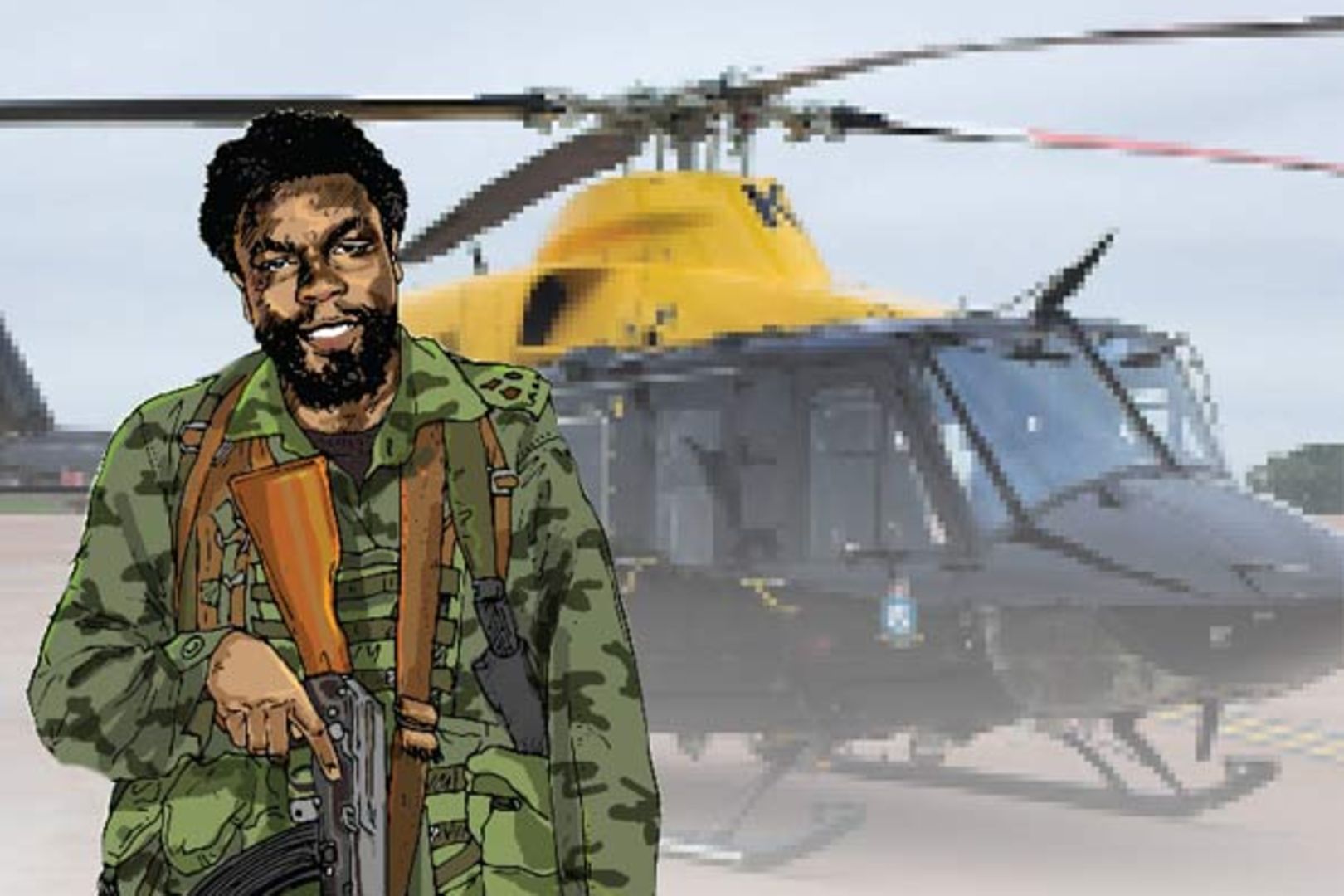
Kampala, Uganda: Today marks forty-two years since the helicopter carrying Maj Gen David Oyite-Ojok plummeted into the scrublands of Nakasongola on December 2, 1983. Yet the circumstances surrounding the crash remain unresolved, the mystery undiminished, and the impact of his death still imprinted on Uganda’s political and military history.
For many who lived through the upheavals of the Obote II era, the fall of Oyite-Ojok’s Bell Augusta helicopter marked the moment the state began to lose its grip, setting Uganda on a path that would culminate in regime collapse, civil war escalation and a fundamental redirection of the country’s future.
A Soldier Shaped by Turbulent Times
David Oyite-Ojok was born on April 15, 1940, in Loro village in the present-day Oyam District. From modest beginnings at Loro Primary School, he entered the Uganda Army in 1963 as an officer cadet. His potential was immediately visible, and he soon earned a place at the Royal Military Academy Sandhurst in the United Kingdom, an institution that shaped many of the post-colonial African officers who later rose to national prominence.
When he returned home, he quickly climbed the military ladder. His discipline, sharp intellect and absolute loyalty to President Milton Obote made him one of the most trusted young officers in the country. Of the generation of post-independence soldiers, Oyite-Ojok stood out as a man destined to shape Uganda’s security and political direction.
The January 1971 Coup and the Exile Years
The turning point came on January 25, 1971, when Idi Amin executed a swift and brutal coup while Obote was abroad attending a Commonwealth meeting. Oyite-Ojok found himself trapped inside Parliament for nearly two days as Amin’s soldiers took control of key installations in the capital.
With arrest or execution almost inevitable, he survived by hiding inside the Inspector General of Police’s office before quietly slipping across the border into Tanzania.
Exile hardened him. It also transformed him from an officer into a strategist. Along with other exiled forces, he helped shape the nucleus of what would later become the Uganda National Liberation Army (UNLA).
These years of clandestine planning and cross-border coordination laid the foundation for his larger role in the final push against Amin.
Commander of the Anti-Amin Liberation War
When the 1978–79 war to overthrow Amin began, triggered by Amin’s invasion of Tanzania, Oyite-Ojok emerged as one of the most important figures in the joint Tanzanian-Ugandan campaign. Working alongside the Tanzanian People’s Defence Force (TPDF), he led operations with a combination of field intelligence, tactical boldness and personal fearlessness that earned him respect among both Tanzanian and Ugandan officers.
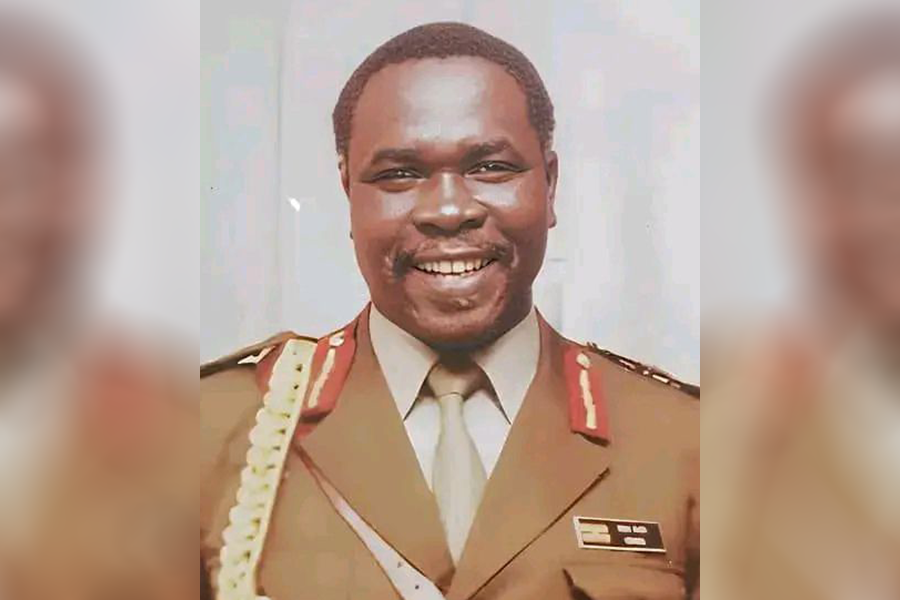
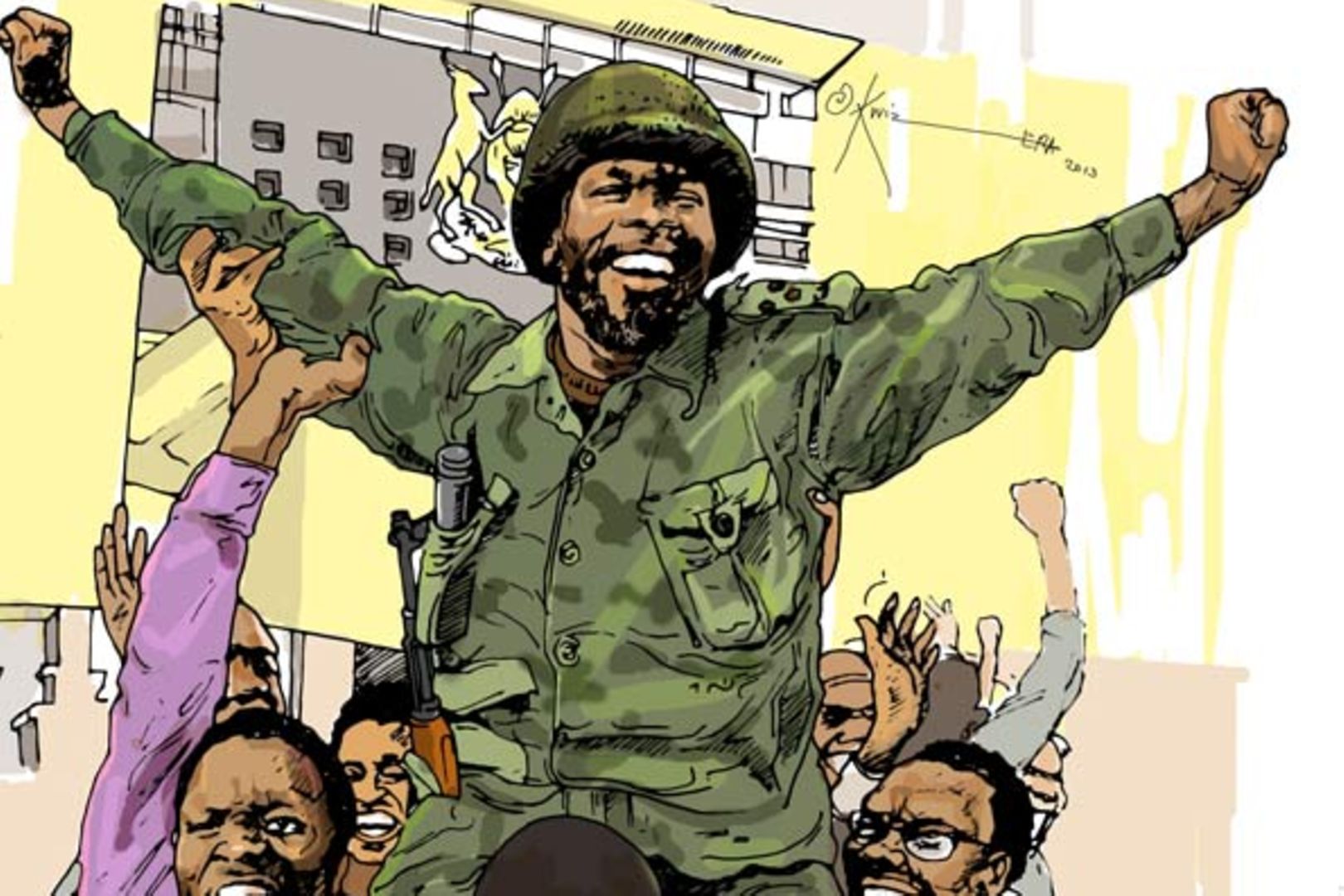
When Kampala finally fell in April 1979, many saw Oyite-Ojok as one of the architects of the liberation, a man whose military instincts had helped bring down one of Africa’s most notorious regimes.
At the Center of Power After Amin’s Fall
The defeat of Amin ushered in a volatile transition period, and Oyite-Ojok rose to the top of the military establishment. As Chief of Staff of the UNLA and a powerful member of the Military Commission, he was one of the central figures shaping political decisions during the turbulent years between 1979 and 1983.
His influence extended far beyond the barracks. As chairperson of the Coffee Marketing Board, at a time when coffee was Uganda’s economic backbone, he commanded significant authority over national revenue. His proximity to Obote made him arguably the most powerful soldier in the country, and in some circles, he was spoken of as Obote’s indispensable right hand.
Among contemporaries, it was often said that in the Obote II government, Oyite-Ojok’s word frequently carried the weight of a command, an observation that reflected both his authority and the fear he inspired among political rivals.
The Final Mission Over the Luweero Triangle

On the morning of December 2, 1983, Maj Gen Oyite-Ojok embarked on a flight intended to review counterinsurgency operations in the Luweero Triangle, the operational heartland of the National Resistance Army (NRA) led by Yoweri Museveni. The government was struggling to contain the insurgency, and the Luweero region had become the epicentre of a growing civil war.
The general boarded a Bell Augusta 412 helicopter with several of his senior colleagues, including Air Force Director Maj Alfred Otto, co-pilot Capt Harry Oluoch and operations officer Maj Stephen Abili.
Moments after taking off, the aircraft crashed into the scrublands near Kasozi village in Nakasongola. All on board died instantly in an explosion that villagers nearby described as “violent and unusual.”
The government announced that the helicopter had suffered a technical failure. However, the explanation never sat comfortably with the public. Within hours, rumours were circulating—rumours that have persisted for 42 years without resolution.

Some argued the aircraft had suffered a mechanical malfunction caused by poor maintenance. Others claimed internal sabotage orchestrated by rivals within the UNLA who feared Oyite-Ojok’s growing influence.
Another theory held that the aircraft had been shot down by NRA fighters using anti-aircraft fire, a theory that NRA leadership publicly denied but which some analysts still discuss. There were also whispers of a political plot by individuals who felt threatened by the general’s expanding power.
No official inquiry, public or classified, has ever been released. The ambiguity has turned the incident into one of Uganda’s most enduring political mysteries.
Shockwaves and the Beginning of Collapse
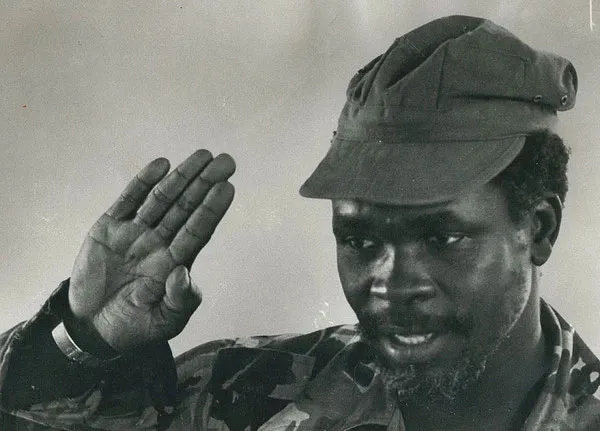
The death of Oyite-Ojok destabilised the Obote II government almost immediately. The military, already stretched by battlefield losses, lost its most capable commander and strategist. Rival factions within the UNLA intensified their internal battles for dominance. Discipline weakened. Morale ebbed. Trust deteriorated.
By July 27, 1985, just nineteen months after the crash, Obote’s government collapsed in a coup led by Gen Tito Okello Lutwa, ushering in another phase of national turmoil. Many historians argue that the collapse began on the day Oyite-Ojok’s helicopter fell.
Without him, the UNLA lost the cohesion necessary to withstand the military and political pressures of the era.
A Legacy That Lives Beyond His Life
Maj Gen David Oyite-Ojok remains a defining figure of Uganda’s complex history; a man celebrated for courage, military brilliance and unwavering loyalty, yet also remembered as a symbol of the unresolved mysteries that shaped the country’s political journey.
His story embodies the triumphs and contradictions of Uganda’s post-independence military class. His life reflected the hope of a military seeking to define national identity; his death exposed the fragile foundations beneath the state.
Forty-two years later, his name continues to evoke admiration, controversy and lingering questions. And Uganda still waits for a definitive answer about what truly happened in the skies over Nakasongola.
If you would like your article/opinion to be published on Uganda’s most authoritative news platform, send your submission on: [email protected]. You can also follow DailyExpress on WhatsApp and on Twitter (X) for realtime updates.