By Oweyegha-Afunaduula
In this article, I exclude the Full Gospel groups and the Pentecostals or the so-called Saveddees, and all the other religious groups that President Idi Amin banned. I exclude them because, for the last 40 years, these believers have been associated with the ruling National Resistance Movement (NRM) regime, which they believe is the reason why they exist and have survived religiously.
It should, however, be remembered by those, like Rev Dr Amos Kasibante, who were the first to attend the ideological and military instructions at Kyankwanzi, soon after President Tibuhaburwa Museveni captured the instruments of power in 1986, that the emergents from the bushes of Luwero agitated against Christianity, to which the majority of the citizens subscribed as their religious faith.
It was not surprising, therefore, that along the way the National Resistance Movement/Army realized it was waging a losing battle against Christianity, to which the absolute majority of Ugandans religiously belonged. Today, the NRM government feels more comfortable with Christians than with Muslims. It has strategized to enhance its political capital by having close “spiritual-political” ties with especially the Full Gospel Churches, Pentecostal Churches and other non-denominational religious groups. Some of the churches have distinguished themselves as highly religio-political.
At the forefront are Nabbi Daudi Isinga’s Universal Apostle’s Church of Righteousness and Aloysius Bugingo’s House of Prayer Ministries International. Isinga and Bugingo have distinguished themselves as NRM religio-political activists behind the pulpit. Both have demonstrated that they are uncompromising supporters of President Tibuhaburwa Museveni and his son, Muhoozi Kainerugaba. They believe that if it is not Tibuhaburwa Museveni to be President then it must be Muhoozi Kainerugaba. They, therefore, believe in what I called hereditary politics in another article.
Most other members of the non-denominational churches are not far from this belief system. They constitute a dependable political base for President Tibuhaburwa Museveni and his party. That is why I wrote an article titled “Role of Pro-regime Political Pastors in De-Democratisation of Uganda” published by Daily Monitor on 8 December 2024.
Therefore, if Ugandans wanted change of leadership and governance of their country, it would be an uphill task to get the faithful of the Full Gospel Churches, Pentecostal churches and other non-denominational churches to participate effectively in a struggle for genuine liberation without guns.
President Idi Amin Dada had banned a total of 27 Christian religious groups in the 1970s on the grounds that they were a security risk. Among the banned religious groups were the Seventh Day Adventist Church, the Salvation Army, the Uganda Baptist Church, the Bahai, the Full Gospel Churches and the Pentecostal Churches.
He decreed that all Ugandans should religiously belong to the three denominational religious groups, then known as Roman Catholic Church, Anglican Church, Orthodox Church (today known as Catholic Church of Uganda, Church of Uganda and Orthodox Church of Uganda) and the Islamic faith.
There are some 2,300 Full Gospel church groups and 243 Pentecostal church groups in Uganda today, but they all have their origins in the early 1960s. The Full Gospel churches can include non-Pentecostal groups such as charismatic or non-denominational groups.
There are persistent claims that the President has pumped a lot of public money into these churches to establish or sustain some of them, with the aim of expanding his political base. Many faithful who used to belong to the traditional faiths have flocked to them, mainly because their clergy spend a lot of their time and energy preaching about money and prosperity rather than spiritual salvation.
Because of this, the faithful give a lot of money in the form of offerings in the hope of becoming prosperous, but instead, they make the clergy maintain themselves among the wealthiest people in Uganda.
At one time, during a Full Gospel Churches Annual Pastors Conference in Mpigi at which the President was represented by his Prime Minister, Robinah Nabbanja, he said:
“I thank God for your remarkable journey of growth and multiplication as the Full Gospel in Uganda… I congratulate you upon your wonderful achievement, which is akin to Jesus.”
He was happy with the wealth creation attitude, which is universally present among them and is equivalent to his own multi-billion-shillings heavy Operation Wealth Creation.
He reminded his audience that in the past there was an attempt to suppress the Balokole (Saveddee) Movement in Uganda. Without mentioning that in fact soon after capturing the instruments of power, his triumphant movement, the National Resistance Movement (NRM), agitated against Christianity during the Mchaka Mchaka drills and lessons in Kyankwanzi ideological school, he told his audience that some religious leaders tried to decampaign the Pentecostal faith and advised government to ban Balokole churches, but he refused.

The President thanked the pastors for preaching a holistic ministry that is concerned about both the physical and spiritual needs of the faithful. However, Jesus warned us that we cannot serve two masters; in this case the “physical” and the “spiritual.” In fact, the tendency has been for the pastors to stress prosperity rather than spirituality, and in the process, very many of them have fallen short of the glory of God.
What I am trying to tell you, the readers of this article, is that for many pastors, the stance of President Tibuhaburwa Museveni on wealth creation has rhymed well with the prosperity teaching of the nontraditional churches. And so, the President has had a lot of influence on them since he uses money as a political tool to get his ideas implemented by buying the consciences of many.
Pastors receive a lot of money from the functionaries of the NRM when they go for prayers. That moves the pastors to pray for the functionaries to become even more prosperous. The pastors never bother to find out whether the money offered was not got through corrupt ways. Yet we now know that almost 10 trillion shillings is lost annually through the corruption of government officials at different levels of governance.
It is, therefore, unlikely that most of the pastors of the nontraditional churches will support anyone who wants change from President Tibuhaburwa Museveni to another leader. However, others like Pastor Male do not hide their wish for meaningful change from President Tibuhaburwa, whom they accuse of dishonesty because he said, “The problem of Africa is leaders who overstay in power,” yet he has overstayed for almost 40 years.
Therefore, the clergy I am interested in this article are those of the Catholic Church of Uganda, the Church of Uganda, the Orthodox Church of Uganda, and the Islamic faith, generally.

The question is: are they, unlike the majority of the pastors in the nontraditional churches, ready for change in leadership and governance at all levels of the country? I am asking this question because the majority of the clergy have chosen the conspiracy of silence concerning change in the country. They are silent on the issues that matter such as corruption, ethnicity, land grabbing, injustice and even imposed poverty.
Let me tell you a short story. One time in 1995, Dr Igeme Katagwa of the then Faculty of Social Science at Makerere University, who later wrote a good doctoral thesis on “From Bushes to Community: Framework for Reintegration of Former Child Rebel Combatants in Northern Uganda”, invited me to address the Bishops of the Church of Uganda during their Colloquium at the Lweza Training and Conference Centre. The topic we agreed on was “Linking Christianity, Development and Environmental Conservation Towards the 21st Century.” I accepted the invitation.
Professor Wangoola was to facilitate my talk. Bishop Cyprian Bamwoze, the late Bishop of Busoga Diocese, was to chair the talk.
The then Archbishop of the Church of Uganda, Livingston Mpalanyi Nkoyoyo (1995–2004), was in my audience. Virtually all the Bishops of the Church of Uganda were present. Apart from Archbishop Nkoyoyo and Bishop Bamwoze, Bishop Geresom Ilukol of Teso (1935–2013), Dr Rev Nicodemus Engwalas Okile of Bukedi, Bishop Yoram Bamunoba of West Ankole and Bishop Luke Orombi were among those who attended my historic talk.
During my talk, I stressed the need for the church leaders to see how they could free the church from governmental influence, which is exercised through the ritualistic donations of vehicles from President Yoweri Museveni, as he was called then, to every new Bishop and Archbishop.
I said that the practice would make them silent when society needed them most to play their leadership role more effectively, by talking about democracy, freedom, equity, justice and issues such as extrajudicial killings or bad laws that harm their sheep.
I told them that the boundary between religion and politics was very thin. I said that there is a thin boundary between political leadership and spiritual leadership since they both aim at improving the quality of life of the citizens physically, spiritually and mind-wise.
Let me repeat the Ten Million Dollar question: “Are the religious leaders of the traditional churches ready to participate in another liberation of Uganda, like many of them did between 1981 and 1986?”
Ugandans need another genuine liberation by Ugandans, for Ugandans, with Ugandans of all stations—free of guns and tear gas—whereby all citizens will enjoy democracy, freedom and justice, and respect the national flag.
It seems to me that the clergy of the Catholic Church and of Islam are more ready to participate in another, more genuine liberation than their counterparts in the Church of Uganda.
For God and my Country.
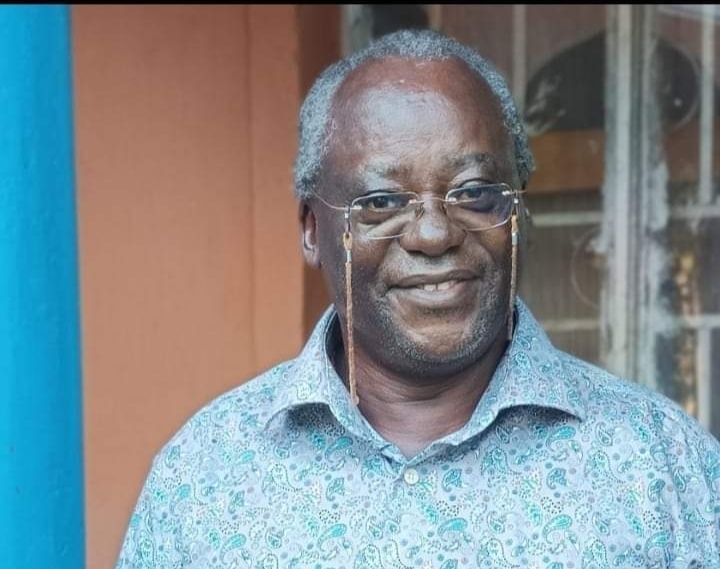
The writer is a Conservation Biologist at the Center for Critical Thinking and Alternative Analysis
If you would like your article/opinion to be published on Uganda’s most authoritative news platform, send your submission on: [email protected]. You can also follow DailyExpress on WhatsApp and on Twitter (X) for realtime updates.