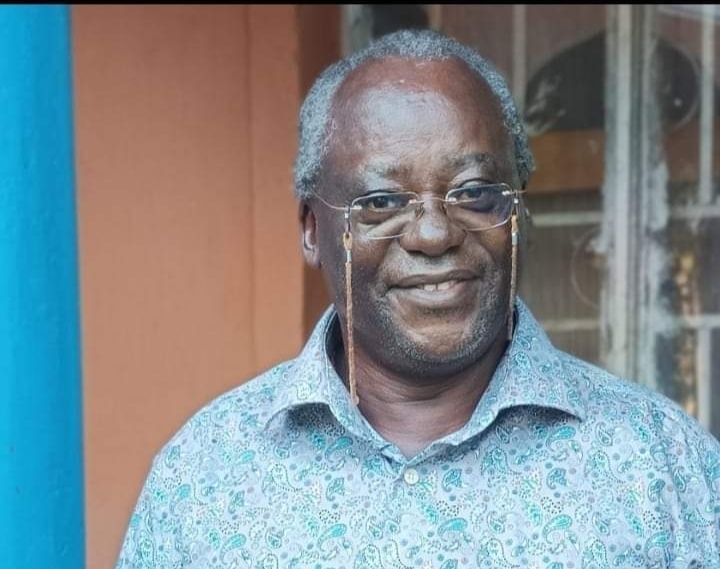
By Oweyegha-Afunaduula
Center for Critical Thinking and Alternative Analysis
I first came to know that elections are held to change leadership and governance by the citizens using votes to express their choices between alternatives in the very early 1960s. I was still in Ikumbya Primary School in the then Luuka County of the former Busoga District in the Uganda British Protectorate.
The British colonialists who invaded, conquered and occupied the area, which they called the Uganda British Protectorate, were organising elections to determine who they should hand the instruments of power to in case they granted political independence to the area after exploiting it for almost 70 years.
The first time direct elections were organised by the colonialists was 23 March 1961. I was in Primary 5. My father, Charles Afunaduula Ovuma Ngobi, who was then yearning to become a Member of the Busoga District Council for a second time on a Uganda Peoples Congress (UPC) card, took me to Bugambo Primary School in Ikumbya Subcounty of Luuka County, where one of the polling stations was located, so that I could observe how voting was conducted. I don’t remember who was contesting. All I remember is that the Democratic Party and UPC were competing to send one of their members to the Uganda Legislative Council (LEGCO), which was the equivalent of today’s Parliament of Uganda.
I believe my father was at the polling station observing the voting on behalf of his party. There was a man sitting near him who was observing on behalf of DP. There was no animosity between them. They were conversing, maybe about other things unconnected to the election. There was only one “administration” policeman with a short stick, ostensibly ensuring peace and security. The ballot box was in a makeshift hut thatched with the then abundant, now extinct, spear grass in Ikumbya Subcounty.
Voters would enter the hut one by one after getting their votes from the election agent, with the administration police showing them the way, but not following them into the hut. Whoever wanted to stay around to witness voting would do so, but the majority preferred to go and do some work in their gardens.
I wondered why my father wanted me to observe the voting. However, when I reflected years later, I concluded that my father wanted me to develop my political attitudes early. At least in 1961 I concluded that elections were not a matter of life and death. I learnt that people on competing sides should remember that they live in the same community and should, therefore, not develop conflicts even if they belong to different sides and support different candidates. I also learnt that policemen are meant to keep peace and ensure security during elections, but not to generate violence and conflicts, or even to show preference for particular candidates during voting. I learnt that soldiers were not meant to get involved in the elections. Indeed, those days soldiers would never get out of their barracks and mix with the civilian population.
When the votes from all over Uganda, except Buganda—whose Parliament (Lukiiko) never allowed its people to participate—were counted, the Democratic Party won (in Buganda DP took 20 out of the 21 seats although only 3–4% of the registered voters in the Kingdom voted).
The colonial government declared DP’s leader, Benedicto Kiwanuka, the Chief Minister of Uganda and leader of government business. However, the colonialists did not give him the instruments of power until nine months later, a few months before the next elections. One wonders why the colonialists held elections but were not ready to give the instruments of power to Ben Kiwanuka immediately after.
The next time my father took me to another polling station to observe what went on during elections was on 25 April 1962. The colonialists organised general elections again throughout Uganda on that date.
When I asked my father why elections were being held so soon after the previous ones, he said he did not know. However, I later learnt that the colonialists were not happy that the Kingdom of Buganda did not allow its people to vote in the previous elections. There was a claim that the colonialists did not want to leave the instruments of power in the hands of a Catholic leader. There was also a claim that the Kingdom of Buganda did not want Kiwanuka to lead Uganda because he had publicly said, as Chief Minister, he was greater than the Kabaka. I later learnt that Buganda demanded indirect elections so that all members to the forthcoming elections were nominated by the Kabaka. What the colonialists wanted to leave behind was a united, secure and peaceful country.
During discussions on the future of Uganda, which became the Commonwealth Realm of Uganda on Independence Day, and Uganda on the first anniversary of Independence on 9 October 1962, UPC supported Buganda’s demand for indirect elections. However, opportunistically, a political association called Kabaka Yekka (KY) was formed to advance the political interests of Buganda. In December 1961 UPC and Kabaka Yekka formed what could be characterised as a marriage of convenience to undercut Benedicto Kiwanuka’s DP and form the next government.
Indeed, when the results of the 25 April 1962 General Elections were declared by the colonial government, UPC got 37 Members of the 82 seats in Parliament. The rest were DP Members. Kabaka Yekka brought in 21 Members. Because of the alliance between KY and UPC, Apollo Milton Obote got 58 Members of Parliament and the colonial government went ahead to declare him the overall winner of the elections. However, while Obote got the instruments of power from the colonial government and carried the political office called Prime Minister of Uganda, the country continued to have Queen Elizabeth II of England as the Head of State in ceremonial capacity, while Obote held the executive powers.
It was not until 9 October 1963 that Uganda got a black Head of State, Sir Edward Walugembe Muteesa II. This was an easy outcome of the marriage of UPC and KY. However, initially, most members of UPC in the General Assembly wanted the Kyabazinga of Busoga, Sir William Wilberforce Kadhumbula Gabula Nadiope II, to be the President of Uganda. Obote convinced the members of UPC in the National Assembly to vote Muteesa II as President and Nadiope as Vice President. Even the DP Members of Parliament voted Muteesa II as Uganda’s first President.
Although elections had produced an adequately plural Parliament, very soon many Members of Parliament from the DP and the KY crossed to UPC. This strengthened UPC but weakened pluralism and multiparty politics in the country, and frustrated the voters who were not consulted by those who crossed.
One could ask: Why were time, energy and money wasted in elections if, ultimately, the elected people were going to cross to the party in power in an essentially plural society with different expectations and political beliefs?
Unfortunately, elections failed to help us forge Uganda as one nation. The Uganda Constitution 1962 recognised the areas that were amalgamated to form Uganda as more or less self-governing, with Ankole, Buganda, Bunyoro and Toro as Kingdoms, Busoga as a semi-monarchical Territory (Territory of Busoga), and the rest (Acholi, Bukedi, Bugisu, Karamoja, Kigezi, Lango, Moyo, Sebei, Teso and West Nile) as Districts of Uganda. The Kingdom of Rwenzururu was left as part of Toro, which was very conflictual.

Soon political conflicts started to emerge, triggered mainly by the Bunyoro Lost Counties of Buyaga and Bugangaizi, which the colonialists had given to Buganda in appreciation of that Kingdom’s role in the colonial invasion, conquest and occupation of the Kingdom of Bunyoro and its inclusion in the Uganda British Protectorate.
Obote used the provision in the Uganda Constitution 1962 to hold a referendum so that the people of Buyaga and Bugangaizi could decide whether to continue belonging to Buganda or go back to Bunyoro. When the people of the Lost Counties decided to go back to Bunyoro, animosity between Buganda and the Central Government escalated, resulting in the clam in Parliament that Obote and his army commander, Idi Amin, had stolen Congolese gold; the arrest of five Central Government Ministers (Grace Ibingira, Balaki Kirya, Mathias Ngobi, B.G.K. Magezi and Dr Emmanuel Lumu) for plotting to overthrow the government, reportedly in collusion with Mengo; abrogation of the Uganda Constitution 1962, replacing it with the Uganda Constitution 1966 (which did not remove kingdoms and kings); and enactment of the Uganda Constitution 1967 (which removed kingdoms and kings, abolished the post of ceremonial President of Uganda, and concentrated all power and authority in the hands of an executive President).
The consequences of all these actions by Dr Apollo Milton Obote were that general elections, which were supposed to be held five years after Uganda was granted political independence, could not be held; the former President fled the country; power was centralized and local governments were weakened vis-à-vis the Central Government. However, politically, Uganda was set on the road to socio-political collapse and conflicts.
Indeed, in 1971 the military took over government, with the help of the British and the Israelis. Idi Amin, who became the new Head of State, declared that he was not a politician but a professional soldier, banned elective politics, banned political parties and named himself President for Life. He ruled through decrees for nearly nine years. Ugandans had no way to choose their leaders. It was full-blown military government to which civilians played second fiddle. All leaders were appointed by Amin.
Uganda experienced elections again in 1980 after the combined forces of the Tanzania Peoples Defense Forces (TPDF), Obote’s Kikosi Maalum and Yoweri Museveni’s Front for National Salvation (FRONASA) expelled Amin from power. The Uganda National Liberation Front (UNLF)/Uganda National Liberation Army (UNLA) organised those elections in which there were four presidential candidates: UPC’s Apollo Milton Obote, DP’s Paul Ssemogerere, Conservative Party’s (CP’s) Mayanja Nkangi and FRONASA’s Yoweri Museveni.

The Uganda Electoral Commission, appointed by the UNLF/A government, pronounced Obote winner of those elections. However, even before the elections were held, Yoweri Museveni announced he would go to the bush if they were rigged. DP’s Paul Ssemogerere dismissed the results of the elections as rigged, but did not choose the option of going to the bush; he went to Parliament instead.
When Yoweri Museveni (now Yoweri Tibuhaburwa Museveni) entered the bush, he did not do so as FRONASA or UPM but as the Patriotic Resistance Army (PRA) on 6 February 1981. We have been repeatedly told that the PRA initiated their struggle against the newly elected UPC government with 27 men. However, most of these had no known natural belonging or identity in any part of Uganda. One school of thought believes some had natural belonging and identity in Rwanda while others traced their natural belonging and identity in the Mulenge area of Eastern Congo (now known as the Democratic Republic of Congo or DRC). Another school of thought believes the PRA immediately absorbed the nearly 4,000 FRONASA troops that contributed to the UNLA, together with Kikosi Maalum. UNLA had a Military Commission to which Yoweri Museveni belonged as its Vice-Chairman (pro-UPC’s Paul Muwanga was its Chairman).
Therefore, although the 1980 elections resulted in Obote as President of Uganda for a second time since independence, they did not promise Uganda a future of peace, security and development since PRA was determined to remove Obote from power through destruction of life and infrastructure.
Just like Amin’s army spent years fighting Obote’s and Museveni’s rebels, Obote’s UNLA, which Museveni and his men deserted, was destined to spend time, energy and money fighting PRA. However, PRA was not immediately successful against UNLA and TPDF although the 6 February 1981 “Battle of Kabamba” marked the start of Yoweri Museveni’s Luwero Bush War, which cost Obote’s government a lot of time, energy and money to contain.
Yoweri Museveni’s men started to make progress in their bush war, which lasted five years (1981–1986), when PRA and Prof. Yusuf Kironde Lule’s Freedom Fighters of Uganda combined forces later in 1981. Yusuf Lule and three other Baganda neo-traditionalists had formed what they called the National Resistance Movement (NRM) and National Resistance Army (NRA) as its military wing at the home of Chris Mboijana in the Kabete area near Kianda School, Kenya. However, they recognised they lacked military experience and expertise.
In July 1981, after a heated debate amongst themselves, Lule and his group decided to invite Yoweri Museveni to Kabete to appoint him as the commander of NRA. Lule did not like anything to do with Museveni because he was angered by the fact that he had participated in removing him from power.
People like Eriya Kategaya, Amama Mbabazi, Rukikaire and Moses Kigongo accompanied Yoweri Museveni. Negotiation resulted in FFU and PRA merging under NRA with Yoweri Museveni as Commander and a certain Muganda as Deputy Commander of the NRA, but the latter died mysteriously at the Kenya–Uganda border as he was entering Uganda with the other NRA fighters. Yusuf Lule became Chairman of NRM and Moses Kigongo became Vice-Chairman. He died on 21 January 1985, leaving NRM and NRA squarely in the hands of Yoweri Museveni and his men with foreign roots.
We can, therefore, say that the 1980 elections bred the NRM/A, which ultimately captured the instruments of power on 25 January 1986 from the Tito Okello military junta that had overthrown Obote’s government on 27 July 1985. However, it took another ten years for Uganda to hold elections again. The elections came in 1996 after a lengthy and costly constitution-making process that resulted in the Uganda Constitution 1995, which was more or less about empowering President Tibuhaburwa Museveni far more than the Uganda Constitution 1967 had ever done.
From 1996 President Tibuhaburwa Museveni’s government has continuously held elections regularly every five years from 1996 to the present. Next year Presidential, Parliamentary and Council elections. However, the elections are not, and will not be, about change or renewal of leadership and governance. They are about President Tibuhaburwa Museveni and power retention, whatever changes have taken place in population dynamics and the attitudes of increasingly young people. They are not about success stories in the interest of Uganda and Ugandans, although currently we are told that they are about protecting gains over the last four decades. They have recently simply opened the eyes of the citizens to see clearly that President Tibuhaburwa Museveni did not come to liberate Uganda and Ugandans, but to conquer and occupy Uganda for the gains of people with no roots, natural belonging or natural identity in Uganda.
The Ten Million Dollar Question is: Will elections in future ever mean anything to the indigenous communities of Uganda in terms of natural belonging, identity, independence, sovereignty, nationality, citizenship, leadership, governance, development, transformation, progress and cultural survival?
Indications are that increasingly foreigners will represent Ugandans in Parliament.
For God and My Country.
If you would like your article/opinion to be published on Uganda’s most authoritative news platform, send your submission on: [email protected]. You can also follow DailyExpress on WhatsApp and on Twitter (X) for realtime updates.