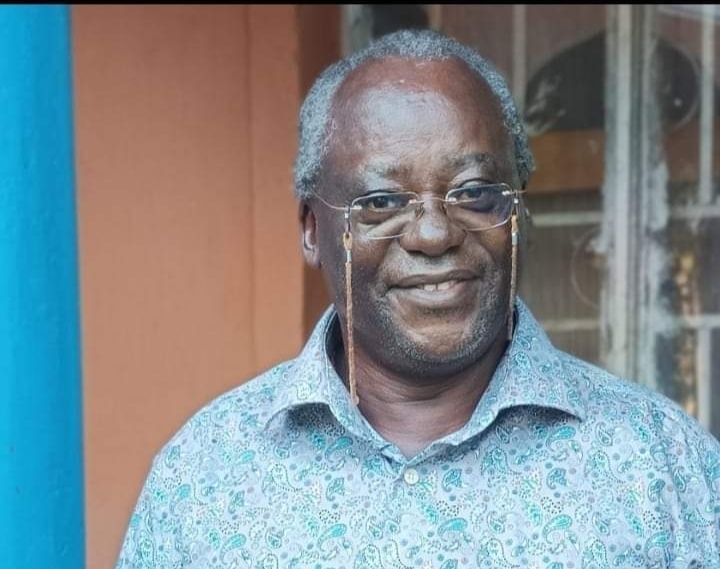
By Oweyegha-Afunaduula
Conservation Biologist
Centre for Critical Thinking and Alternative Analysis
In Uganda, the whispers of a “Mafia” echo through corridors of power, pointing to a quiet dismantling of the very institutions meant to safeguard its people. From courts to classrooms, the threads of influence are pulling toward a shadowy centre—threatening governance, equity, and the nation’s future. This article explores how this network, entrenched in politics, business, and security, is de-institutionalising Uganda, and what it means for the country’s citizens.
What Does De-institutionalisation Mean?
I define de-institutionalisation as weakening formal institutions and making them serve private interests instead of the public good. In the context of Uganda, de-institutionalisation is a system where rules bend to favour a powerful few, eroding accountability and democracy.
The following are what I consider to be the key dimensions of de-institutionalisation in Uganda.
Political Capture
Presidentialism:
Article 98 of the 1995 Constitution grants broad powers to the President, enabling NRM-aligned governance in all sectors of the economy. The President appoints all key officials in every sector, including judges. He dissolves Parliament and influences national budget allocations. This explains why, in every national or supplementary budget, security and State House receive more funding than essential sectors such as education, health, and agriculture.
Elections and Parties
Money politics is squeezing out genuine voices, filling positions with complacent figures or sycophants, thereby undermining professionalism and dividing the nation along ethnic lines. I will not include “tribalism” here because I do not believe it exists in Africa generally or Uganda specifically. It is an alien concept introduced by British colonialists and perpetuated by neo-colonialists and black colonialists who succeeded them—violating rights, grabbing land, and using ethnic considerations in appointments and employment.
What exist instead are indigenous groups and clans. If we disregard the constitutional creation of an indigenous group of Banyarwanda, Uganda has indigenous groups such as the Acholi, Banyankole, Baganda, Bagisu, Bakedi, Bakiga, Banyoro, Basoga, Bateso, Bakaramoja, Basebei, and Batoro. These groups have natural belonging and identities which the 1995 Constitution should have protected and preserved.
Political parties without ideology, committed to maintaining the status quo rather than building nationalism, are of no use to citizens yearning for democracy, freedom, and justice. They facilitate de-institutionalisation by refusing to challenge anti-people laws and policies. Their leaders become easily compromised when power seeks to advance Mafia interests.
Ethnic Politicisation
Appointments prioritise loyalty over merit, undermining professionalism. Institutions filled with loyalists no longer operate on ethics or competence. While power preaches unity and patriotism, its preference for loyalty over morality undermines both—serving Mafia interests by keeping people divided and unpatriotic.
Economic Exploitation
Business control has become the norm. Major sectors of the economy are dominated by Mafia networks that evade or minimise taxes. Public resources, including minerals and finances, are diverted. The Inspector General of Government reports losses of UGX 10 trillion annually to corruption.
Thousands of young people have been pushed into domestic and international servitude, especially in the Middle East. Indigenous entrepreneurs are squeezed out through over-taxation and exclusion. The Mafia prefer ownership while locals work under them.
Remittances grew from USD 52.4 million in 2010 to USD 309.2 million in 2018, accounting for 23% of Uganda’s USD 1.3 billion remittance inflows. By 2024, 317,555 Ugandans were working in the Middle East—84.45% of them women. This undermines Uganda’s reproductive capacity.

Many labour export firms belong to Mafia networks. Connected to this trade are allegations of organ trafficking. Slaves are reportedly killed for body parts to serve wealthy recipients abroad.
Gold, now Uganda’s largest export, is controlled by Mafia networks. Gold-producing regions such as Busoga and Karamoja receive no benefits. The situation is worse than under colonial exploitation.
Agriculture
Operation Wealth Creation (OWC), a military-led programme under the NRM, sidelines professionals and weakens the Ministry of Agriculture. Billions are allocated annually, turning OWC into a money-making venture for military elites. This has accelerated de-institutionalisation of the agricultural sector.
Land Grabbing
Land grabbing by individuals linked to dominant power structures has displaced indigenous communities, destroying cultural institutions and agro-ecological systems. Food insecurity and future dependency loom.

Social Decay
Education
Leadership in education lacks professionalism. Colonial-era schools are decaying. Private schools dominate, exploiting poor families. Government plans to rehabilitate infrastructure are welcome but late.
Health
Public healthcare has collapsed while public funds finance private hospitals such as Lubowa. Preventable deaths are rising. Privatisation favours Mafia hospitals while neglecting public ones.
Media and Academia
Media self-censorship is widespread due to threats from the Uganda Communications Commission (UCC). Attempts to close Busoga Radio One illustrate political interference. Universities have muted humanities and social sciences, silencing critical voices and disconnecting academia from society.
Security and Justice
Security forces increasingly suppress opposition and protect elite interests. The judiciary is compromised. The UPDF Act 2025 raises fears of silencing dissent and subverting justice in favour of the Mafia.
Cultural and Societal Impact
Weaponised poverty, fear, and silence prevail. Cooperatives have been dismantled or co-opted. Youth, women, and disabled groups are given representation without empowerment. Programmes like Emyooga, OWC, and PDM ultimately benefit Mafia networks.
Consequences and Risks
Democracy has eroded, inequality risen, sovereignty weakened, national identity eroded, and environmental stress increased. Patronage dominates governance, limiting reform and entrenching Mafia control.
In conclusion, Uganda’s institutions need safeguarding. Transparency, accountability, and inclusive governance are essential. The cost of inaction is a nation where power, not people, dictates the future.
For God and My Country.
If you would like your article/opinion to be published on Uganda’s most authoritative news platform, send your submission on: [email protected]. You can also follow DailyExpress on WhatsApp and on Twitter (X) for realtime updates.