

This story was first published by Daily Monitor and is republished by Daily Express with attribution.
Kampala, Uganda: Kimombasa, a densely populated slum in Bwaise Parish, Kawempe Division, has over the decades become notorious for prostitution, drug abuse and extreme poverty, with sex work deeply woven into the area’s social and economic fabric.
The settlement derives its name from Mombasa, Kenya’s coastal city, following the return of women in the 1970s who had previously engaged in commercial sex work there. According to Ms Masituula Nabawanuka, the Local Council representative for women’s affairs, the women settled in the area, then known as Jambula Zone, opened brothels and began recruiting young girls into prostitution.
“The brothels attracted men, and over time the place became known as Kimombasa, in reference to where the trade originated,” Nabawanuka said.
Today, Kimombasa faces multiple social challenges, including theft, drug abuse, poor sanitation and widespread prostitution. Charles Kiyingi, a community leader and long-time resident, says some sex workers are as young as 13 years old, driven into the trade by poverty and family breakdown.
Sex workers, he explains, are informally categorised by age. Older women, typically 35 years and above, operate privately through mobile phones and charge higher fees, while younger women sit along narrow alleys and outside makeshift brothels waiting for clients.
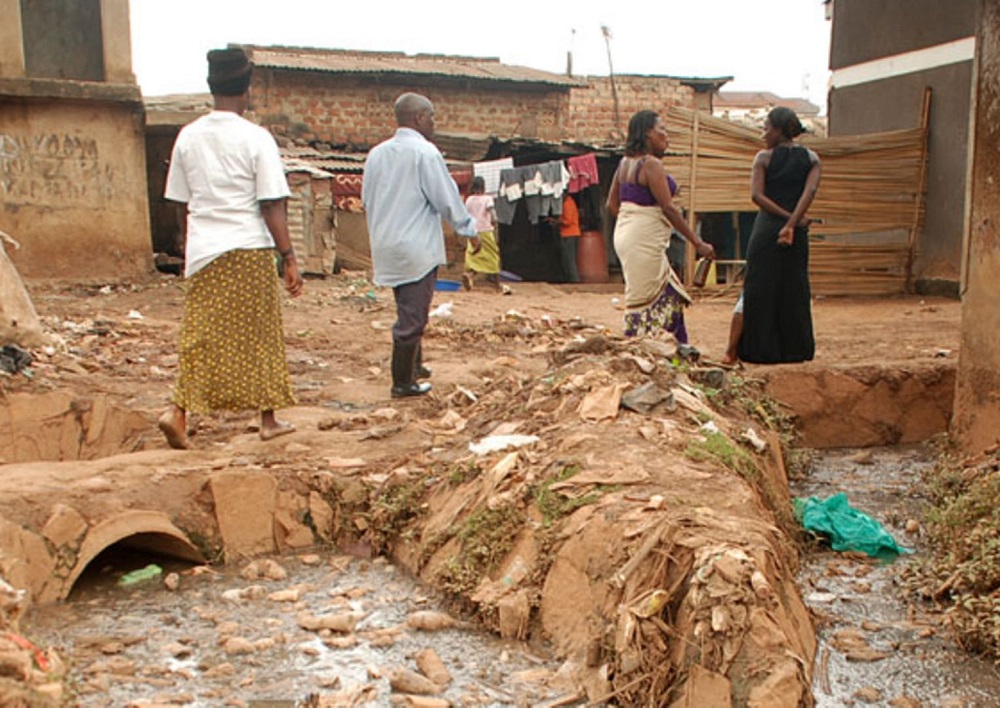
Many homes double as family residences and sex parlours. Makeshift houses are overcrowded, sanitation is poor, and garbage, including human waste, is dumped into stagnant drainage channels, creating breeding grounds for disease.
As one moves deeper into the slum, bedsheets hang from wires, often from brothels, while loud music blares from video halls and nearby rooms where scantily dressed women linger. Alcohol sold in small plastic sachets and bottles is readily available.
At least 300 sex workers are estimated to be operating in the area.
‘I Was Forced Into Prostitution as a Child’
Mango (not her real name), a former child sex worker now living in Kimombasa, recounts her ordeal with visible trauma. She says she was forced into prostitution in 2002 while still a minor, after losing both parents at the age of nine.
Taken in by an aunt in Kawaala, Mango says lack of parental supervision pushed her into destructive choices. “I used to leave home in the morning and return at night. I had too much freedom,” she recalls.

Mango later became pregnant by a client and moved to Kikoni, sleeping in makeshift shelters with street children while begging to survive. Eventually, she relocated to Kimombasa after being promised work in scrap metal and other businesses, only to be forced back into prostitution.
“I had to go back to sex work to feed my child,” she says.
Fearing for her children’s future, Mango sent them upcountry. She now lives in a one-room mud-and-wattle structure without a latrine or bathroom, paying Shs3,000 per day in rent.
She says she wants to leave prostitution but has no alternative livelihood and accuses security officers of mistreating sex workers. “One time I was beaten and thrown into a drainage channel after demanding payment,” she recounts.

Sex workers typically charge Shs3,000 for short encounters, rarely exceeding Shs10,000 for longer encounters.
A Way Out
Despite the bleak reality, some women have escaped the trade. Madina (not real name), 35, left prostitution after five years. She joined sex work after her husband abandoned her and medical bills overwhelmed her restaurant wages.
Years later, fear that her teenage son would discover her work pushed her to quit. “I was tired of returning home at 5 am. It was time to reform,” she says. She now sells local brew.
Aisha (also not real name), 39, another former sex worker, also quit and now earns a living through brewing. “Leaving prostitution was the best decision of my life,” she says.
What Leaders Say
Ms Nabawanuka blames parental neglect and school dropout for the rise in prostitution, noting that many girls join the trade because their mothers do it. “When girls miss school, they are easily lured into sex work at a young age,” she said.
For Kawempe Division Mayor Emmanuel Sserunjogi, poverty is the root cause and calls for stronger government intervention. “If programmes like the Parish Development Model are implemented here, many women would leave prostitution,” he said. “They need capital, not condemnation.”
The names of sex workers in this story have been changed to protect their identities.
Source: Daily Monitor.
If you would like your article/opinion to be published on Uganda’s most authoritative news platform, send your submission on: [email protected]. You can also follow DailyExpress on WhatsApp and on Twitter (X) for realtime updates.

