Kampala, Uganda: Parliament has okayed the government to borrow $162 million (about Shs580 billion) from the Korea Export-Import Bank to finance the Makerere University Infrastructure Improvement Project, aimed at expanding and modernising academic facilities, particularly in science and health disciplines.
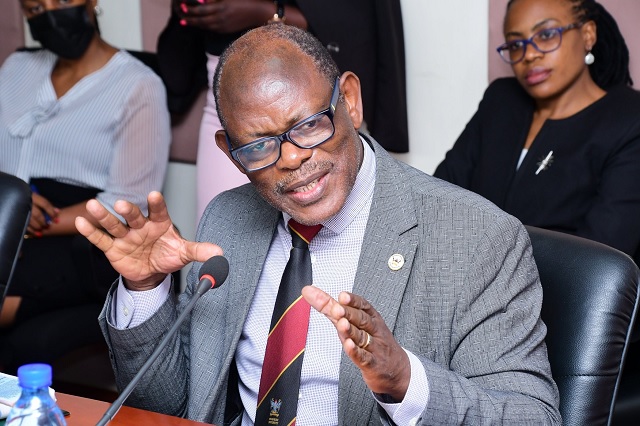
The loan approval was passed during plenary sitting on December 16, chaired by Deputy Speaker Thomas Tayebwa, in the presence of Makerere University top management led by Vice Chancellor Barnabas Nawangwe.
“We are going to proceed and process the loan,” Tayebwa ruled during plenary.
His ruling came after the Minister of State for Higher Education, John Chrysostom Muyingo, appearing on behalf of the Minister of Education and Sports and First Lady Janet Kataaha Museveni, had earlier in the day sought approval from the Parliamentary Committee on National Economy for the borrowing proposal.
“Honourable Chair and Members, the Ministry of Education and Sports prays that this Committee approves government’s proposal to borrow US$162 million from the Korea Export-Import Bank, given its strategic importance in enhancing productivity and national competitiveness through improved quality of Science, Technology, Engineering and Mathematics (STEM) education,” Muyingo said.
He explained that the project targets expansion and modernisation of academic infrastructure, strengthening institutional capacity in STEM and health sciences to address rising enrolment, inadequate facilities, and the need to improve teaching, learning and research outcomes.
Under the project, new facilities will be constructed at the College of Health Sciences to support pre-clinical education, alongside a fully equipped new building for the School of Dentistry to enhance dental education, technology and clinical practice.
The project will also include construction of a Science and Technology Centre housing laboratories and innovation spaces for mechanical, electrical, civil and computer engineering, including incubation and start-up facilities.
Additional works include upgrading laboratories and smart classrooms at the College of Computing and Information Sciences, as well as constructing and equipping a new building for the Departments of Mechanical, Civil and Electrical Engineering under the College of Engineering, Design, Art and Technology.
Muyingo informed Parliament that the project had successfully undergone the Public Investment Management appraisal process and received Cabinet approval.
The project will be implemented over 42 months, spanning the 2025/2026 to 2029/2030 financial years, at an estimated total cost of Shs700.26 billion (about $204 million). Financing will comprise a concessional loan from the Government of the Republic of Korea and counterpart funding of $42 million from the Government of Uganda to cover taxes, duties and project management costs not eligible under the Economic Development Cooperation Fund (EDCF).

The Ministry of Education and Sports will serve as the executing agency, with Makerere University as the implementing unit under the responsibility of the Vice Chancellor.
During debate, Hillary Lokwong supported the loan but questioned its timing, arguing that Parliament was being approached at a politically sensitive moment ahead of campaigns. He also urged government to prioritise investment in struggling primary and secondary schools.
His concerns were echoed by Joseph Gonzaga Ssewungu, who questioned why borrowing appeared to focus on Makerere while other public universities and UPE schools faced severe infrastructure challenges.

Responding, Tayebwa said securing concessional loans is a complex process and defended prioritising Makerere as the country’s premier institution.
“I was among those who went to Korea to lobby for this support. It was not easy. We started with Makerere because it is a premier university that many other universities depend on,” Tayebwa said, while tasking the education ministry to consider support for other institutions.
Muyingo assured MPs that government has plans covering the entire education cycle and warned that Parliament should expect future loan requests to revamp other universities and technical institutions.
Leader of Opposition Joel Ssenyonyi cautioned against unchecked borrowing, noting that Uganda’s debt-to-GDP ratio now stands at 51.3 percent, edging into what he described as the red zone.
Appearing before MPs, Prof Nawangwe said Makerere’s student population has grown from about 5,000 three decades ago to the current 35,000, necessitating major infrastructure expansion.
“Everyone wants to study at Makerere. At one time we had 50,000 students, but we reduced numbers due to public outcry. The School of Medicine alone grew from 100 students to about 3,000,” Nawangwe said.
He added that the current science-to-humanities programme ratio of 2:5 would be improved to at least 3:5 with the new facilities, enabling the university to meet international standards and reduce reliance on costly overseas PhD training.
Nawangwe also dismissed claims that Makerere is overstretched by international students, revealing that only about 1,500 of the 35,000 students are foreigners, largely due to policy changes in Kenya that reduced student mobility.
If you would like your article/opinion to be published on Uganda’s most authoritative news platform, send your submission on: [email protected]. You can also follow DailyExpress on WhatsApp and on Twitter (X) for realtime updates.