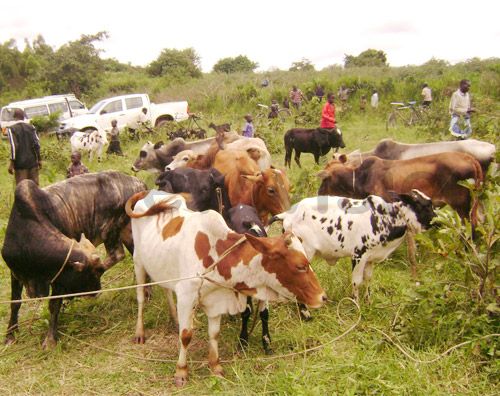
Apac, Uganda: A UGX 76 billion government cattle restocking programme targeting war-affected communities in Northern and Eastern Uganda has reignited cautious optimism, even as memories of past failures fuel deep public scepticism.
The renewed push follows a December 19, 2025 directive from the Office of the Prime Minister (OPM) instructing district leaders in Acholi, Lango and Teso sub-regions to begin identifying beneficiaries for a second phase of national livestock restocking, scheduled for the 2025/2026 financial year.
The programme seeks to compensate households that lost cattle during years of insurgency, cattle rustling and prolonged displacement—losses that shattered livelihoods, cultural identity and household resilience in some of Uganda’s most affected regions.
Who Gets What
Under the programme design, each eligible household is expected to receive livestock worth approximately UGX 1.6 million, mainly cattle, with government arguing that restocking remains among the fastest routes to restoring income, food security and dignity in agrarian communities.
Regional Allocations indicate that Lango sub-region is allocated UGX 28.4 billion, Acholi sub-region: UGX 23.3 billion, and Teso sub-region: UGX 24.2 billion.
Going by the districts in Lango, the allocation is as follows: Oyam: UGX 5.45bn, Lira City: UGX 3.13bn, Kole: UGX 3.13bn, Lira District: UGX 2.73bn, Apac: UGX 2.62bn, Dokolo: UGX 2.48bn, Kwania: UGX 2.35bn, Alebtong: UGX 2.90bn, Amolatar: UGX 1.96bn and Otuke: UGX 1.69bn
District chairpersons and town clerks have been directed to work with parish chiefs, technical staff and local councils to identify and verify beneficiaries, with final lists due at OPM by January 5, 2026.
A Presidential Promise Revisited
The restocking initiative revives an earlier presidential directive that positioned livestock recovery as central to post-war economic reconstruction. In Acholi, Lango and Teso, cattle are not merely assets—they underpin culture, social status, agriculture, school fees and long-term household security.
Yet previous programmes left scars. Communities recall politicised selection, ghost beneficiaries, poor-quality animals and limited follow-up, outcomes that undermined trust and diluted impact.
These memories have prompted caution from lawmakers. Erute South MP Jonathan Odur, speaking on Voice of Lango, warned that funding alone will not deliver transformation.
“The programme sounds good in theory, but it risks becoming mere talk if it does not genuinely benefit the people it is intended to help,” Odur said. “If the same mistakes are repeated, ghost beneficiaries, politically connected recipients and no monitoring, then this money will not change lives.”

His warning mirrors widespread anxiety as districts race to compile beneficiary lists under intense political and social pressure.
District Leaders Defend the Process
Local leaders insist safeguards are stronger this time. Oyam LC5 Chairperson Benson Dila said community-led verification is central. “We are involving parish chiefs, village elders and technical staff. The people know who lost cattle during the war. This process is under intense public scrutiny.”
In Lira City, Town Clerk Sarah Akello said displaced urban households are also being considered. “The war did not only affect rural areas. Many families in the city lost livestock and livelihoods. We are ensuring inclusivity.”

Apac LC5 Chairperson Odonogo Asanti acknowledged the pressure. “Everyone wants to benefit. Our task is to ensure the truly affected households are prioritised.”
Voices from the Ground
Among residents, the programme has reopened wounds and hopes. In Alebtong, widow Grace Aber recalls losing her family’s last cow in 2003. “That cow paid school fees and fed my children. If I get another, I can start again, but only if the list is fair.”
Peter Ocen, a young farmer in Kole, believes restocking could reverse rural unemployment. “Without animals, farming collapsed. This can bring youth back to agriculture.”
From Kwania, Nancy Akello stressed the need for sustained support. “Animals need medicine and follow-up. Otherwise they die, and the poverty remains.”
In Otuke, elderly survivor Mzee Luzino Okello framed the loss in cultural terms. “When cattle were taken, our dignity went with them.”
Similar sentiments echo across Acholi and Teso, where leaders insist the programme must be insulated from corruption if it is to rebuild confidence in post-conflict recovery.
Beyond the Cows
Development experts warn that livestock restocking alone is insufficient without veterinary services, pasture management, climate resilience and market access. As districts prepare submissions to OPM, scrutiny is intensifying, not on the size of the budget, but on whether cattle reach the right households and survive long enough to alter livelihoods.
If you would like your article/opinion to be published on Uganda’s most authoritative news platform, send your submission on: [email protected]. You can also follow DailyExpress on WhatsApp and on Twitter (X) for realtime updates.