Editor’s Note
As Uganda hurtles toward the 2026 general elections under a darkening cloud of suspicion, exclusion, and institutional contradiction, the recent wave of de-nominations of parliamentary candidates, overwhelmingly targeting opposition and independent NRM-leaning challengers, has transformed what should be an administrative process into a political weapon. What began as routine nominations has morphed into a purge, and the consequences for democracy are profound.
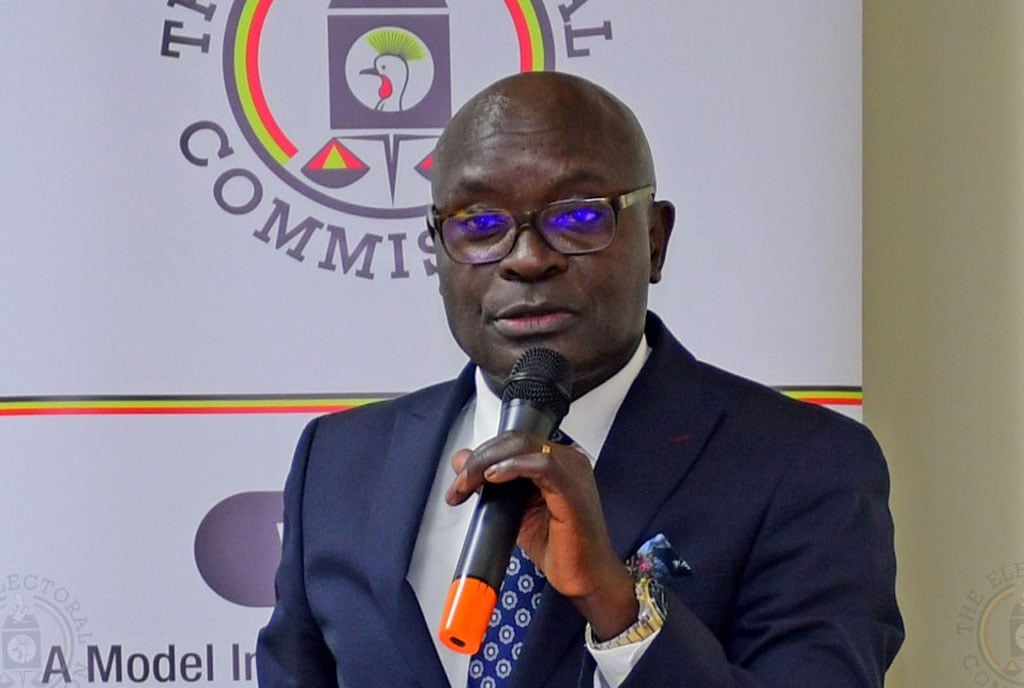
At the centre of the storm is the Electoral Commission (EC) under its Chairperson, Justice Simon Byabakama. The Commission insists its systems are “authentic” and rigorous. Yet the same system that now declares candidates unfit previously vetted and cleared them, accepted their nomination papers, validated their supporters’ signatures, gazetted their candidatures, and issued official campaign roadmaps. But weeks later, those very signatures are retroactively branded “defective.” This is not diligence; it is institutional self-indictment.
If the EC’s digital and manual verification mechanisms were robust, how did allegedly invalid signatures evade detection at nomination? If they were not robust, why were candidates cleared and allowed to mobilise, spend resources, and engage voters? Either way, the Commission cannot escape responsibility. A referee who changes the rules after kickoff forfeits credibility.
This pattern raises a deeper, more troubling question: why now? During Byabakama’s first term, and even under his predecessor, Eng Dr Badru Kiggundu, disputes over nominations existed, but they did not crystallise into a systematic, late-stage de-nomination spree. The timing today, deep into the campaign calendar, suggests not improved scrutiny but strategic exclusion. It is governance by ambush.
More alarming is the asymmetry of impact. The denominations fall almost entirely on opposition candidates, especially from the National Unity Platform (NUP), and on independents perceived to threaten entrenched incumbents. Meanwhile, candidates from the ruling party simply walk through, unscathed by the same technicalities.
Even some senior NRM figures, speaking privately and sometimes publicly, admit discomfort: victories engineered by omission cheapen the mandate they are meant to secure. Winning without contest is not strength; it is fear masquerading as order.
Voters are asking the questions institutions refuse to answer. Why do “signature discrepancies” only mature into disqualifications when competition tightens? Why do these flaws escape detection until the political cost of correction becomes maximal?
Are EC staff altering records post-submission, as opposition parties allege? Or are local incumbents quietly buying procedural mercy to fence off challengers? In the absence of transparent, independent audits, suspicion thrives, and legitimacy withers.

Also, the silence of the Inter-Party Organisation for Dialogue (IPOD) is deafening. As the umbrella body meant to safeguard multipartyism, IPOD’s quietude reads as a concession to the practice. If parties cannot collectively defend the rules of participation, what exactly is being dialogued? A multiparty system that tolerates selective exclusion is multiparty in name only.
There is also the looming spectre of escalation. If parliamentary candidates can be struck off deep into the cycle, what prevents last-minute denominations of presidential candidates on similarly elastic grounds? The precedent has been set: eligibility is provisional, revocable, and politically contingent. That should alarm every Ugandan, regardless of party colour.

Democracy is not merely the act of voting; it also encompasses the right to compete, the certainty of rules, and the equal application of law. An election that narrows choices through administrative fiat is not competitive, it is curated. Citizens sense it. Analysts warn it. Even beneficiaries of the current imbalance privately concede it.
Uganda deserves an Electoral Commission that resolves doubts at nomination, not one that weaponises doubt after mobilisation and mounting challenge on incumbents. It deserves an umpire that protects participation, not one that perfects exclusion.
Until the EC explains, with evidence and transparency, how its “authentic” systems failed first and punished later, until IPOD speaks, and until the law applies evenly, the 2026 elections will proceed not as a contest of ideas, but as a procession of omissions.
And omissions, repeated often enough, do not just erase candidates. They erase trust.
Disclaimer
This article is an Editor’s Note and reflects the considered editorial opinion of DailyExpress. The views expressed herein are based on publicly available information, observed electoral developments, and ongoing public discourse surrounding Uganda’s 2026 general elections. They do not necessarily represent the positions of any political party, institution, or individual mentioned.
All individuals, organisations, and institutions referenced are presumed to be acting within the confines of the law unless otherwise established by competent authorities. Allegations, questions, and opinions raised are intended to stimulate public debate, accountability, and democratic reflection, not to assert criminal culpability.
DailyExpress remains committed to balanced journalism and welcomes right of reply, clarification, or response from the Electoral Commission, political parties, state institutions, and any persons referenced in this publication, in accordance with journalistic ethics and Uganda’s media laws.