Kampala, Uganda: The Supreme Court of Uganda has dismissed an application that sought to suspend the 2026 general elections and compel the enforcement of recommendations arising from the 2016 presidential election petition between former prime minister Amama Mbabazi and President Yoweri Museveni.
In a unanimous ruling delivered on January 12, 2026, the court held that the applicant, one Mukisa Patrick, lacked the legal standing to invoke its original jurisdiction and that it had no constitutional mandate to entertain or grant the reliefs sought.
The court decision turned on two preliminary points of law: whether the applicant had locus standi and whether the Supreme Court had jurisdiction to hear a pre-election dispute of that nature.
Court records seen by this publication indicate that Mukisa, who is/was not even a presidential candidate in either the 2016 or 2021 elections, filed a chamber summons seeking an interim injunction to halt the 2026 presidential, parliamentary and local government elections until all recommendations and orders issued by the Supreme Court in the 2016 Mbabazi petition and a related 2019 application were fully implemented.
He has further sought declarations aimed at disqualifying certain candidates and would-be candidates whose participation, he argued, allegedly contravened those recommendations.
In some of the most far-reaching prayers, Mukisa had asked the court to declare the 2021 general elections unconstitutional, illegal, null and void; to dissolve the government elected from those polls; and to order the establishment of an interim government to run the country pending fresh elections.
In defense of his petition, Mukisa told court he was acting as a “concerned citizen and whistle-blower,” relying heavily on the Supreme Court’s recommendations in the Mbabazi case, which called for broad electoral reforms, including extending timelines for election petitions, guaranteeing equal access to state media, regulating campaign financing by incumbents, restricting the involvement of public officers in campaigns, and establishing mechanisms to ensure implementation of court recommendations.
But the Supreme Court unanimously rejected his application, clarifying that Article 104 of the Constitution grants it original jurisdiction only in post-election presidential petitions filed by aggrieved candidates after declaration of results.

The judges ruled that Mukisa, as a voter and non-candidate, did not qualify as an aggrieved party and could not approach the court either as a litigant or as a friend of court in the absence of a pending matter.
The court further held that it has no power to hear pre-election disputes in its original jurisdiction, noting that such matters fall under the mandate of the Electoral Commission and are appealable to the High Court. It emphasized that courts cannot issue injunctions stopping elections, since Article 61 of the Constitution imposes a mandatory duty on the Electoral Commission to conduct elections within prescribed timelines.
Proceedings against President Museveni were also struck out, with the court reiterating that a sitting President enjoys constitutional immunity while in office.

The application was dismissed in its entirety with no order as to costs, and the court indicated that a detailed ruling would be uploaded on its electronic system.
Reacting to the ruling, the Manager of the Office of the National Chairman, Hadijah Namyalo Uzeiye, said the decision safeguarded Ugandans’ constitutional right to vote and upheld the rule of law.
“Stopping elections would have taken away Ugandans’ constitutional right to vote,” Namyalo said. “By dismissing this case, the court has protected the little we have constitutionally as Ugandans and reaffirmed our democratic freedoms.”
She urged citizens to remain focused on peaceful participation in the forthcoming polls, noting that the ruling reaffirmed stability, the rule of law, and the constitutional order governing Uganda’s electoral process.
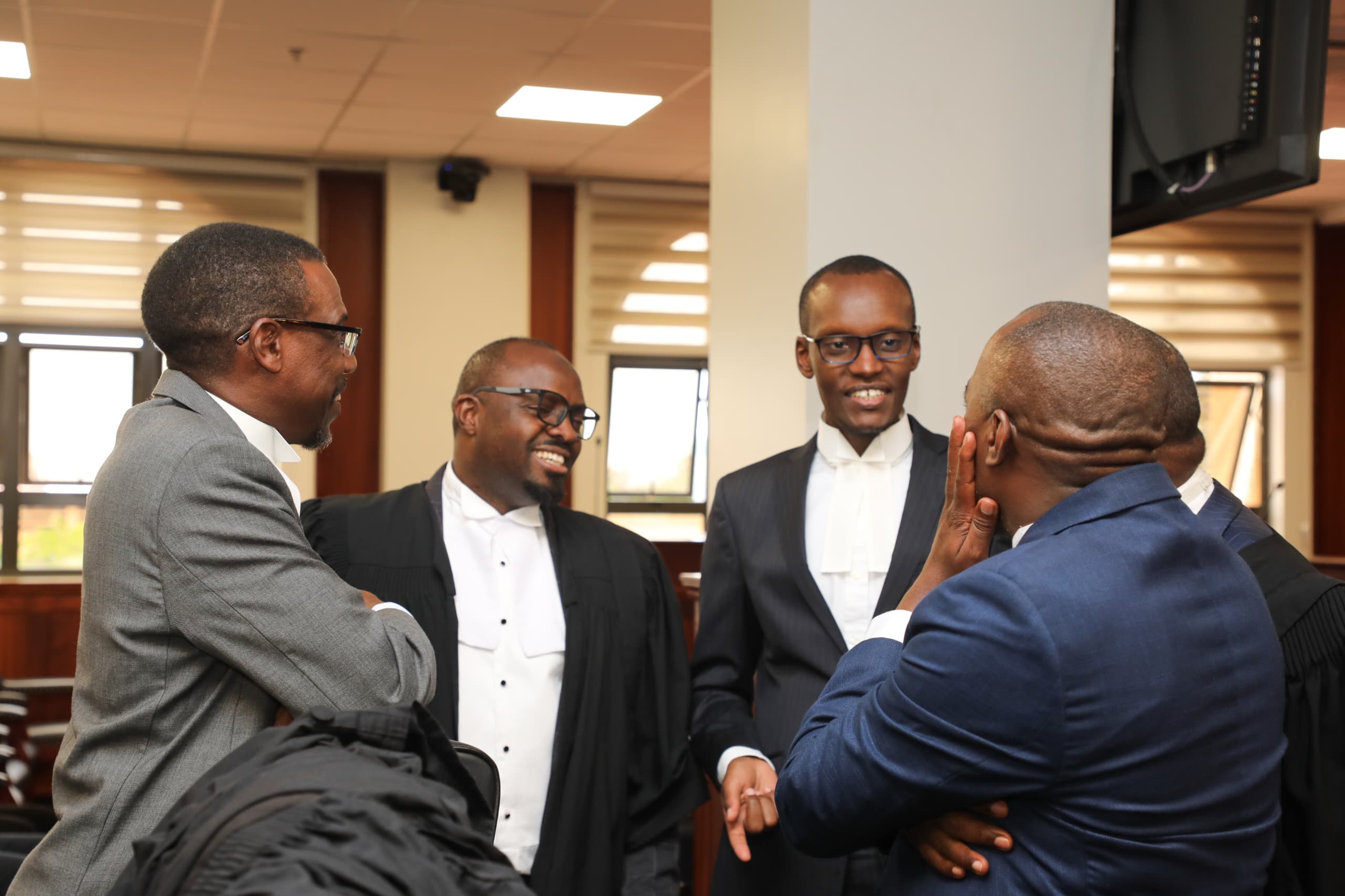
President Museveni was represented by K and K Advocates, led by Attorney General Kiryowa Kiwanuka, Edwin Karugire and Senior Counsel Usaama Ssebuufu.
If you would like your article/opinion to be published on Uganda’s most authoritative news platform, send your submission on: [email protected]. You can also follow DailyExpress on WhatsApp and on Twitter (X) for realtime updates.