By Ben Ssebuguzi
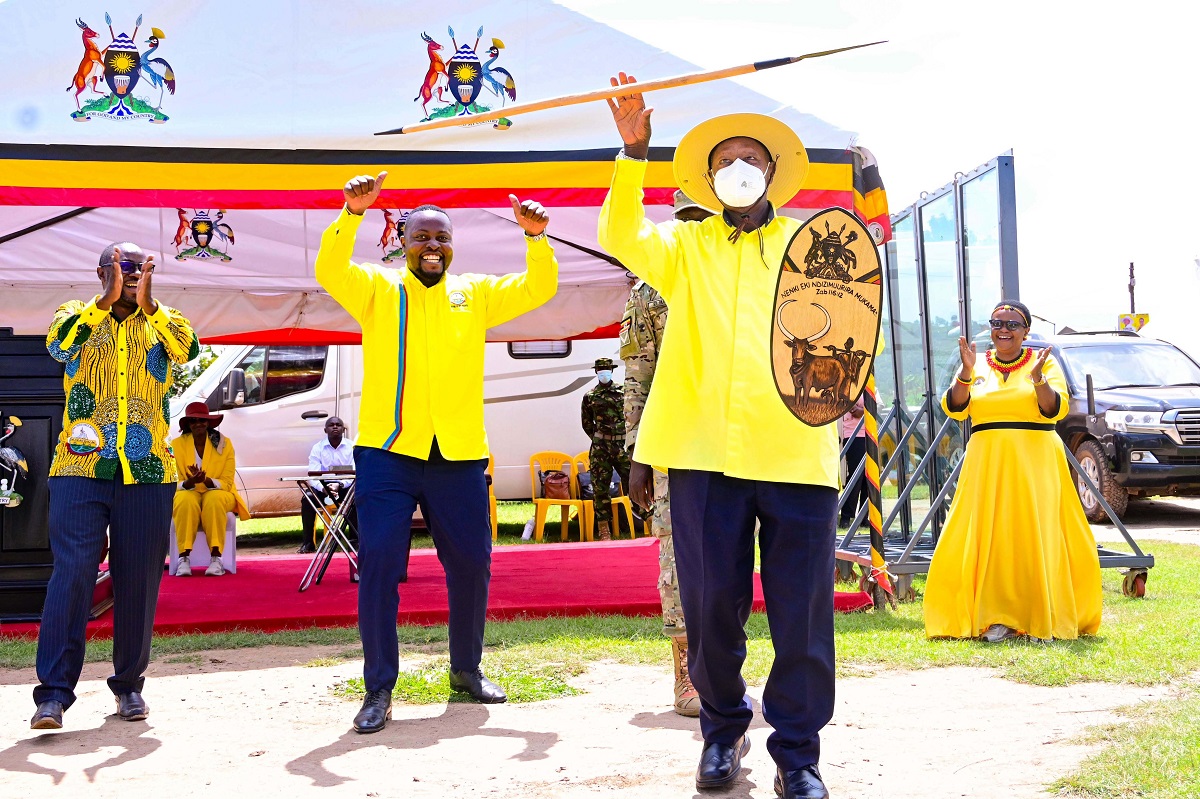
President Yoweri Museveni Tibuhaburwa’s recent victory as President-elect of Uganda—after polling more than 7.6 million votes and securing 71.88 per cent of the valid votes in the 2026 General Election—demonstrates the deep allegiance and loyalty many Ugandans continue to place in the National Resistance Movement (NRM).
His main challenger, Hon. Robert Kyagulanyi of the National Unity Platform (NUP), garnered 2,741,000 votes, representing 24.5 per cent, reflecting a notable decline compared to his 2021 performance.
From the outset, when President Museveni presented his manifesto Protecting the Gains as We Make a Qualitative Leap into Middle-Income Status, it was evident that he would command a dominant lead. In contrast, Hon. Kyagulanyi’s manifesto was perceived by many as shallow and unrealistic, weighed down by promises that lacked practical grounding.
In his 11-point manifesto, the NUP candidate failed to adequately diagnose the most pressing needs of the rural economy, where more than 80 per cent of the voting population resides. President Museveni capitalised on this gap by focusing squarely on improving household incomes—a subject that resonated strongly with voters and ultimately delivered the NRM a resounding victory.
President Museveni’s 143 presidential rallies, anchored on a consolidated message built around seven key blocs, and punctuated with videos of model farmers, were deliberate and strategic. Messages on peace, infrastructure development, wealth creation, service delivery, market access and political integration proved invaluable in driving the NRM’s landslide win.
Furthermore, candidate Kyagulanyi’s political weight and pedigree could not match President Museveni’s long history in public administration, underpinned by a strategic framework spanning more than 50 years.
While President Museveni articulated the importance of expanding regional markets for Ugandan goods—a message that directly appealed to livelihoods—the NUP candidate struggled to explain the value of regional corridor infrastructure, such as the 223-kilometre road network linking Beni, Goma and Butembo, to the strategic business interests of Ugandans.
Given that Uganda is a landlocked country, it requires a leader who can exert influence and navigate complex regional dynamics. President Museveni’s global stature, self-awareness, resilience and experience position him to manage these realities. Questions remain as to whether his main challenger could clearly articulate policies on removing non-tariff barriers and tariffs to attain price competitiveness.
Trade among African countries holds immense potential for sustainable development. President Museveni’s campaign consistently emphasised promoting African synergies and markets. Even in his acceptance speech, he reaffirmed commitment to continental frameworks such as AfCFTA, underscoring his broader vision for Africa’s growth and global competitiveness.
Another comparative advantage for the NRM was Uganda’s progress in mineral sector development, particularly oil. From championing commercial exploitation to advancing the US$5.6 billion EACOP project, these undertakings demand seasoned leadership. Many Ugandans viewed it as risky to entrust such critical projects to an inexperienced leader.

Uganda’s transition from a high-risk, agriculture-dependent economy to a more diversified one driven by minerals, industry and services has contributed to projected economic growth of about 6.5 per cent this year.
It is also important to acknowledge the role of the Office of the National Chairman (ONC), led by Hajjat Hadijah Namyalo, whose mobilisation messages—such as “Tova Ku Main” and “Tova Ku Ballot”—kept supporters engaged and energised. ONC became a unifying centre, bringing together Ugandans from different walks of life through fellowships, youth engagement and cultural identification.
ONC’s empowerment initiatives, including distribution of goats, poultry, sewing machines and welding equipment to youths and women, significantly weakened opposition strongholds. The vote-protection strategy was better prepared this time, contributing to the jump from 59 per cent in the previous election to 71.88 per cent in 2026.
In redefining poverty, it must be understood not only as lack of income but also as lack of capability. NRM achievements in roads, free education through UPE, industrial skilling hubs and electricity generation remain central to poverty alleviation and heavily influence voter choice.
Congratulations to the people of Uganda for voting their National Chairman, and congratulations to President Yoweri Museveni for trusting the Bazzukulu to remain a pillar in transforming Uganda.
The writer is the Head of Research, Office of the National Chairman.
If you would like your article/opinion to be published on Uganda’s most authoritative news platform, send your submission on: [email protected]. You can also follow DailyExpress on WhatsApp and on Twitter (X) for realtime updates.