By Amiri Wabusimba
Each year, World Leprosy Day, marked on the last Sunday of January, offers the world a moment to reflect on a disease medicine has conquered but society continues to mishandle. In 2026, observed on January 25, Uganda joined the global community under the theme “Leprosy is curable; the real challenge is stigma”, a message that exposes a persistent paradox in global public health.
Leprosy, medically known as Hansen’s disease, is a chronic infectious condition caused by Mycobacterium leprae. It primarily affects the skin, peripheral nerves, eyes, and upper respiratory tract. Untreated, it can lead to nerve damage, sensory loss, muscle weakness, and visible deformities. These outcomes, often wrongly assumed to be inevitable or highly contagious, have historically driven fear, isolation, and discrimination.
Yet modern science tells a very different story. Leprosy is fully curable, not highly contagious, and does not spread through casual contact. With timely diagnosis and treatment, patients recover fully and quickly become non-infectious. The tragedy, therefore, is not the disease itself but the social stigma that delays diagnosis, deepens disability, and perpetuates exclusion.
Across many societies, stigma remains deeply entrenched. Misconceptions that leprosy is caused by curses, sin, or heredity, or that it has no cure, continue to shape responses from families, employers, communities, and even health systems. For many affected individuals, stigma outlives the disease, resulting in delayed care-seeking, psychological distress, and long-term socio-economic marginalisation.
Globally, leprosy is now a low-incidence but high-impact disease. About 200,000 new cases are reported annually worldwide, a figure that has remained stubbornly stable despite the availability of effective treatment. The disease’s long incubation period, ranging from months to up to two decades, complicates surveillance and masks transmission pathways.
Infection typically occurs through prolonged close contact with untreated individuals via respiratory droplets, a mode of transmission comparable to tuberculosis. Crucially, once multidrug therapy begins, patients rapidly become non-infectious, rendering isolation and exclusion medically unjustifiable.

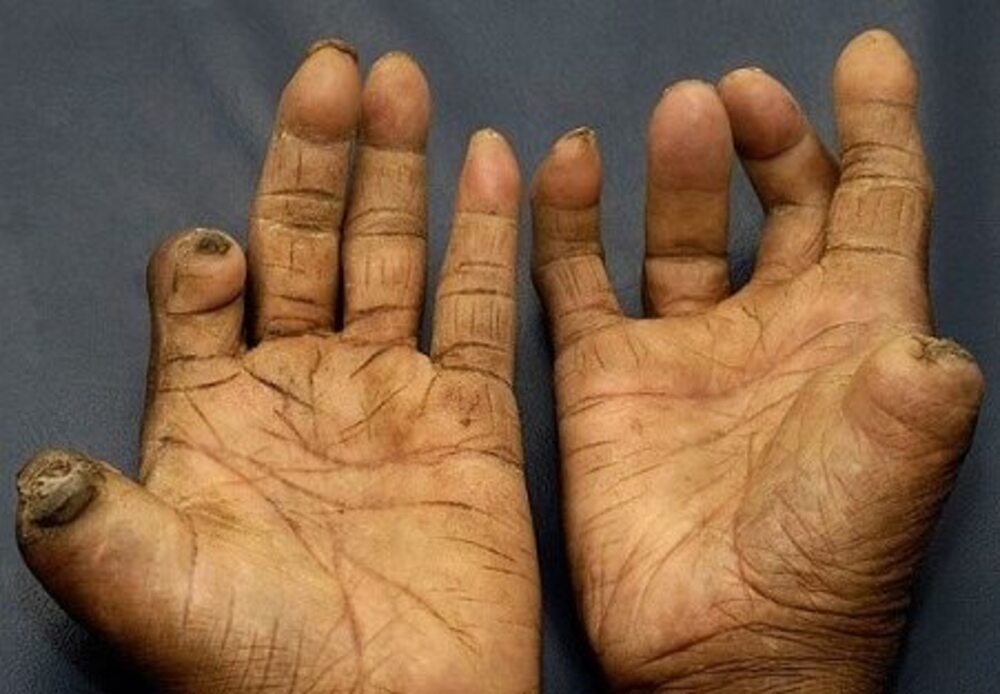
Early symptoms often include light or reddish skin patches with reduced sensation, nerve thickening, and numbness. When diagnosis is delayed, neurological damage may progress to clawed hands, foot drop, or visual impairment. These disabilities are not an inherent feature of leprosy; they are markers of health system gaps, late detection, and stigma-driven silence.
Diagnosis relies on clinical assessment supported by laboratory tests such as skin smears or biopsies. World Health Organization–recommended multidrug therapy, provided free of charge in many countries, is highly effective. Preventive tools, including early case detection, contact tracing, single-dose rifampicin prophylaxis, and Bacillus Calmette–Guérin (BCG) vaccination at birth, further reduce transmission. But these tools cannot reach their full potential in environments where fear and misinformation dominate.

Uganda’s experience illustrates both progress and challenge. Under the Zero Leprosy Roadmap 2022–2030, the country aims to achieve zero transmission, zero disability, and zero stigma by 2030. Strengthened surveillance, community engagement, and health worker training have contributed to a significant decline in affected districts between 2022 and 2024, alongside reduced new and relapse cases by 2025.
However, Uganda’s progress also underscores a wider global lesson: elimination is not only a biomedical milestone but a social one. As case numbers fall, stigma can intensify, pushing the disease into silence and invisibility among marginalised populations.
World Leprosy Day 2026 was therefore more than symbolic. It was a call to recalibrate global narratives around neglected tropical diseases, placing dignity alongside diagnosis, and inclusion alongside intervention. Ending leprosy will require sustained funding, strong health systems, and effective clinical tools, but it will also demand informed public dialogue, responsible media representation, and policies that centre the lived experiences of those affected.
Leprosy today is not a test of medical capability. It is a test of collective resolve. The persistence of stigma in the face of a curative disease exposes a deeper challenge confronting global health governance: the gap between scientific progress and social acceptance. Bridging that gap is essential, not only to eliminate leprosy but to advance a more just, humane, and informed global health order.
— Amiri Wabusimba is a communication specialist and diplomatic scholar.
If you would like your article/opinion to be published on Uganda’s most authoritative news platform, send your submission on: [email protected]. You can also follow DailyExpress on WhatsApp and on Twitter (X) for realtime updates.