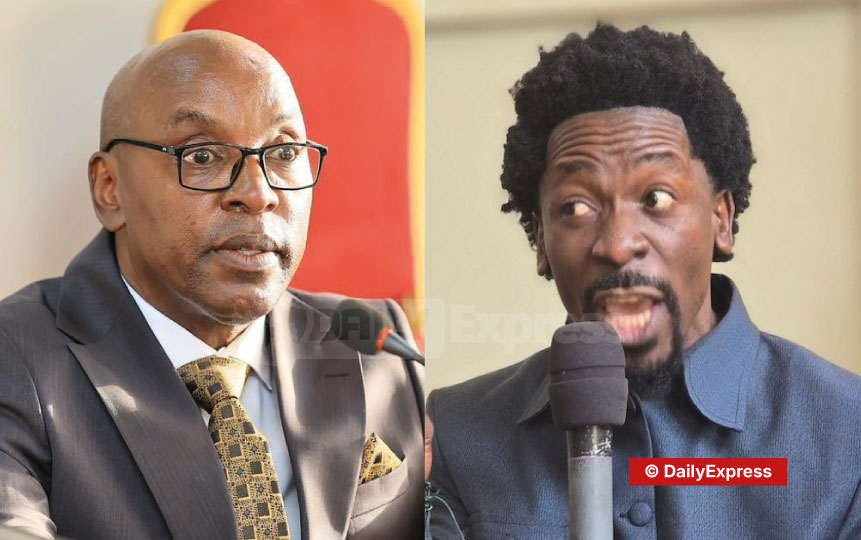
Kampala, Uganda: The Uganda Law Society (ULS) has strongly rejected what it describes as attempts by Chief Justice Flavian Zeija to silence online criticism of judicial officers, warning that policing social media speech would undermine constitutional freedoms and deepen the trust deficit between the Bench and the public.
In a jointly signed statement dated Friday, February 6, the legal body said judges, like all public officials, are not immune from criticism, including harsh or offensive commentary, stressing that freedom of expression is protected under Article 29 of the 1995 Constitution and reinforced by international human rights instruments to which Uganda is a party.
“Public officers, especially those exercising immense authority over citizens’ liberties, lives and property, must tolerate a higher threshold of scrutiny,” ULS said, cautioning that threats of legal action or declared intolerance risk chilling legitimate critique rather than safeguarding judicial dignity.
The lawyers’ statement followed remarks by Dr Zeija during the Opening of the New Law Year 2026, on Thursday, where he raised concern over online commentary he described as insulting or traumatic to members of the Bench.
While acknowledging that criticism of court decisions is legitimate, the Chief Justice warned that personal attacks on judges undermine judicial independence and public confidence.
“No judicial officer should be harassed by anyone while in the line of duty,” Zeija said, adding that the Judiciary would explore lawful mechanisms to protect officers from online abuse while maintaining transparency and accountability.
However, ULS argued that such language reflects a growing and troubling tendency within the Judiciary to rely on colonial-era offences such as scandalising the court, alongside modern statutes including the Computer Misuse Act and the Data Protection and Privacy Act, to suppress dissent.
“These tools, often associated with authoritarian control, are incompatible with a modern, independent judiciary in a constitutional democracy,” the Society said.
A history of bar–bench clashes
The standoff comes against the backdrop of a long-running and increasingly bitter confrontation between the Judiciary and sections of the legal profession over online criticism.
In recent years, several lawyers have faced arrests, prosecutions or imprisonment over social media posts critical of judges. Among the most prominent is Male Mabirizi, who has repeatedly been charged and jailed over online attacks on judicial officers.

In 2022, Mabirizi was sentenced to 18 months in prison for contempt of court following a series of social media posts targeting judges, including Musa Ssekaana.
More recently, Mabirizi was again remanded this week on charges of spreading malicious information and hate speech against Justice Ssekaana and the Chief Justice-designate himself, a case that has reignited debate about the criminalisation of online speech.
The conflict escalated further under the leadership of Isaac K. Ssemakadde, Senior Counsel and President of ULS, whose outspoken criticism of the Judiciary, particularly during the 2025 New Law Year opening, triggered sanctions, public rebukes and a widening rift between the Bench and the Bar. The fallout saw ULS boycott several Judiciary events and accuse the courts of intolerance toward dissenting lawyers.

Warning on legitimacy and public trust
The Society has vehemently warned that surveillance of online speech or punitive action against critics would worsen Uganda’s already fragile political environment, where the legitimacy of state institutions, including the Judiciary, is increasingly contested.
“The Judiciary derives its authority not from coercion or enforced reverence, but from impartiality, competence, timeliness, transparency and incorruptibility,” ULS said, urging Justice Zeija to abandon any “declared or implied policy of bellicosity” toward court users, lawyers and the wider public.
ULS further cautioned that if judges continue to treat critics as enemies rather than stakeholders, the public may increasingly view members of the Bench as political actors, a development it said would be damaging to judicial independence and national stability.
Citing the Inspectorate of Government’s Cost of Corruption Report (2021), the Society noted that public perceptions of the justice system are already shaped by long-standing concerns over corruption, delayed judgments, opacity, executive interference and unequal access to justice.
“Much work remains to rebuild credibility before any member of the current Judiciary can credibly claim the moral high ground from which to lecture the public on decorum,” the statement said.
The lawyers have called on the Chief Justice and his colleagues to prioritise substantive reforms, including clearing case backlogs, ensuring merit-based appointments and promotions, strengthening accountability mechanisms and demonstrating independence in politically sensitive cases.
“The Judiciary exists to serve the people, not to be shielded from them,” they concluded.
If you would like your article/opinion to be published on Uganda’s most authoritative news platform, send your submission on: [email protected]. You can also follow DailyExpress on WhatsApp and on Twitter (X) for realtime updates.