
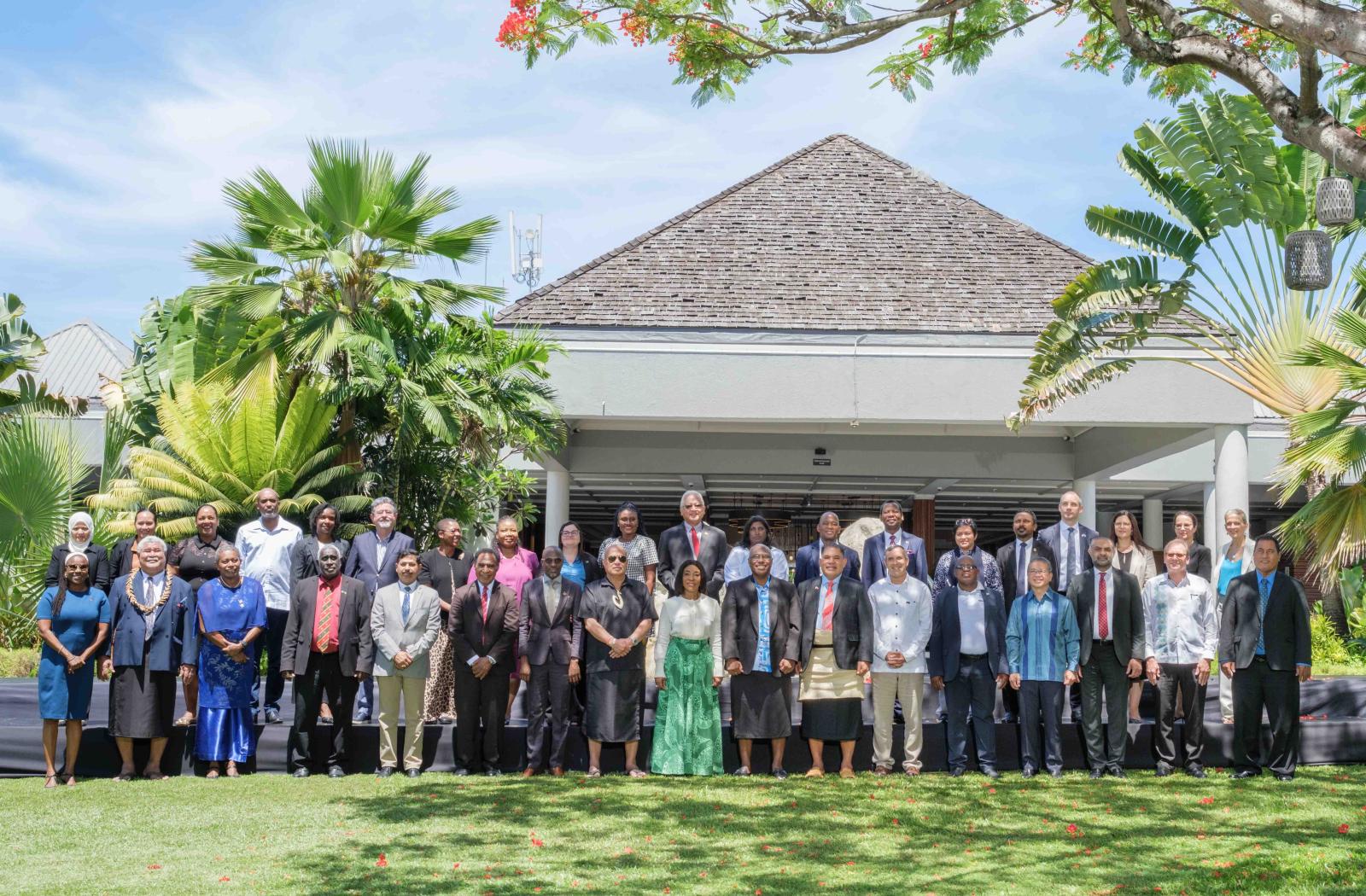
Nadi, Fiji: Law ministers from 56 Commonwealth countries have adopted fresh commitments aimed at strengthening democracy, protecting human rights and improving access to justice for citizens amid mounting global political, economic and climate pressures.
The resolutions were formalised in an outcome statement issued on February 11, 2026, at the close of the Commonwealth Law Ministers Meeting held in Nadi, Fiji.
A central milestone of the three-day summit was the adoption of the Nadi Declaration, which commits member states to renew democratic governance by reinforcing the rule of law, safeguarding fundamental rights and expanding citizen participation in decision-making processes.
The meeting brought together justice ministers and attorneys general, alongside disability rights advocates, legal innovators and other stakeholders to deliberate on emerging legal challenges affecting the Commonwealth’s 2.7 billion citizens.
Renewed Focus on Rule of Law
Commonwealth Secretary-General Shirley Botchwey described the commitments as critical at a time when the rule of law is facing increasing strain globally. “To continue along the current path would be to accept injustice and inequality as the new normal. For the Commonwealth, that is not an option,” she said.
Botchwey warned that weakening legal systems directly affects citizens’ daily lives, eroding peace, fairness and climate resilience. She urged collective action to ensure the new commitments translate into opportunity, dignity and prosperity.
Ministers agreed to strengthen cooperation, capacity-building and collective action to advance the Nadi Declaration across all member states.
Among the key resolutions, ministers pledged to combat misinformation and disinformation — including foreign interference in democratic processes — and to improve access to justice for vulnerable groups such as women, youth and persons with disabilities.

The ministers also welcomed new legal reform tools developed by the Commonwealth Secretariat and partner institutions aimed at reducing the cost of civil litigation, establishing family courts and reforming laws that criminalise poverty.
They underscored the importance of independent legal institutions in sustaining democratic governance and supported the Secretariat’s renewed focus on strengthening democracy through the rule of law.
Recognising the intensifying impacts of climate change, particularly for small island states, ministers reaffirmed that countries should retain their maritime zones, rights and entitlements even as rising sea levels alter coastlines.

The commitment is seen as particularly significant for Pacific and Caribbean member states facing existential climate threats.
The meeting was chaired by Siromi Turaga, Fiji’s Minister for Justice and Acting Attorney-General, who hailed the discussions as a renewed commitment to partnership.
“As we conclude this meeting, we do so with a renewed sense of purpose and partnership. We look forward to translating our shared work into lasting impact for Commonwealth countries,” Turaga said.
The Fiji meeting took place against a backdrop of a documented global decline in the rule of law, with billions of people worldwide still lacking meaningful access to justice.
Legal experts have warned that democratic backsliding, economic instability and climate-induced displacement are increasingly testing the resilience of governance systems across multiple regions.
The Nadi Declaration now sets the policy direction for Commonwealth legal cooperation over the coming years, with member states expected to domesticate the commitments within their national legal frameworks.
If you would like your article/opinion to be published on Uganda’s most authoritative news platform, send your submission on: [email protected]. You can also follow DailyExpress on WhatsApp and on Twitter (X) for realtime updates.