
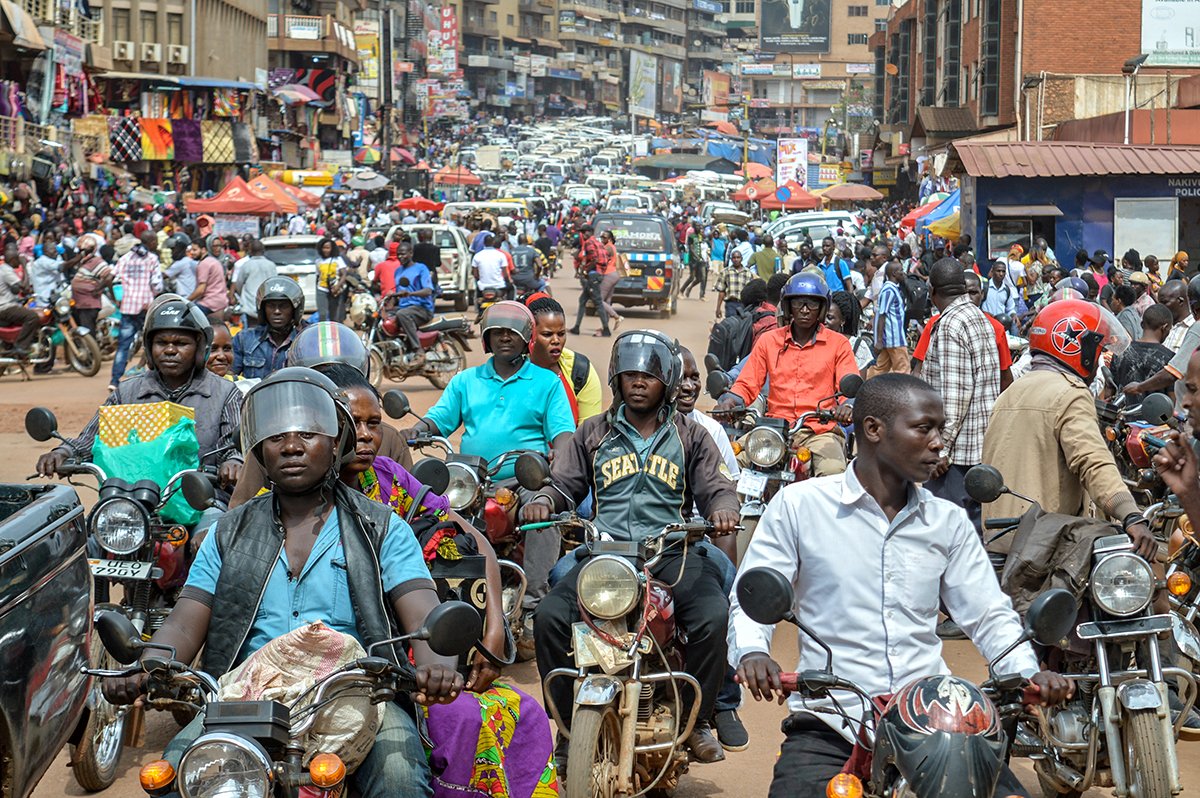
Kampala, Uganda: The Kampala Capital City Authority (KCCA) has unveiled plans to ban passenger-carrying boda bodas from accessing Kampala’s central business district (CBD) under a sweeping transport regulatory blueprint aimed at restoring order and tightening security.
The Kampala City Transport Regulatory Plan, currently under review, aims to restrict entry into the CBD to only motorcycles carrying cargo or riding without passengers. All passenger boda bodas will be required to stop at designated peripheral stages before the city centre.
KCCA says the move is part of a broader effort to organise the boda boda sector, curb crime, and streamline urban mobility across the five city divisions of Nakawa, Rubaga, Kawempe, Makindye and Kampala Central.
According to Daniel NuweAbine, Head of Corporate and Public Affairs at KCCA, the authority plans to gazette 929 boda boda stages across the five divisions, accommodating a capped number of 27,870 registered riders.
So far, 166 stages have already been gazetted.
Each division will host 185 stages with approximately 5,574 riders, translating to 30 boda bodas per stage.
“We want to see an organised city; each boda boda should belong to a specific stage for easy identification,” NuweAbine said, adding that structured stages would enhance accountability and economic coordination.
Under the plan, unregistered riders will be barred from operating within city limits.
Off-Limit Zones
The blueprint designates the CBD as a boda-free passenger zone. Riders entering through Jinja Road will stop at Kitgum House; those from Bombo, Hoima and Gayaza roads will halt at City Oil in Wandegeya; Entebbe Road riders will stop at Clock Tower; while those approaching from Masaka Road, Nateete, Mengo, Rubaga and Wakaliga will stop at Berkley (Bakuli).
No boda bodas will be allowed near banks or within non-motorised transport (NMT) corridors reserved for pedestrians and cyclists.
The move follows earlier directives by the Minister for Kampala Metropolitan Affairs, Minsa Kabanda, who ordered eviction of street vendors and unregulated boda boda operators from the CBD.
Shift to Buses and Rail
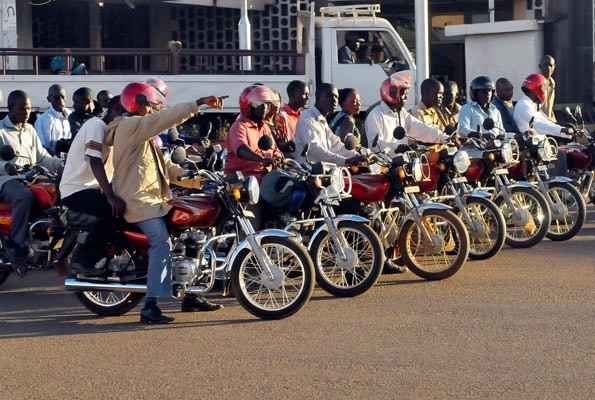
KCCA officials say the restrictions will be complemented by the expansion of mass transit options, including buses and commuter rail.
The plan references collaboration with Kiira Motors Corporation (KMC), the state-owned electric vehicle manufacturer based in Jinja. KMC’s Kayoola EVS electric buses will be expected to serve as feeder transport from designated boda boda stop points into the city centre.

Authorities argue that a bus-based system will be safer, cheaper and more efficient than the current informal motorcycle-dominated transport network.
Registration and QR Tracking
State Minister for Kampala, Kabuye Kyofatogabye, warned that non-compliant riders would be “forcefully chased away” if they resist voluntary registration.
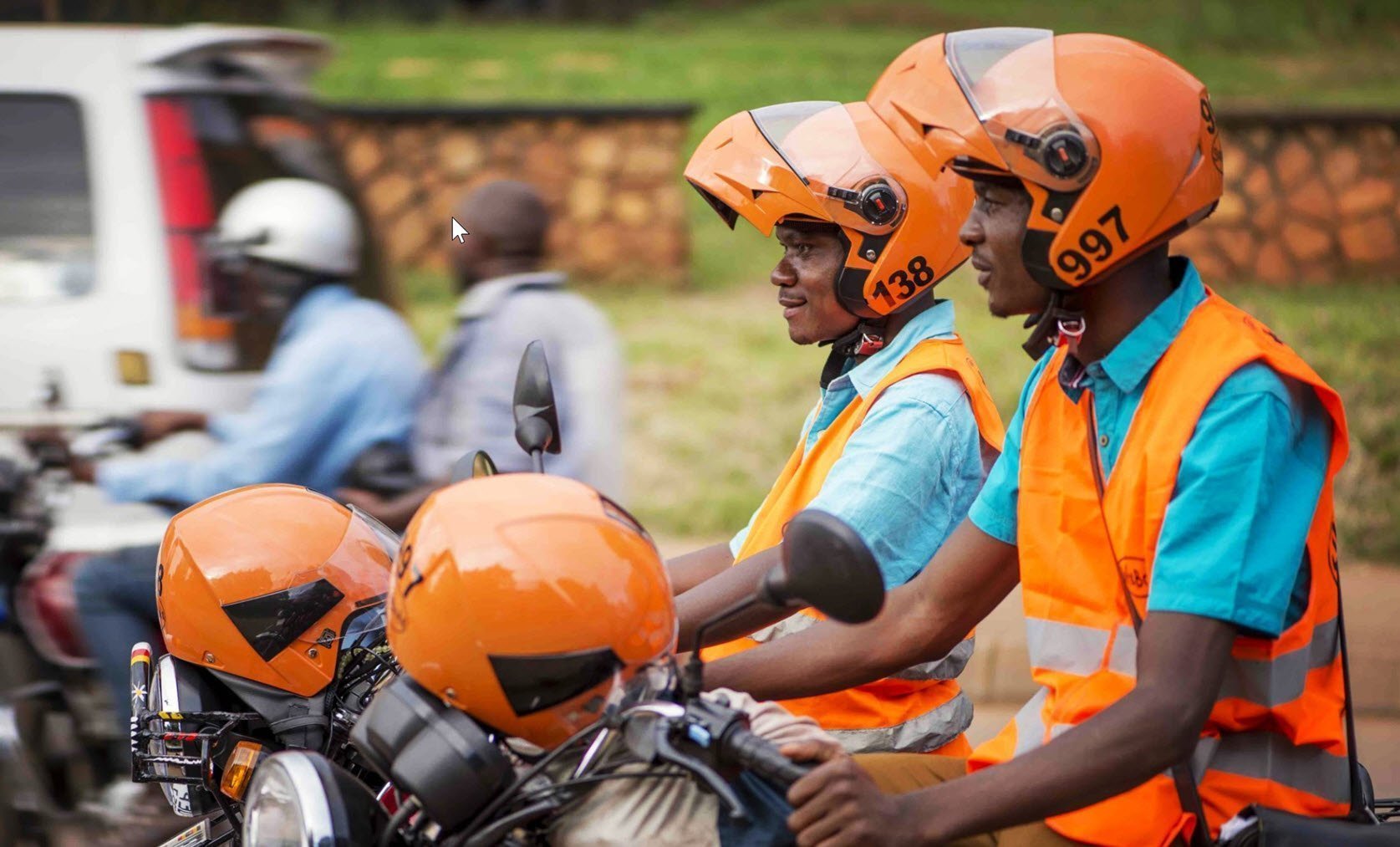
To qualify, riders must present a valid national ID, riding permit and credentials before being issued a city operating permit. Each registered rider will receive a reflector jacket embedded with a QR code displaying identification details, stage, division and leadership structure — with different colours assigned per division.
The initiative traces back to 2022 resolutions by the Uganda National Security Council, which called for nationwide registration and numbering of boda boda riders as a security measure.

KCCA is currently conducting a boda boda census in partnership with division Town Clerks to determine the exact number of riders operating in Kampala. Estimates vary widely; a 2018 industry count placed the figure at 145,000 — a number believed to have since increased.
Political and Industry Pushback
The plan, which is yet to be implemented, has already sparked sharp political debate.
Lord Mayor Erias Lukwago dismissed the directive as impractical without a fully operational mass transit system, arguing that previous urban transport master plans were underfunded and stalled.
“You cannot evict without providing alternatives,” he said, calling for a robust Mass Rapid System including buses and light rail before restricting para-transit.

His incoming successor, Lord Mayor-elect Ronald Balimwezo, also cautioned against abrupt implementation without stakeholder engagement.
Within the industry, reactions are mixed. Frank Mawejje, Chairperson of Boda Boda Kampala, welcomed the plan as a step toward structure and discipline. However, Dickson Mujuni, Secretary General of Boda Boda Industry Uganda, warned that enforcement without harmonisation could trigger clashes.
“The boda boda industry employs millions and contributes significantly to government revenue through fuel and licensing,” Mujuni said.
But KCCA insists that once consultations conclude, the final plan will be gazetted and enforcement will commence immediately.
If fully implemented, the regulatory overhaul will mark one of the most consequential shifts in Kampala’s informal transport sector in over a decade — reshaping mobility, security, and the livelihoods of thousands of riders.
If you would like your article/opinion to be published on Uganda’s most authoritative news platform, send your submission on: [email protected]. You can also follow DailyExpress on WhatsApp and on Twitter (X) for realtime updates.