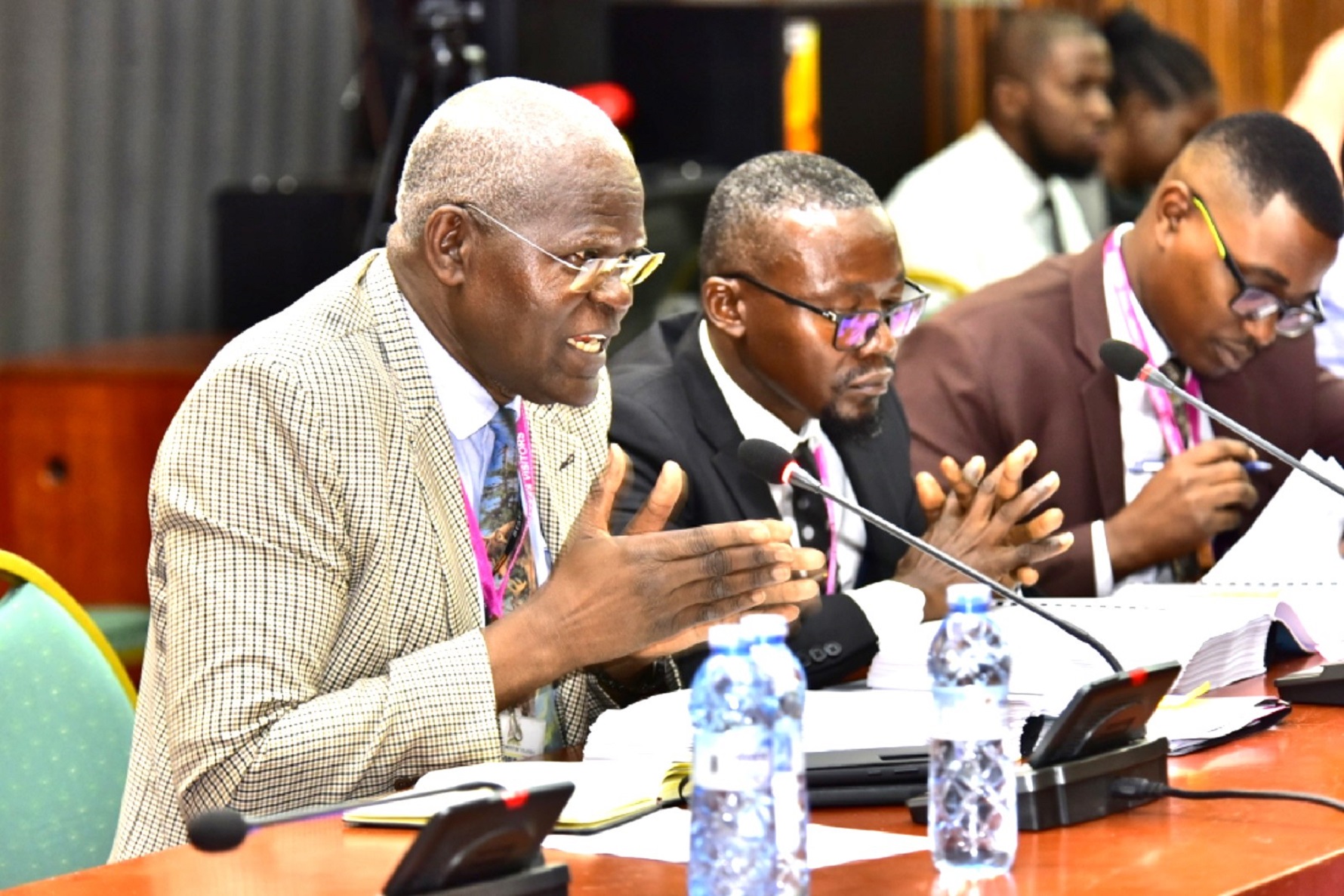
Kampala, Uganda: Officials from the Directorate of Government Analytical Laboratory (DGAL) have asked Parliament to expedite the processing of the Forensic and Scientific Analytical Service Bill, 2025, saying the proposed law is critical in strengthening the legal use of forensic evidence in criminal investigations.
The call was made on Wednesday, February 25, 2026, during an appearance before the Public Accounts Committee (Central Government), chaired by Deputy Chairperson Gorreth Namugga. The officials were responding to queries raised by the Auditor General for Financial Year 2024/2025.
Commissioner of Criminalistics and Laboratory Services, Tarsisius Byamugisha, said the Bill would provide a firm legal framework for the admissibility and management of forensic data in national investigations.
“With the database, instead of Police arresting 50 people over the same crime, they can search the crime scene and give us the exhibits. We will test them and search through the database to point out the actual people who were at the scene. That is why we are pushing this Bill,” Byamugisha said.
He revealed that DGAL has already developed in-house databases, including DNA and ballistics systems, currently used for quality control and investigative support.
MPs Raise Oversight Concerns
Joseph Ssewungu (NUP) said fast-tracking the Bill would also enhance regulation of private forensic service providers, especially amid rising demand for DNA testing in family disputes.

“There are so many challenges happening now with families where many people are taking their children for DNA testing… All these are issues that must be addressed by the Bill, especially how evidence is produced, used and kept,” Ssewungu said.
Hope Nakazibwe asked DGAL officials to account for progress on the national forensic database, noting that Parliament had earlier approved Shs178.66 billion to prioritise its development.
“Have you been receiving money for the same and what have you done in that regard?” Nakazibwe queried.

Chief Chemist Kepher Kuchana Kateu told the committee that DGAL recently conducted a nationwide study on allele frequency databases for 21 autosomal short tandem repeats within the Ugandan population.
“We carried out this study across the Ugandan population from the east, west, south and central regions. We have generated the genetic profiles of our population which can be used in the future. Presently, we have been using databases generated by other people,” Kateu explained.
He added that beyond DNA and ballistics, DGAL has developed additional databases, including toxicology for poisons and pesticide residue tracking, to enhance crime detection and evidence verification.
The proposed law is expected to streamline forensic services, regulate private analytical institutions and strengthen the evidentiary value of scientific data in Uganda’s justice system once enacted.
If you would like your article/opinion to be published on Uganda’s most authoritative news platform, send your submission on: [email protected]. You can also follow DailyExpress on WhatsApp and on Twitter (X) for realtime updates.