
Kiryandongo, Uganda: Kiryandongo District is set to benefit from a Shs5.87 billion climate-resilient agro-processing project funded by the Food and Agriculture Organization (FAO), aimed at reducing post-harvest losses and transforming seasonal surpluses into marketable products.
The Dehydrated Products Supply Chain Development Project will be implemented by Excel Hort Consult and is expected to strengthen food security, improve farmer incomes, and promote climate-smart agriculture in the district.
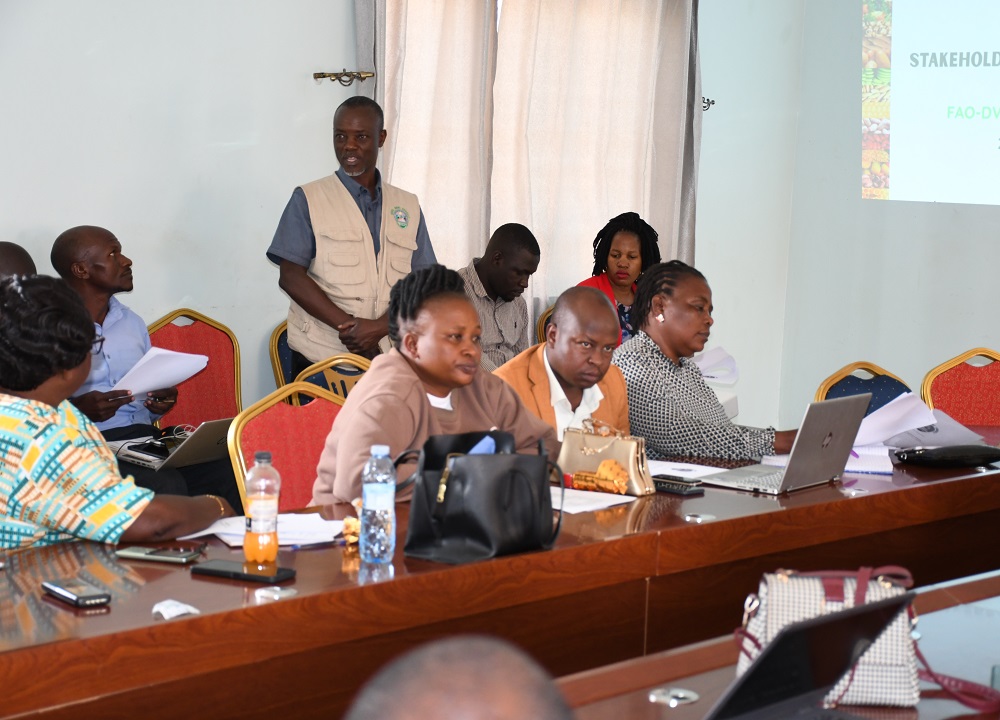
The project was unveiled during a stakeholders’ meeting held on February 26 at Kiryandongo District Headquarters, bringing together local leaders, technical officers, development partners and farmer representatives.
Dr. Charles Lwanga Malingu, Project Manager at Excel Hort Consult, said the initiative introduces a solar-assisted dehydration system designed to provide a sustainable and market-oriented solution to challenges faced by farmers.
“The project leverages solar-assisted dehydration as a climate-resilient solution that addresses seasonal gluts while promoting inclusive enterprise and market development,” Dr. Malingu said.
The technology will enable farmers to convert perishable produce into shelf-stable, tradable food products, reducing wastage during peak harvest periods and expanding access to regional and national markets.
1,000 Farmers to Benefit
The project will directly support 1,000 smallholder households from both refugee settlements and host communities in Kiryandongo.
Priority value chains include cassava, maize, sweet potatoes, okra and cabbage — crops widely grown in the district but frequently affected by high post-harvest losses.

Officials say the intervention is expected to ease pressure on livelihoods in Kiryandongo, which hosts one of Uganda’s largest refugee populations, while fostering economic self-reliance and peaceful coexistence.
Upon completion, the initiative will establish two solar-powered dehydration hubs in the district. The facilities will offer drying, sorting, grading, milling, packaging and storage services at affordable rates.
The hubs are expected to serve farmers in Kiryandongo and neighbouring districts, positioning the area as a regional centre for agro-processing and value addition.

Kiryandongo Chief Administrative Officer Anselm Kyaligonza welcomed the project and urged implementers to prioritise local participation.
“This will help localise the project and ensure sustainability beyond donor support,” Kyaligonza said, calling for involvement of local agro-input dealers and businesses.
Stakeholders described the project as timely, especially amid increasing climate variability affecting production and storage.
By integrating renewable energy-powered processing and structured market access, the project is expected to reduce food losses, stabilise prices and create new agribusiness opportunities.
Once operational, the FAO-backed initiative is anticipated to transition Kiryandongo’s agriculture from subsistence-based production to commercial, climate-resilient and market-driven farming.
If you would like your article/opinion to be published on Uganda’s most authoritative news platform, send your submission on: [email protected]. You can also follow DailyExpress on WhatsApp and on Twitter (X) for realtime updates.