
Berlin, Germany: Uganda has showcased its conservation achievements and sustainable tourism strategy at the ITB Berlin global tourism exhibition, with the Uganda Wildlife Authority highlighting the country’s growing reputation as a destination where tourism supports wildlife protection and community development.
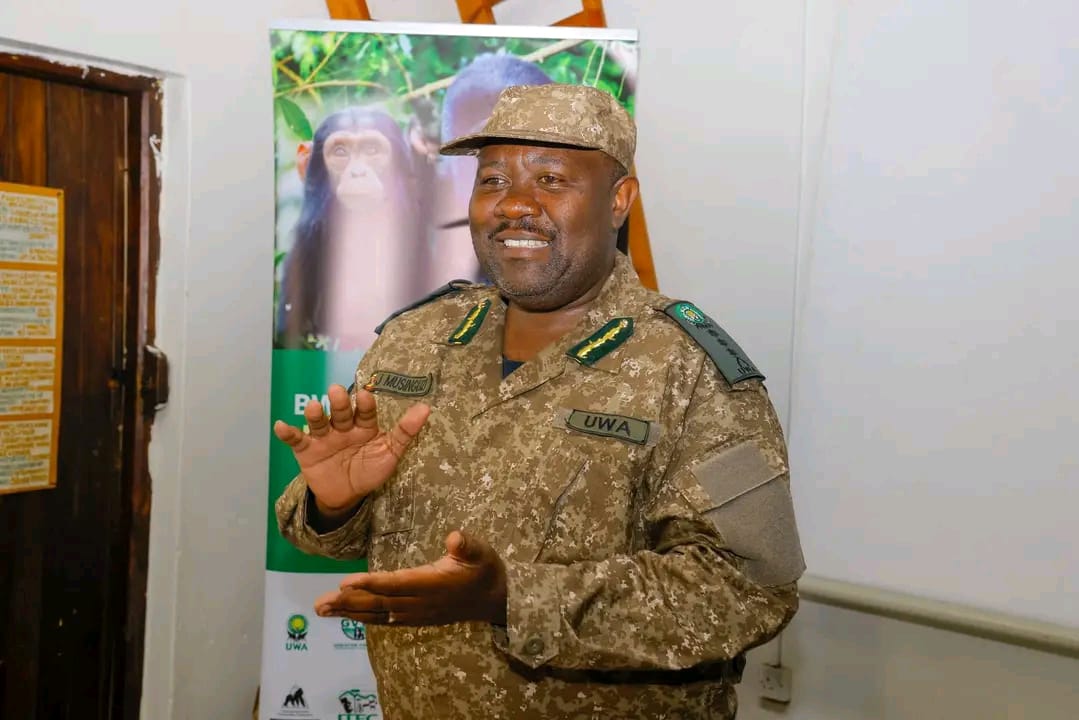
Leading Uganda’s delegation, Uganda Wildlife Authority Executive Director James Musinguzi presented the country’s conservation progress to international tourism stakeholders, travel companies and conservation partners attending the global event in Germany.
Musinguzi used the platform to highlight Uganda’s wildlife recovery successes, particularly the revival of the rhino population, which had been declared extinct in the country in 1983 after years of poaching and political instability during the 1970s and early 1980s.
He explained that Uganda launched a deliberate effort in 2005 to restore the species as part of a wider strategy to rebuild the country’s wildlife heritage and strengthen its tourism appeal.
The programme began with only six rhinos, but conservation efforts have since transformed the initiative into a major success story.
“Today the population has grown to about 60 rhinos through successful breeding, strong law enforcement and the dedication of our conservation workforce,” Musinguzi told delegates.
He noted that Uganda’s conservation progress is driven not only by financial investment but also by the commitment of rangers, conservationists and local communities working to protect wildlife habitats.
Uganda’s conservation model places communities at the centre of wildlife protection, ensuring that residents living near national parks benefit from tourism revenue while also participating in conservation efforts.
Musinguzi said reaching a population of about 60 rhinos marked an important milestone because it created a viable breeding population capable of sustaining the species’ recovery.

To strengthen genetic diversity, Uganda has also imported additional rhinos from South Africa, alongside genetic profiling to guide responsible breeding programmes.
The Uganda Wildlife Authority has now begun expanding rhino habitats beyond breeding sanctuaries.
According to Musinguzi, rhinos have recently been relocated to Ajai Wildlife Reserve, where conservationists say the animals are adapting well as part of efforts to establish a stable population in the area.

He added that future plans include reintroducing rhinos to Kidepo Valley National Park and the Murchison Falls Conservation Area.
Uganda’s current conservation focus is on the southern white rhino, a subspecies closely related to the northern white rhino, which historically lived in Uganda but is now nearly extinct globally, with only two individuals remaining in the world.
Despite these challenges, Uganda continues to pursue long-term strategies under its national rhino conservation plan while strengthening regional cooperation with neighbouring countries including Kenya.
Addressing the global tourism audience in Berlin, Musinguzi said Uganda’s conservation achievements demonstrate the potential of tourism to protect wildlife while also improving the livelihoods of surrounding communities.
“Tourism-driven conservation allows us to protect wildlife, empower communities and sustain fragile ecosystems,” he said.
With international travellers increasingly seeking nature-based experiences, Uganda hopes its participation at ITB Berlin will attract new tourism partnerships and visitors eager to explore the country’s rich biodiversity.
Often referred to as the Pearl of Africa, Uganda is positioning itself as a leading destination for sustainable tourism where wildlife conservation and community development go hand in hand.
If you would like your article/opinion to be published on Uganda’s most authoritative news platform, send your submission on: [email protected]. You can also follow DailyExpress on WhatsApp and on Twitter (X) for realtime updates.