
Kampala, Uganda: The government has confirmed that Local Council (LC) 1 and LC 2 elections will be held by the end of April 2026, ending years of delays that have left village leadership structures operating beyond their mandate.
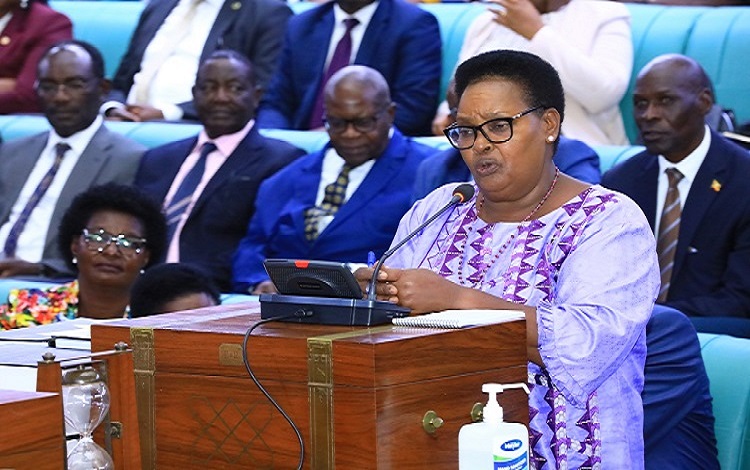
The announcement was made by Victoria Rusoke during plenary sitting of the Parliament of Uganda on Thursday, March 12, 2026.
Rusoke told lawmakers that the elections had already been scheduled and the information communicated to district authorities across the country. “I want to confirm to this House that elections of LCs 1 and 2, and Women Councils were properly scheduled and this information has reached the districts,” she said.
The elections are long overdue after the term of LC 1 and LC 2 leaders elected in 2018 expired in 2023. Since then, the tenure of the officials has been extended six times, raising concerns about democratic legitimacy and governance at the grassroots level.
Uganda has more than 70,000 villages, most of which depend on LC 1 and LC 2 leaders to coordinate government programmes, resolve local disputes and mobilise communities.
During the plenary, Hon Keefa Kiwanuka (Kiboga West) asked government to clarify conflicting statements about the funding and timeline for the elections. The legislator said uncertainty had been created by different statements from government agencies.
“The Chairperson of the Electoral Commission, Justice Byabakama, told us that money had been released; however, shortly, the Ministry of Local Government indicated that there was a funding shortfall of Shs58 billion,” he said.

He added that the Cabinet had earlier indicated the elections would be held in March and April, prompting lawmakers to demand clarity.
“Can we have confirmation whether the money was released. Can we also have confirmation when these elections will be held?” Kiwanuka asked.
Lawmakers warned that the continued delay in holding the elections risks weakening grassroots governance. Hon Kiwanuka argued that the absence of elected leaders at village level creates administrative gaps in the implementation of government programmes.

“Whereas LC 1 and LC 2 systems are critical in implementation of government programmes, we are now consistently relying on arguably unelected structures,” he said.
Speaker Anita Among said the absence of elected local leaders was undermining democratic governance. “We need confirmation if we are going to have elections, what is the shortage, and if it is there, it was approved by Cabinet. Why are we not releasing that money,” Among said.
She added that conflicting statements from government institutions had created confusion about whether the elections were fully funded.
“Electoral Commission said they had received funding, so which shortage is there? Why are we not releasing that money?” she asked.
Despite confirming the elections will be held before the end of April, the minister did not immediately provide the exact polling dates.
If you would like your article/opinion to be published on Uganda’s most authoritative news platform, send your submission on: [email protected]. You can also follow DailyExpress on WhatsApp and on Twitter (X) for realtime updates.