

By Odeke Bazel
Uganda’s speakership has long followed an almost ceremonial script, carefully choreographed within the corridors of the National Resistance Movement (NRM). The path appeared orderly: serve as Deputy Speaker, prove loyalty, and eventually ascend. It worked seamlessly for Rebecca Kadaga, who patiently climbed the ladder, and for Jacob Oulanyah, who followed the same route before his untimely death disrupted the rhythm.
Then came Anita Among, whose rise was less about tradition and more about circumstance. Her assumption of the Speaker’s chair did not just fill a vacancy—it quietly rewrote the rules. It raised a philosophical question worth asking: In Ugandan politics, is leadership earned through sequence, or seized through timing?
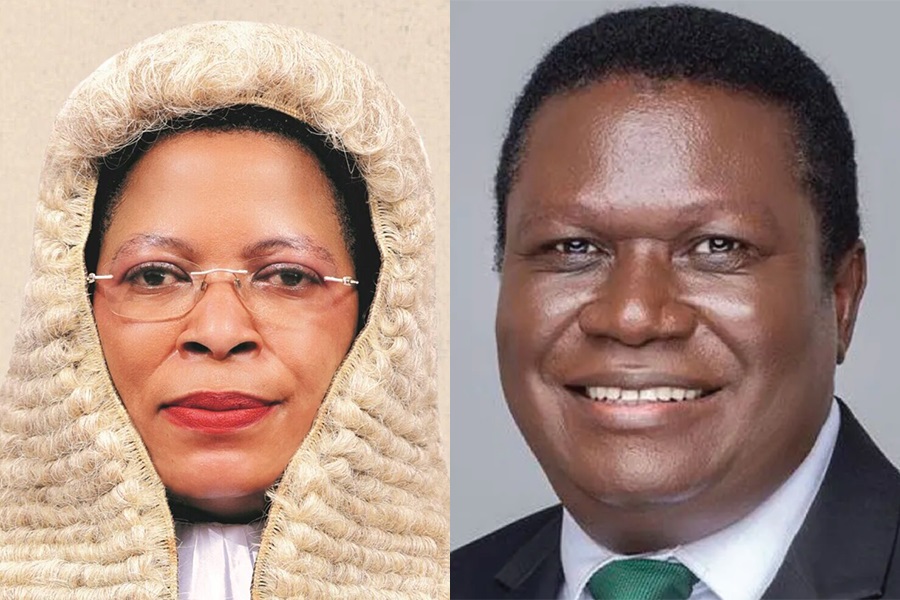
That question now becomes sharper with the entry of Norbert Mao into the speakership conversation—a man whose political journey resembles a pendulum more than a ladder.
Mao’s cooperation agreement with Yoweri Museveni was, at the time, presented as a statesman’s gamble. By aligning the Democratic Party (DP) with the ruling establishment, he argued that proximity to power would deliver constitutional reforms and prepare the country for a structured transition. In exchange, he was entrusted with the Ministry of Justice and Constitutional Affairs—a position not just of influence, but of expectation.
Yet, years later, the anticipated reforms remain largely theoretical. The Constitution stands where it stood, like a house whose renovation was announced but never began. This invites another uncomfortable question: Can one claim to engineer change without producing visible blueprints of that change?
Mao’s recent attacks on Anita Among introduce an intriguing twist. He now questions the legitimacy of a system he once chose to work within. Politics allows flexibility, but it also keeps receipts. The opposition he left behind has not forgotten; the ruling establishment he joined appears less responsive. In simpler terms, Mao finds himself between two political homes—one he exited and another that may not fully have moved him in.

There is something almost comical about the situation. It is like a man who leaves his village for the city, praises urban life, and then returns home asking to be made village chief—on grounds that he has “seen things.” The villagers, naturally, would ask: And what exactly did you bring back?
The speakership bid, therefore, raises more than political calculations; it raises questions of coherence. What makes Mao the right candidate at this moment? Is it experience? Certainly, he possesses it. Is it ideological consistency? That is more debatable. Or is it strategic necessity—the need to remain politically central in a landscape that moves quickly and forgets even faster?
Ugandan politics has evolved beyond rigid pathways. The once-clear progression from Deputy Speaker to Speaker now competes with a more fluid reality where opportunity, alignment, and timing often outweigh tradition. The system no longer asks only, “Who has waited longest?” but increasingly, “Who fits best—right now?”

And perhaps that is the most honest, if uncomfortable, truth.
The race for the Speaker’s chair is no longer just about qualification; it is about positioning. It is about who stands where when the music stops. But even in this game of political musical chairs, one principle remains: the chair does not move—the players do.
In the end, Ugandans are left with a final, unavoidable question: Is leadership a matter of conviction, or convenience?
Because if politics becomes a journey of constant returns, then the real contest is not for the Speaker’s chair—but for credibility itself.
The author is a political commentator, Researcher, and a social worker with focus on democracy!
If you would like your article/opinion to be published on Uganda’s most authoritative news platform, send your submission on: [email protected]. You can also follow DailyExpress on WhatsApp and on Twitter (X) for realtime updates.

