

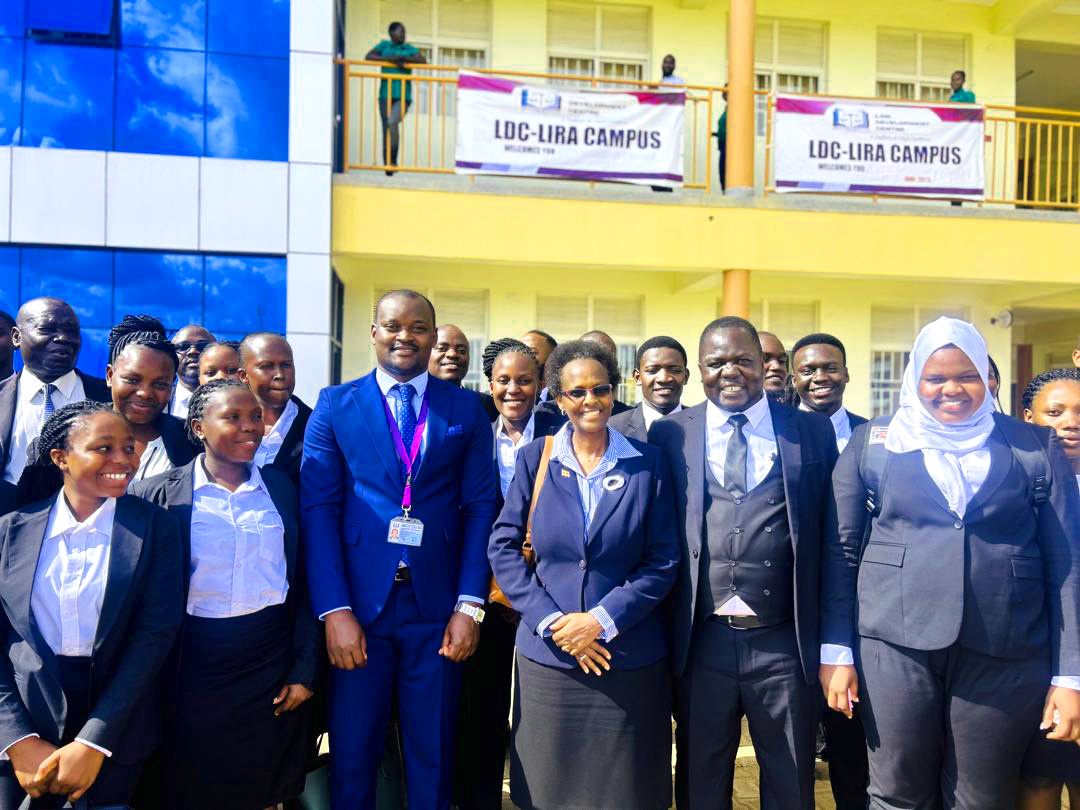
Kampala, Uganda: The impending closure of the Law Development Centre (LDC) Lira Campus exposes deep structural weaknesses in Uganda’s legal education system and could plunge the country into a legal crisis if no affirmative action is taken, the Uganda Law Society (ULS) has warned.
In a statement released Friday, March 27, 2026, ULS President Isaac Ssemakadde said the society had received complaints from students at the Lira Campus saying they had been directed to select alternative campuses where they will complete their postgraduate legal training.
“The Uganda Law Society (ULS) has received complaints from students enrolled at the Law Development Centre (LDC) Lira Campus reporting that they have been informed of the impending closure of the campus after the second term. According to the complaints received, students have allegedly been directed to select alternative campuses where they will complete their postgraduate legal training,” Ssemakadde noted, describing the situation as urgent and called on the LDC administration to clarify the matter without delay.
“The abrupt closure of an LDC campus shows the long-standing structural weaknesses within Uganda’s legal education framework, particularly the overreliance on a single institution to deliver professional legal training for an ever-growing number of law graduates.”
The looming closure of the campus follows persistent complaints from students over inadequate facilities and unsafe living conditions. “Students have reported the absence of a consistent water supply, resulting in poor sanitation and unhealthy living conditions, exposing them to the risk of disease,” ULS stated.
It added that heavy rains have led to flooding in hostels, destroying students’ property and disrupting studies, while prolonged power outages have exposed learners to insecurity and robbery. “Further complaints indicate prolonged power outages, which expose the students to insecurity and robbery,” the statement added.
Ssemakadde strongly argued that LDC, as an institution, “owes a duty of care to students enrolled under its programs. The provision of safe, habitable, and conducive learning environments is the institution’s responsibility owed to the students.”
The Society also criticised the system of campus allocation, arguing that students are often placed arbitrarily without consideration of their personal circumstances, warning that “such forced relocations impose financial, emotional, and academic burdens that must be acknowledged within the broader discussion on legal education reform.”
The LDC Lira Campus was opened in 2021 in Barapwo in Lira City, Western Division, within Lira University

LDC Monopoly model under scrutiny
In a separate but related development, Ssemakadde re-echoed the society’s long-standing position that LDC should no longer operate as the sole provider of postgraduate legal training in Uganda.
He specifically pointed out that Uganda produces thousands of law graduates annually, yet “the capacity of LDC has consistently failed to match this output, resulting in congestion, delays, limited intake, and systemic inefficiencies that restrict access to the legal profession.”

Ssemakadde also flagged concerns over LDC’s dual role as both trainer and examiner. “The dual role played by LDC as both trainer and examiner presents insurmountable challenges, including conflict of interest and operational inefficiencies,” he stated.
The Lira Campus crisis has intensified calls for broader legal education reforms, including the proposed National Legal Examination Centre Bill, which seeks to separate training from examination.
The Law Society has now called on the government to prioritise reforms that expand access to legal training while maintaining professional standards, including fast-tracking the establishment of an independent national examination body.
“We call upon Government to prioritise the passage of the National Legal Examination Centre Bill as a matter of urgency,” Ssemakadde urged.
Referencing Ghana’s recent reforms, where Parliament abolished the Ghana School of Law as the sole gateway to legal practice and introduced a decentralised system allowing accredited universities to provide training, Ssemakadde argues that it’s time Uganda adopted the same direction, given the fact that the LDC model was picked from Ghana.
“The bitter irony is that we copied the LDC model from Ghana. Records show Prof Crabbe was seconded to Uganda from Ghana’s civil service to help speed up the Africanization of our judicial system. Now Ghana is surging ahead while we’re stuck in fighting,” Ssemakadde said in a post via his official X handle.
Photo Caption: Students at Lira Law Development Centre (LDC) Campus, now at the centre of closure following concerns raised by the Uganda Law Society.
If you would like your article/opinion to be published on Uganda’s most authoritative news platform, send your submission on: [email protected]. You can also follow DailyExpress on WhatsApp and on Twitter (X) for realtime updates.

