

Uganda’s agrochemical regulatory framework is facing renewed scrutiny following a proposed $7.25 billion settlement by Bayer over cancer-related claims tied to its herbicide, Roundup (Glyphosate).
While regulatory agencies in several developed countries had previously approved the product for use, a growing body of lawsuits has argued that both consumers and agricultural workers were not adequately informed about its potential cancer risks.
As the United States Supreme Court deliberates on whether federal approval protects manufacturers from liability, the case highlights a critical reality—that regulatory approval does not necessarily equate to absolute safety.
For Uganda, this distinction is particularly significant. In a context where chemical monitoring systems remain underdeveloped, data on poisoning incidents is inconsistent, and legal remedies are often slow or difficult to access, the implications extend beyond theory into everyday public health and agricultural practice.
Agriculture remains the backbone of Uganda’s economy, largely driven by small-scale farmers who sustain food security and rural livelihoods. However, dependence on imported agrochemicals is steadily increasing. According to data from the United States Environmental Protection Agency, 51% of the 41 agrochemicals registered for use in Uganda fall under the classification of Highly Hazardous Molecules—many of which are banned in the European Union due to their toxicity.
Although the Agricultural Chemicals (Control) Act of 2006 provides a regulatory framework, enforcement challenges persist. Limited laboratory capacity, fragmented inspection systems, and weak oversight mechanisms have resulted in inconsistent application of safeguards, allowing potentially harmful substances to remain widely accessible.
Bwambale Benard, Program Head at Global Consumer Centre (CONSENT), places the issue within the broader context of Africa’s environmental commitments and long-term public health outlook.
“Government, being a signatory to the Bamako Convention, must look at the highly hazardous molecules in the country, and they must be banned. Molecules that have been banned elsewhere must also be banned in Africa. Farmers need to be sensitised on what pesticides can cause harm to them,” he warned.
Scientific research has linked several commonly used agrochemicals to serious health and environmental risks, including cancer, hormonal disruption, neurological damage, acute poisoning, and long-term environmental persistence.
Unlike more developed regions, Uganda lacks robust systems for toxicovigilance, residue monitoring, and integrated disease tracking. As a result, gradual health effects linked to chemical exposure may go undetected and unaddressed.
Dr. David Kabanda, Executive Director at the Center for Food and Adequate Living Rights (CEFROHT), argues that gaps within the current regulatory framework have enabled the continued spread of hazardous agrochemicals.
“Poor monitoring and enforcement of agrochemical regulations, and gaps in the laws and policies, have worked in favour of increasing sales of hazardous agrochemicals. We need a new law to eliminate glyphosate. Farmers must be mobilised, whether as groups or individuals, to hold Bayer accountable for product liability,” he said.

From a technical perspective, Katende Stephen Serunjogi, Principal Technician at Makerere University College of Agricultural and Environmental Sciences (CAES), notes that improper usage is often driven by limited knowledge among farmers.
“Most small-scale farmers lack knowledge on proper fertiliser and pesticide application, which puts their lives at risk,” he explained.
He added that incorrect chemical mixing, inadequate protective equipment, and misinterpretation of product instructions significantly increase exposure risks—especially in informal markets where advisory services are limited.
Hakim Baliraine, a small-scale farmer and National Chairperson of the Eastern and Southern Africa Small Scale Farmers Forum (ESAFF) Uganda, emphasises the need to address the issue at its source.

He notes that despite Uganda’s participation in the European Union–African Union Partnership, many hazardous agrochemicals used across Africa are exported from Europe.
He advocates for stronger action within EU–AU parliamentary frameworks to halt both export and import of such substances.
Beyond immediate health concerns, experts caution that food and nutrition security should not be measured solely by crop yields. Soil health, biodiversity, and ecological balance play a critical role in sustaining long-term agricultural productivity and nutrient quality. Excessive reliance on chemicals threatens these systems.
At the consumer level, limited testing capacity raises concerns about chemical residues in food, potentially exposing the public to unsafe levels. At the same time, stricter international standards on residue limits could undermine Uganda’s export competitiveness if regulatory credibility weakens.
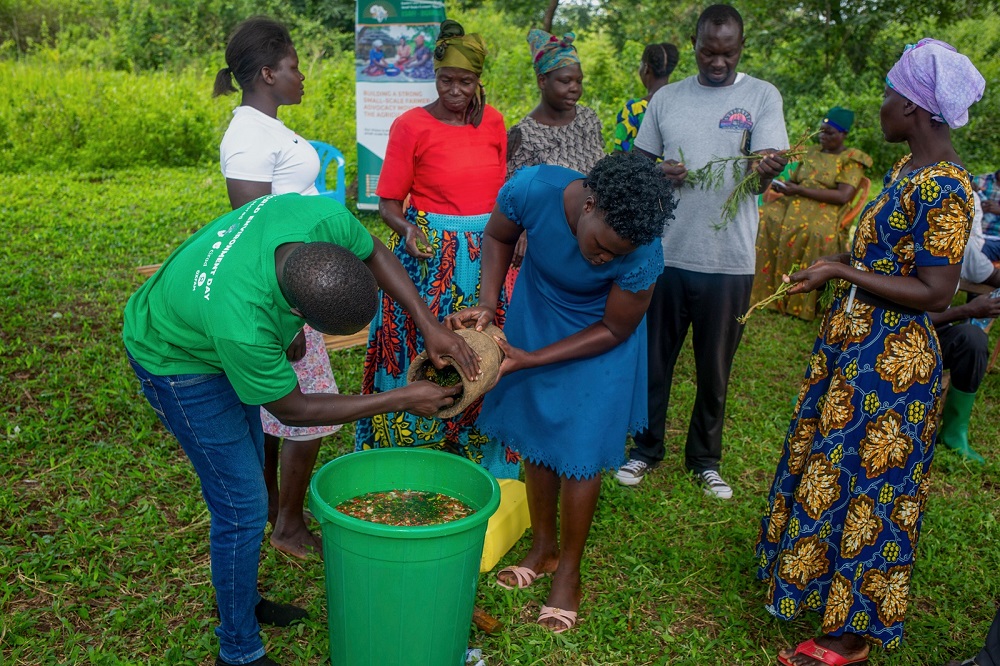
Promoting agroecological farming practices and encouraging the use of locally produced organic inputs could reduce dependency on imports while supporting the Build Uganda, Buy Uganda (BUBU) initiative.
A decisive policy shift is increasingly necessary. Experts recommend that government adopts a precautionary approach in pesticide approval and importation, phases out globally recognised Highly Hazardous Chemicals, and strengthens independent risk assessment mechanisms.
Expanding residue testing infrastructure and embedding sustainable agricultural practices should form the foundation of a more resilient and health-conscious agricultural policy framework.
If you would like your article/opinion to be published on Uganda’s most authoritative news platform, send your submission on: [email protected]. You can also follow DailyExpress on WhatsApp and on Twitter (X) for realtime updates.

