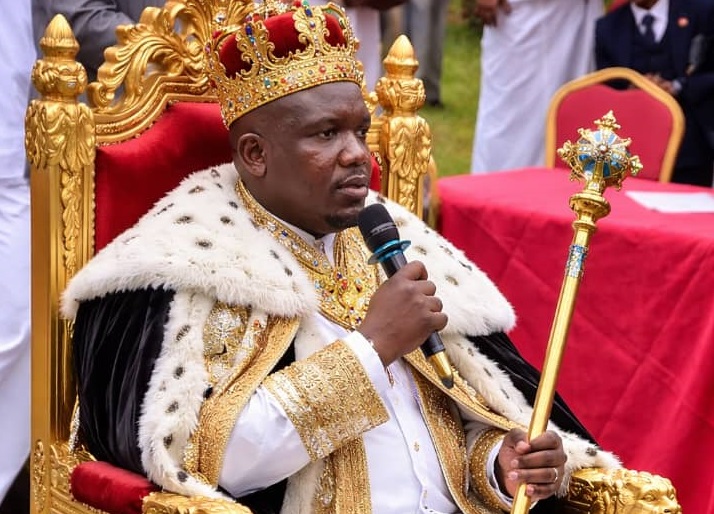
Iganga, Uganda: What began as scattered WhatsApp conversations among a few determined voices has culminated in a historic milestone, the election of the first cultural leader of the Bakenye community.
On Saturday, March 28, 2026, at Serenity Gardens in Iganga, delegates from across Uganda gathered to witness a defining moment: the election of His Royal Highness Waiswa Moses Sinini as the first recognized cultural leader of the Bakenye.
It was the end of a three-year journey, and the beginning of a new identity.
For generations, the Bakenye, an indigenous community rooted in fishing and water-based livelihoods across eastern Uganda, have lived with a strong cultural identity but without a centralized institution to represent them.
Their heritage survived through oral tradition, clan systems, and communal life. But in a country where cultural institutions shape identity, advocacy, and visibility, the absence of a unified leadership left a gap.
“We were tired of explaining who we are without being able to point to a central leadership,” one member reflected.
That frustration would become the seed of transformation.
The idea that changed everything
In early 2023, a small group of progressive members, including Babikanya Joseph and colleagues, initiated discussions about organizing the Bakenye under a formal structure. The conversations began informally, but they carried weight.
On May 11, 2023, the creation of the Bakenye Community Link (BCL), a WhatsApp-based mobilization platform, marked a turning point. Within months, the group attracted over 500 members.
Debates ranged from identity and governance to culture and belonging—sometimes intense, sometimes light-hearted, but steadily moving toward consensus.
By mid-2023, the question had shifted from whether to organize to how.
From digital talk to real structure
Momentum moved offline in October 2023, when the first national physical meeting was held in Kampala. This gathering led to the election of a National Committee tasked with steering the process.
By February 2024, the committee was formally sworn in, ushering in a new phase of structured engagement.
Over the next year, the Bakenye undertook nationwide consultations, engagements with government institutions, and the drafting of governance frameworks.
By the end of 2024, the community had developed the key pillars of a cultural institution, a constitution, anthem, flag, and an emblem. “We now have everything except the king,” one elder remarked at the time.
A decisive moment came in December 2024 during a meeting in Jinja, where clan leaders were formally integrated into the process. It became clear that legitimacy would come from the clans.

Across the country, clans began organizing, electing leaders, and shaping the constitutional framework that would guide the institution. This marked a shift from mobilization to ownership.
Momentum becomes irreversible
By 2025, the movement had gained full momentum. The constitution was formally adopted, governance structures solidified, and new initiatives launched—including SACCOs, fisheries committees, and broader community associations.
The Bakenye also began appearing in national forums, gaining recognition as an indigenous fishing community with a shared identity and voice.
“They are no longer just mobilizing, they are building something real,” one attendee said.

The day history was made
On March 28, 2026, the long journey reached its defining moment.
Delegates convened in Iganga to ratify clan leadership, form a General Assembly as an Electoral College and elect a cultural leader.
The atmosphere was calm, but deeply symbolic. “There was a sense that this could not be postponed again,” one participant recalled.
After deliberations and voting, Waiswa Moses Sinini emerged as the chosen leader.
Applause erupted. Ululations filled the air. For many, it was not just an election—it was closure.
More than a crown
Leaders described the moment as a turning point for a community that had long existed without a unified voice. “It is a victory of unity and persistence,” one elder said. “We have moved from scattered voices to one recognized identity.”
The journey itself became a lesson, that even without a centralized homeland, a people can organize around shared heritage and purpose.
With a cultural leader now in place, focus is expected to shift toward institution-building, implementation of governance structures, and strengthening community cohesion.
As the gathering drew to a close, one voice captured the mood of the moment: “Now we begin the real work.”
A story of possibility
From WhatsApp debates in 2023 to a fully structured cultural institution in 2026, the Bakenye story is one of vision, persistence, and collective will.
It is proof that identity, when organized and nurtured, can evolve into power. “When people come together with purpose, even long-delayed dreams can become reality.”
If you would like your article/opinion to be published on Uganda’s most authoritative news platform, send your submission on: [email protected]. You can also follow DailyExpress on WhatsApp and on Twitter (X) for realtime updates.