
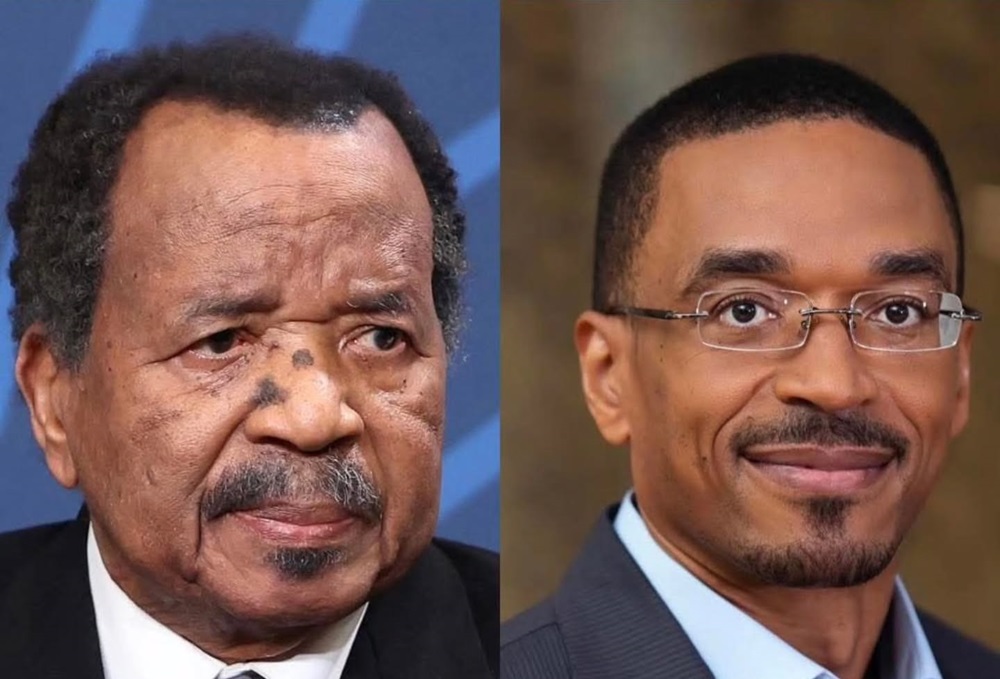
Yaoundé, Cameroon: President Paul Biya has appointed his son, Franck Emmanuel Biya, to three of Cameroon’s most powerful positions, consolidating executive and military authority in a move that is likely to intensify debate over succession in the Central African nation.
In a presidential decree signed Saturday, April 4, Biya named his son Franck Vice-President of the Republic, Head of the Armed Forces, and Minister Delegate at the Presidency in charge of Defence, placing him at the centre of both civilian governance and military command.
The decree states that the appointments were made “in the interest of service,” citing constitutional provisions and existing laws governing the military and the organisation of the presidency. It further indicates that the changes take immediate effect and will be published under emergency procedure in the official gazette.
The development marks a significant restructuring of power in Cameroon, where executive and military authority are now consolidated under one individual, a rare governance arrangement that analysts say could signal preparations for a potential leadership transition.
Franck Biya, long viewed by some political observers as a possible successor, has until now held no formal government position, making his sudden elevation particularly striking in a country where political continuity has been tightly controlled.

The move comes as President Biya, 93, remains one of the world’s longest-serving leaders, having ruled Cameroon since 1982. Public discourse around his health remains restricted, further fuelling speculation about succession planning within the ruling establishment.
In a related development, lawmakers in a joint sitting of the National Assembly and Senate passed legislation reinstating the position of Vice-President, with 200 votes in favour, 18 against, and four abstentions.
The law provides that the Vice-President will automatically assume the presidency in the event of death, resignation, or incapacitation of the sitting head of state.

The reintroduction of the vice presidency marks the most significant constitutional shift since 2008, when presidential term limits were scrapped in a controversial amendment that triggered nationwide protests and a subsequent security crackdown.
Historically, the vice presidency existed prior to 1972 but was abolished following a constitutional referendum that reshaped the country’s governance structure.
Observers say the latest changes could redefine Cameroon’s political trajectory, particularly in the context of long-standing concerns over governance, institutional balance, and democratic transition.
If you would like your article/opinion to be published on Uganda’s most authoritative news platform, send your submission on: [email protected]. You can also follow DailyExpress on WhatsApp and on Twitter (X) for realtime updates.