
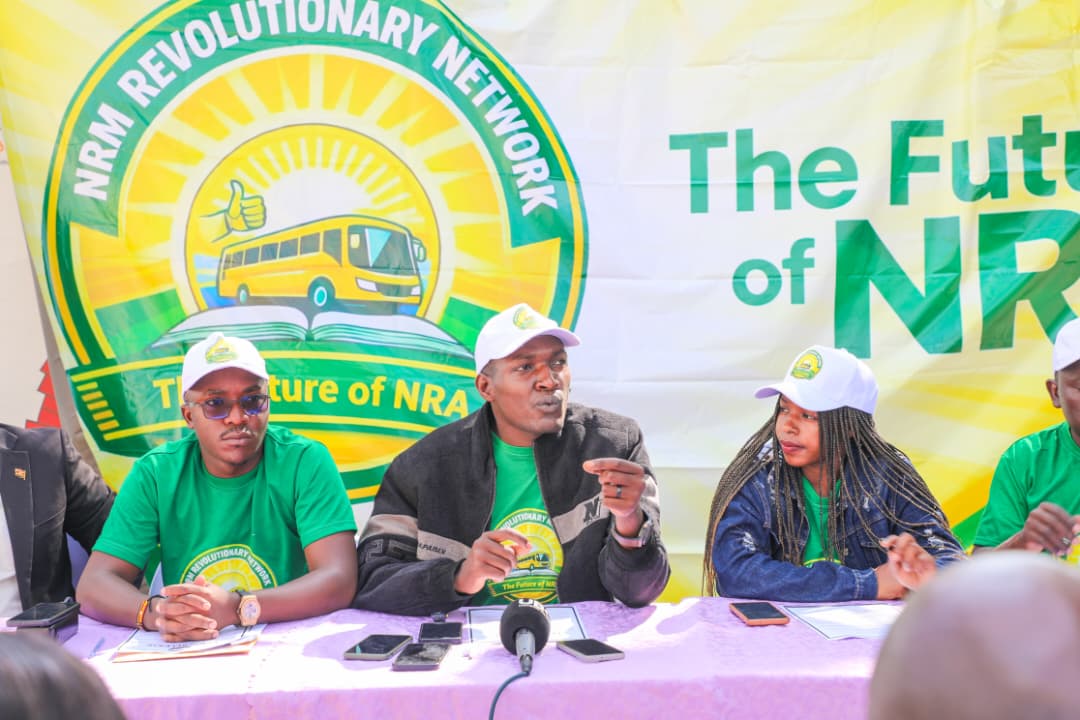
Kampala, Uganda: The NRM Revolutionary Network (NRN), an umbrella body for youthful revolutionary cadres in the ruling party, has called for equal and comprehensive accountability in the Karamoja iron sheets scandal, warning against selective justice, which downplays the core principles of the Movement.
In a statement issued Friday, April 10, the group said while the conviction and four-year jail sentence handed to former State Minister for Karamoja Affairs Agnes Nandutu signals progress in the fight against corruption, justice must be applied uniformly to all implicated officials.
“The conviction and sentencing… sends a clear message that the era of impunity must give way to accountability,” the statement reads in part, while cautioning that the scandal “was not an isolated incident involving a single individual.”
Nandutu, a former journalist-cum politician and minister, was sentenced to four years in prison and barred from holding public office for 10 years after being found guilty of dealing with suspect property—specifically 2,000 iron sheets meant for vulnerable communities in Karamoja.
Her conviction by the Anti-Corruption Court Judge, Jane Kajuga, marks the most consequential legal outcome so far in a scandal that shook the Office of the Prime Minister (OPM) and exposed systemic abuse in the distribution of relief items.
Court findings established that the iron sheets were part of a government consignment intended for Karamoja under a Shs39.94 billion supplementary budget, but were instead diverted to various political leaders and officials.
Wider Web of Implicated Officials
The NRN statement appeared to point to a wide pool of high-profile officials who were either investigated, arrested, or arraigned in court over the scandal.
Among those previously charged are former Minister for Karamoja Affairs Mary Goretti Kitutu, State Minister for Finance Amos Lugoloobi, and State Minister for Karamoja Affairs (junior) Agness Nandutu (now convicted and jailed)
Others who were implicated but never appeared before authorities for questioning included Vice President Jessica Alupo, Speaker Anita Among, Prime Minister Robinah Nabbanja, Finance Minister Matia Kasaija, former Speaker Rebecca Kadaga, and several ministers and senior government officials.

While some officials were asked to return the iron sheets or step aside, only a handful faced prosecution.
Arrests, Bail, and Acquittals
Mary Goretti Kitutu and her brother were among the earliest to be arrested and charged in connection with the diversion of over 3000 iron sheets. They were later granted bail as court proceedings continued.
Amos Lugoloobi, who was accused of diverting iron sheets for personal use, also appeared in court multiple times but was eventually acquitted after the prosecution failed to establish sufficient evidence linking him to criminal liability.

The differing outcomes, ranging from arrests and bail to acquittals and now convictions, have fueled public debate over consistency in the handling of the case.
“Justice Must Be Seen to Be Fair”
In its statement, the NRN warned that selective prosecution risks eroding public trust in the justice system. “It is imperative that accountability is pursued without fear, favour, or selective application,” the group stated, emphasizing that all individuals implicated, regardless of rank, should be subjected to due process.
The network further urged that officials under investigation should step aside to allow transparent proceedings, while those found innocent must be fully exonerated.
The Karamoja iron sheets scandal has become one of Uganda’s most politically sensitive corruption cases in recent years, not only because of the scale of diversion but also due to the calibre of individuals named.
NRN noted strongly that the credibility of anti-corruption efforts depends on institutional consistency rather than targeting individuals. “The strength of the Movement has always rested on its commitment to systems over individuals, and this principle must be upheld,” the statement added.
With Nandutu now jailed and others either acquitted or still under scrutiny, the scandal continues to test Uganda’s anti-corruption institutions and political will. Observers say the next phase, whether further prosecutions will follow, will determine whether the crackdown is viewed as comprehensive justice or selective accountability.
If you would like your article/opinion to be published on Uganda’s most authoritative news platform, send your submission on: [email protected]. You can also follow DailyExpress on WhatsApp and on Twitter (X) for realtime updates.